
India Raises Concerns Over Extremist Activities Ahead of Bangladesh Protest
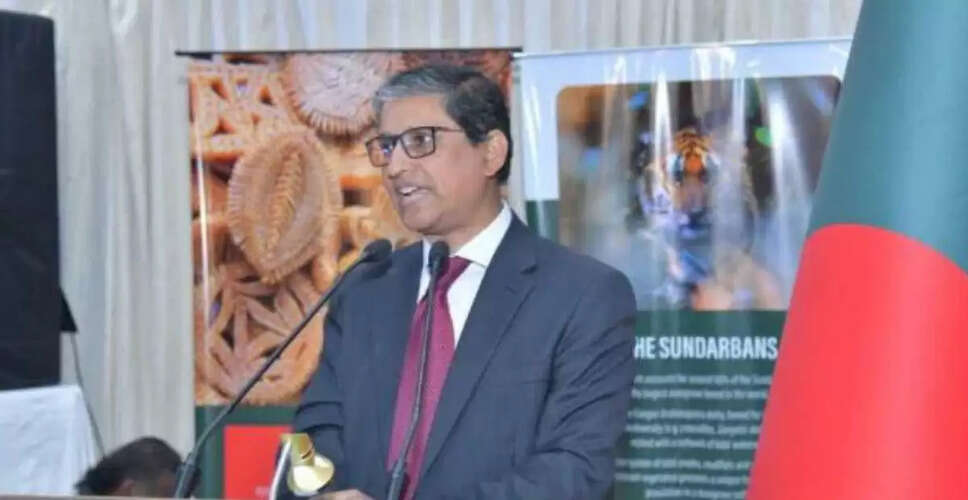
India Summons Bangladesh High Commissioner
On Wednesday, India called in the Bangladesh High Commissioner, M Riaz Hamidullah, to voice its apprehensions regarding the actions of extremist groups in light of an upcoming protest march directed at the Indian mission in Dhaka.
The protest, organized by a group known as July Oikyo Mancho, aims to demand the extradition of former Prime Minister Sheikh Hasina from India, as reported by a local media outlet.
India's Ministry of External Affairs stated that it “strongly refutes the misleading narrative being propagated by extremist factions concerning recent occurrences in Bangladesh.”
Furthermore, the ministry expressed disappointment that the interim government has not conducted a comprehensive investigation or provided substantial evidence to India regarding these incidents.
India emphasized its amicable relations with the Bangladeshi populace, which are deeply rooted in the country’s liberation struggle. The ministry reiterated its commitment to peace and stability in Bangladesh, advocating for elections that are free, fair, inclusive, and conducted in a peaceful environment.
India has urged the interim government led by Muhammad Yunus to guarantee the safety of foreign missions and diplomatic posts within Bangladesh.
The July Oikyo Mancho scheduled the march to the Indian mission for 3 PM on Wednesday, demanding the “return of Fascist Hasina and other murderers,” according to reports.
This situation unfolds against the backdrop of a statement by Hasnat Abdullah, leader of the National Citizen Party in Bangladesh, who cautioned about the potential isolation of India’s northeastern states and the harboring of separatist groups if Bangladesh experiences instability.
The summoning of the Bangladeshi high commissioner occurred just a day after both nations commemorated Vijay Diwas, marking India’s victory in the 1971 war and Bangladesh’s liberation.
On Sunday, Bangladesh’s Ministry of Foreign Affairs had summoned Indian High Commissioner Pranay Verma to express its “serious concern” regarding alleged comments made by the ousted Prime Minister Sheikh Hasina.
Bangladesh reiterated its demand for her swift extradition, alleging that Hasina, who fled to India in August 2024 amid protests, made incendiary remarks inciting her supporters to execute “terrorist” acts to disrupt the parliamentary elections scheduled for February.
Later that day, India’s Ministry of External Affairs firmly rejected the claims made by Bangladesh’s interim government under Yunus.
Sheikh Hasina resigned and fled to India on August 5, 2024, following extensive student-led protests against her Awami League government, after serving for 16 years.
Yunus, a Nobel laureate economist, assumed the role of chief adviser of the interim government just three days after Hasina's resignation.
Bangladesh has been pursuing her repatriation since the collapse of her government, with the demand formalized after Hasina and former Home Minister Asaduzzaman Khan Kamal received death sentences from the International Crimes Tribunal on November 17.
The tribunal found Hasina guilty of crimes against humanity due to her role in the violent crackdown on protests. Hasina has labeled the tribunal as biased and politically motivated, denying any orders to security forces to fire on demonstrators.