
India Prioritizes Energy Security Amid Global Challenges
Energy Security as a Top Priority for India
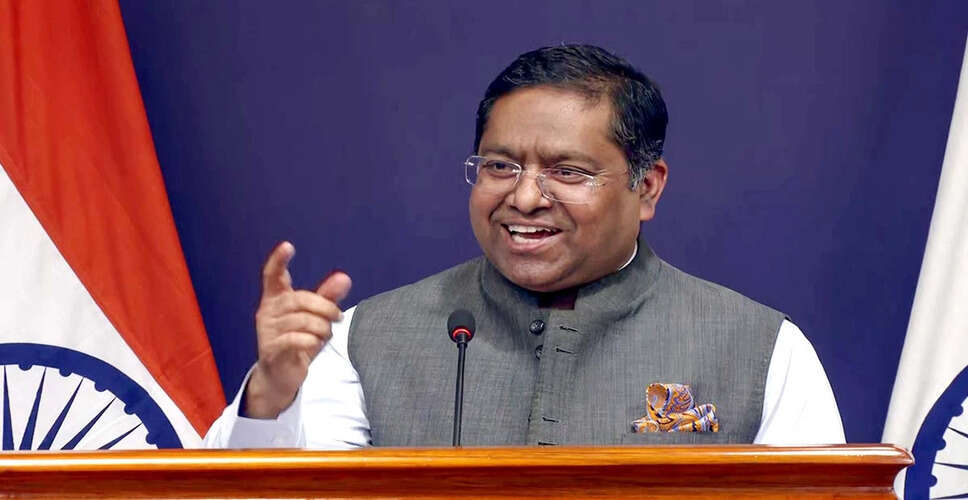
India has emphasized that ensuring energy security for its 1.4 billion citizens is its foremost priority. This statement was made by the spokesperson of the Ministry of External Affairs, Randhir Jaiswal, during a weekly press briefing, responding to claims from the United States that India had agreed to halt its purchase of Russian oil. Jaiswal stated, 'Regarding India's energy procurement, the government has publicly reiterated on several occasions that ensuring energy security for 1.4 billion Indians is our top priority.' He further explained, 'Diversifying our energy procurement based on market conditions and changing international circumstances is a core part of our strategy. All of India's actions are taken with this in mind and will continue to be so in the future.'
Diversification of Energy Sources
Jaiswal also highlighted that diversifying energy sources is a sustainable policy for India. This means that instead of relying on a single country, India keeps multiple options open to maintain supply, pricing, and strategic balance. His remarks directly countered speculation suggesting that India was leaning towards one particular bloc.
Engagement with Venezuela
Regarding Venezuela, the spokesperson provided historical context, noting that Venezuela has long been an energy partner for India. Oil imports from Venezuela continued until 2019 but were halted due to sanctions. Although purchases resumed temporarily between 2023 and 2024, they were again interrupted by renewed sanctions. Nevertheless, India has not closed the door on future engagements. Public sector Indian enterprises maintain partnerships with international oil companies operating there, and future supply will be considered if commercial benefits are evident.
India-U.S. Trade Agreement Developments
In response to a question about the India-U.S. trade agreement, Jaiswal mentioned that following a phone conversation between Prime Minister Narendra Modi and President Donald Trump, the U.S. has taken steps to reduce reciprocal tariffs. He noted that products manufactured in India can now be exported to the U.S. at an 18 percent tariff, which he described as a significant opportunity for Indian exports. He confirmed that the U.S. has also clarified this tariff rate.
Assistance for Indian Sailors in Iran
Jaiswal also addressed the situation of 16 Indian sailors detained in Iran, stating that they have received consular access. Indian officials met with them in Bandar Abbas. According to Iranian sources, eight sailors have been released and will return home, while efforts are ongoing to assist the remaining eight.
India's Stance on Global Issues
Overall, the Ministry of External Affairs' responses have made it clear that India articulates its interests on the global stage. Whether it concerns oil procurement, trade agreements, or the safety of citizens abroad, the focus remains on India's own interests. Amid external claims and political rhetoric, New Delhi has clarified that India's policies are not swayed by others' declarations. India listens to all but acts according to its own priorities, firmly stating that there will be no compromise on energy security, economic benefits, or the protection of its citizens.