
India Mandates LPG Disconnection for Households with PNG Connections Amid Global Fuel Crisis
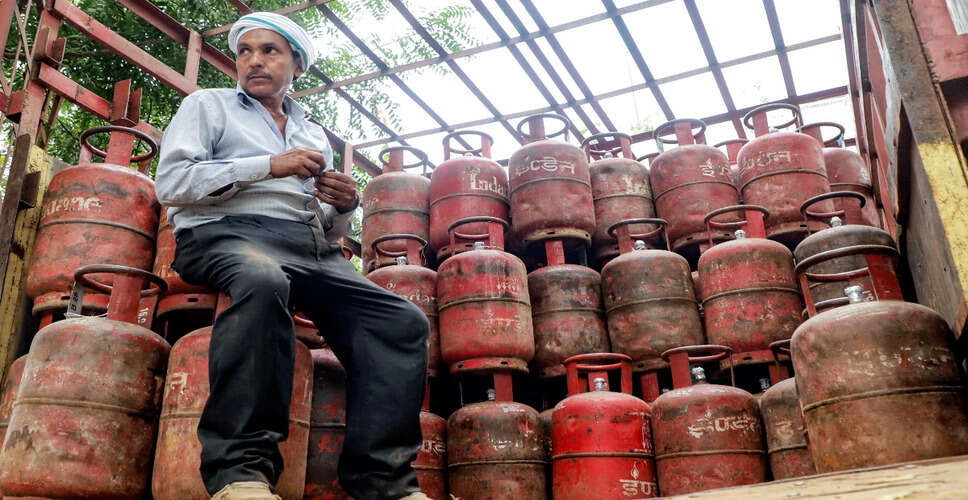
Government's New Directive on Fuel Usage
The central government has implemented a significant and stringent decision regarding the use of domestic fuel. According to a recent notification from the Ministry of Petroleum and Natural Gas, households connected to piped natural gas (PNG) must immediately relinquish their LPG (cylinder) connections. This measure comes in response to the severe conflict in the Middle East and disruptions in fuel supply through the Strait of Hormuz, which have led to a global crisis.
Details of the Notification
On Saturday, the Ministry of Petroleum and Natural Gas issued a notification stating that households with both PNG and domestic liquefied petroleum gas (LPG) connections must forfeit their LPG connection and are prohibited from refilling cylinders from any government oil company or its distributors.
Impact of the Global Fuel Supply Crisis
This notification, released amid the ongoing crisis in the Middle East affecting global fuel supplies, serves as an amendment to the Liquefied Petroleum Gas (Regulation of Supply and Distribution) Order. The revised order also prevents those using PNG from obtaining new domestic LPG connections.
Government's Stance on LPG Connections
"Individuals with a connection to piped natural gas cannot retain their domestic LPG connection, nor can they refill domestic LPG cylinders from any government oil company or its distributors. Such individuals must immediately discontinue their domestic LPG connection," the notification states.
Iran's Recent Statements on Shipping
Just hours before the government's notification, Iran's ambassador to India, Mohammad Fathali, confirmed that some Indian vessels have been granted passage through the Strait of Hormuz. He noted that while there were initial challenges in discussions with India, both nations are now supporting each other.
Historical Ties Between India and Iran
"Yes, we have allowed some vessels to pass through Hormuz, but I cannot specify how many at this time. I will discuss this issue further in the future. Iran and India share historical ties and mutual interests," he stated during the India Today Conclave 2026.
Significance of the Strait of Hormuz
On Friday, Iran permitted two LPG carriers flagged by India, Shivalik and Nanda Devi, to transit through the Strait of Hormuz, which had been nearly closed since early March due to the ongoing conflict between Iran and a coalition of Israel and the United States. This narrow waterway is a crucial chokepoint through which approximately 20 percent of the world's oil passes.
Challenges for India Amidst the Crisis
The closure of the Strait of Hormuz has become a significant headache for India, which imports 60 percent of its LPG needs, with 85-90 percent sourced from Gulf countries like Saudi Arabia and the UAE. These nations utilize the Strait of Hormuz for shipping oil and natural gas.