
India Launches ₹1,500 Crore Initiative to Boost Critical Mineral Recycling

Government's New Recycling Scheme
New Delhi: On Wednesday, the Union Cabinet, led by Prime Minister Narendra Modi, sanctioned a ₹1,500 crore incentive program aimed at enhancing the recycling capabilities within the nation for extracting and processing critical minerals from secondary sources.
This initiative is part of the National Critical Mineral Mission (NCMM), which seeks to strengthen domestic capabilities and ensure supply chain resilience for critical minerals. The entire value chain for critical minerals, which includes exploration, auctioning, and operationalizing mines, requires time before it can effectively supply these minerals to Indian industries. To ensure immediate supply chain sustainability, recycling of secondary sources is deemed a practical approach, as stated in an official announcement.
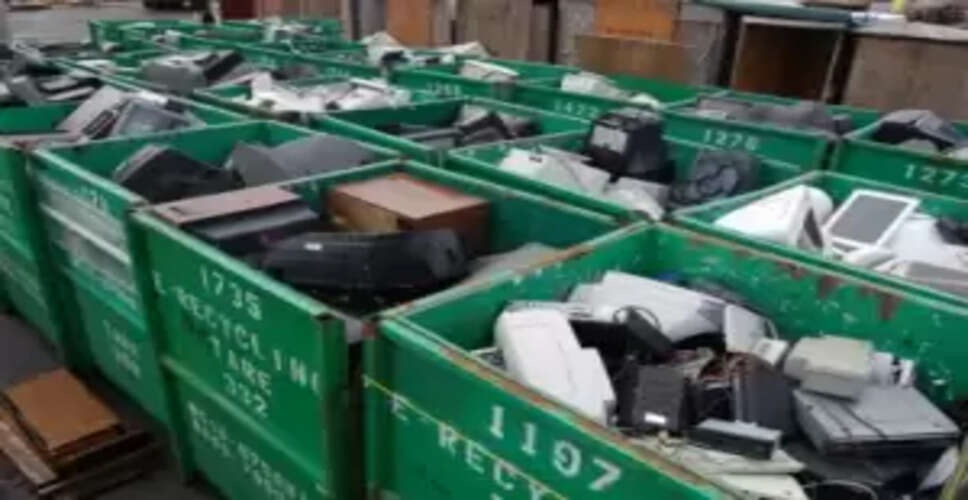
The program will span six years, from FY 2025-26 to FY 2030-31. Eligible materials for recycling include e-waste, Lithium Ion Battery (LIB) scrap, and other scrap materials like catalytic converters from decommissioned vehicles. The initiative is designed to benefit both large, established recycling firms and smaller, emerging recyclers, including startups, with one-third of the total funding allocated for the latter.
The scheme will support investments in new facilities as well as the expansion, modernization, and diversification of existing operations. It will incentivize the recycling value chain that focuses on the extraction of critical minerals rather than just the production of black mass.
Incentives will include a 20% capital expenditure (Capex) subsidy for machinery and equipment necessary for production within a specified timeframe, after which a reduced subsidy will apply. Additionally, an operational expenditure (Opex) subsidy will reward incremental sales over the base year (FY 2025-26), offering 40% of the eligible Opex subsidy in the second year and the remaining 60% in the fifth year, contingent on meeting specified sales thresholds.
To maximize the number of beneficiaries, the total incentives (Capex and Opex) per entity will be capped at ₹50 crore for larger companies and ₹25 crore for smaller ones, with specific limits for Opex subsidies set at ₹10 crore and ₹5 crore, respectively.
The anticipated outcomes of this initiative include the establishment of at least 270 kilotons of annual recycling capacity, leading to the production of approximately 40 kilotons of critical minerals annually, attracting around ₹8,000 crore in investments, and generating nearly 70,000 direct and indirect jobs. The formulation of this scheme followed extensive consultations with industry stakeholders through dedicated meetings and seminars.