
India Launches First Daily Hydrogen-Powered Train Service

Introduction of Hydrogen-Powered Train Service
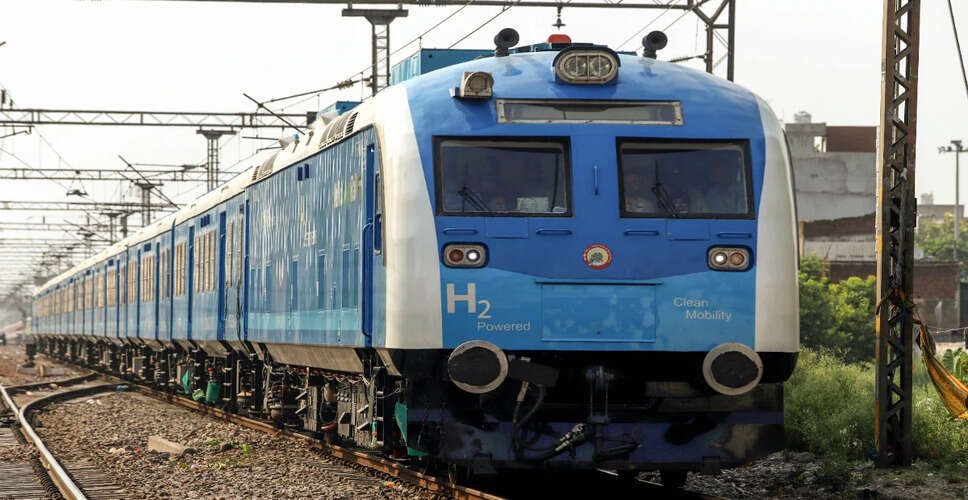
The Ministry of Railways has approved India's inaugural daily hydrogen-powered train service, which will operate between Jind and Sonipat. According to sources, this service will be designated as train number 74010/74009, making stops at various locations including Jind City, Pandu Pindara, Lalit Khera, Bhambewa, Ishapur Kheri, Butana, Khandarai, Gohana, Rabra, Lath, Mohna (Haryana), and Badwasani. In June, a trial run was conducted focusing on emergency braking distance and train oscillation between Delhi and Jind to assess performance parameters.
Details of the Hydrogen Train
In May, Indian Railways granted approval for a 10-car hydrogen fuel cell-based train set on the Northern Railway's Jind-Sonipat section. The ministry has confirmed that this train set is fully prepared for launch and will operate at a maximum speed of 75 km/h using a 1200 KW hydrogen fuel cell propulsion system. This initiative aims to promote cleaner and more energy-efficient rail transport.
Technology Behind Hydrogen Fuel Cells
The ministry explained that hydrogen fuel cell technology generates electricity through a chemical reaction using hydrogen, producing only water vapor as a byproduct. This makes it a clean alternative to traditional fossil fuel-based traction systems. With this project, India joins countries like Germany, Japan, China, and the United States in developing hydrogen-powered rail transport.
Infrastructure and Safety Measures
The Jind-Sonipat section has been selected as the pilot route for this initiative. Facilities for hydrogen storage and refueling have been established in Jind. The Petroleum and Explosives Safety Organization (PESO) has granted the necessary licenses for storing and refueling compressed hydrogen gas at this location. The ministry has also installed a hydrogen compression system for refueling operations, along with arrangements for technical support and essential spare parts. A standby compressor unit is also being set up.