
India Launches Ambitious Project for Fifth-Generation Fighter Jet: What to Expect?
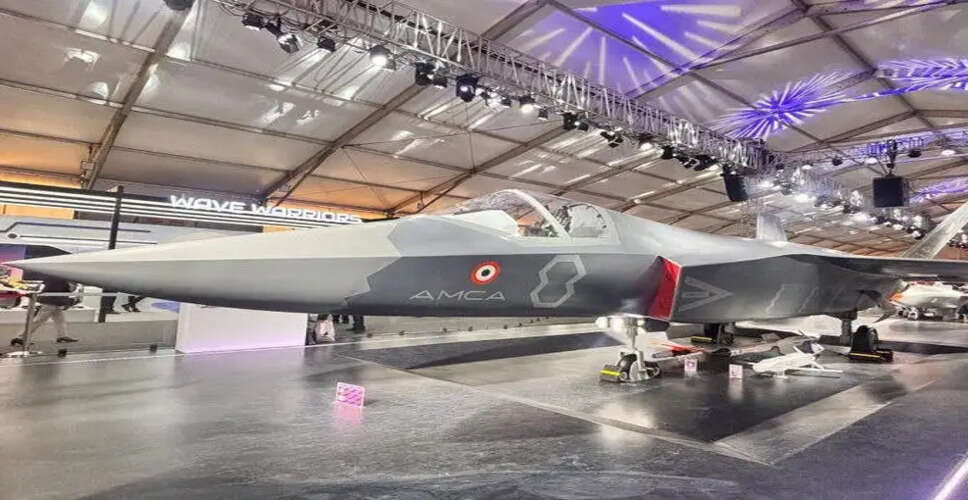

India's Defence Ministry Initiates Fighter Jet Selection Process
New Delhi: The Ministry of Defence has officially commenced the process of selecting a private sector partner for the development of a fifth-generation fighter jet, part of the ambitious Advanced Medium Combat Aircraft (AMCA) initiative, which is regarded as India's most significant indigenous aerospace endeavor.
A Request for Proposal (RFP) has been issued to Tata Advanced Systems, Larsen and Toubro, and Bharat Forge as part of this selection process.
Larsen and Toubro is collaborating with Bharat Electronics Limited, while Bharat Forge has formed a partnership with the defence public sector unit BEML.
Notably, Hindustan Aeronautics Ltd (HAL), a state-owned aerospace giant, has been excluded from this selection process.
India is prioritizing the AMCA project to create a medium-weight, deep-penetration fighter jet equipped with advanced stealth capabilities to enhance its aerial combat strength.
The RFP specifies that the first flight of the aircraft should occur within 30 months following the signing of the contract.
It also mandates that the AMCA project adhere to a strict timeline, requiring an 1,800-sortie flight test program to be completed within 84 months of contract signing before the fighter jet can enter series production.
The initial prototype is anticipated to be unveiled by 2029, utilizing the GE F414 engine.
According to the RFP, the successful bidder must establish a new company within three months of selection, after which the contract will be finalized.
This new entity is restricted from having foreign ownership beyond passive institutional investments allowed under Indian law and must remain under the control of Indian citizens.
Among the three contenders, Tata has prior experience in setting up a production facility in collaboration with Airbus for assembling C-295 military transport aircraft in Vadodara, Gujarat.
The Indian Air Force (IAF) aims to establish seven squadrons of the AMCA, with series production expected to commence in 2035.
The AMCA, alongside the Tejas light combat aircraft, is set to become a cornerstone of the Indian Air Force's capabilities.
Following the submission of responses to the RFP by the three companies, the selection process is expected to conclude within four to five months.
The chosen private defence contractor will collaborate with the Aeronautical Development Agency (ADA), which operates under the Ministry of Defence, to develop the aircraft prototypes.
The government plans to construct five prototypes of the Advanced Medium Combat Aircraft (AMCA) as part of this initiative.
The IAF has been advocating for the AMCA project to meet its long-term operational needs.
India's confidence in developing the AMCA has significantly increased following the successful rollout of the Light Combat Aircraft (LCA) Tejas.
Manufactured by HAL, the Tejas serves as a formidable platform for air combat and offensive air support, with reconnaissance and anti-ship missions as secondary roles.
Additionally, the IAF is in the process of acquiring 114 Multi-Role Fighter Aircraft (MRFA).
In April 2019, the IAF issued a Request for Information (RFI) to procure 114 jets, estimated to cost around USD 18 billion, marking it as one of the largest military procurement initiatives globally in recent years.