
India Intensifies Crackdown on Illegal Immigration Along Bangladesh Border
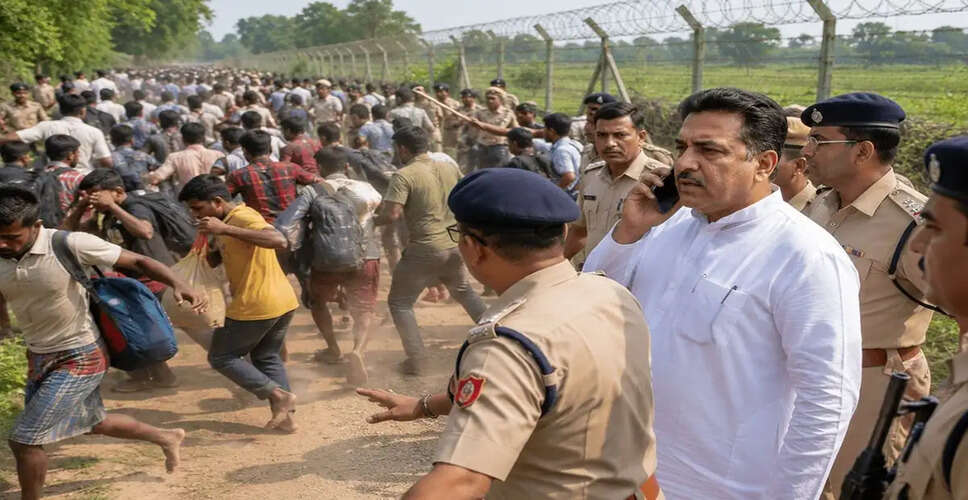

Changing Dynamics at the India-Bangladesh Border
Following a shift in power in West Bengal, the situation along the India-Bangladesh border is rapidly evolving. During the election campaign, leaders from the ruling party openly discussed their plans to combat illegal immigration. They referred to undocumented Bangladeshis using terms like 'infiltrators', 'termites', and 'burden' from various platforms. Chief Minister Suvendu Adhikari announced a policy of 'Detect, Delete, and Deport', clearly stating that those residing illegally would be sent back. This declaration has led to an increase in border enforcement actions.
Border Security Measures Intensified
The border between India and Bangladesh stretches over 4,000 kilometers, with the largest segment located in West Bengal. For years, this border has been a route for illegal crossings, smuggling, and entry through forged documents. Indian security agencies are now taking stringent measures against this entire network. The Border Security Force (BSF) has initiated special operations, including the installation of barbed wire in several areas and enhanced surveillance of river routes to prevent illegal entries. Reports indicate plans to release crocodiles and venomous snakes in river areas to completely block pathways for infiltrators.
Bangladesh's Response to India's Actions
In response, Bangladesh has expressed strong objections, accusing India of forcibly pushing people across the border. According to the Bangladesh Border Guard, over 2,000 individuals were pushed from India to Bangladesh between May 2025 and January 2026, including some Indian citizens and individuals from Myanmar. Tensions have escalated at the border, with some families stranded in no man's land for several days.
National Security Concerns
India views illegal immigration as a significant threat to national security. The demographic balance in border states is rapidly changing, with millions of Bangladeshis having settled in India over the years using fake Aadhaar cards, voter IDs, and ration cards. This influx has increased pressure on employment, resources, and internal security. Consequently, both the central and state governments are accelerating the processes of identification, verification, and deportation.
Smuggling Issues Alongside Border Disputes
In addition to border disputes, the issue of smuggling has also come to the forefront. The Bangladesh Border Guard recently seized a large quantity of garlic and urea fertilizer being smuggled into India. Officials state that continuous operations are underway to curb cross-border smuggling, indicating that the border remains a significant corridor for illegal trade.
Rohingya Refugee Complications
The situation is further complicated by the issue of Rohingya refugees. Those residing in camps in Bangladesh are reportedly fearful of India's stringent measures. Several Rohingya organizations have claimed that they face ongoing harassment, detention, and violence in India, with allegations of being pushed back into the sea in some instances. On the other hand, Indian security agencies argue that the Rohingya network could be exploited by extremist and criminal organizations, necessitating strict actions.
Impact on India-Bangladesh Relations
The rising tensions at the border are beginning to affect India-Bangladesh relations, with longstanding disputes over the Ganga water treaty and the Teesta water sharing agreement still unresolved. The escalating border situation has made the relationship between the two nations even more sensitive. Meanwhile, the United Nations has urged both countries to respect human rights and seek resolutions through dialogue.
A Firm Stance Against Illegal Immigration
It is clear that India is no longer willing to tolerate illegal immigration under any circumstances. Those attempting to cross the border should understand that India is not an open field where one can hide for years using fake identities. Strict actions will be taken against individuals who enter illegally, violate laws, or disrupt national security and social balance.
A Warning to Infiltrators
This serves as a clear warning to Bangladeshi infiltrators that any attempts to undermine India's laws and sovereignty will not be tolerated. The crackdown on illegal entry, fraudulent documents, and smuggling networks is already underway. From the Border Security Force to state administrations, efforts are being ramped up. In the coming days, this campaign is expected to expand further, urging infiltrators to leave India as soon as possible.