
India Hosts UNESCO Meeting on Intangible Cultural Heritage Preservation
Significance of Cultural Heritage
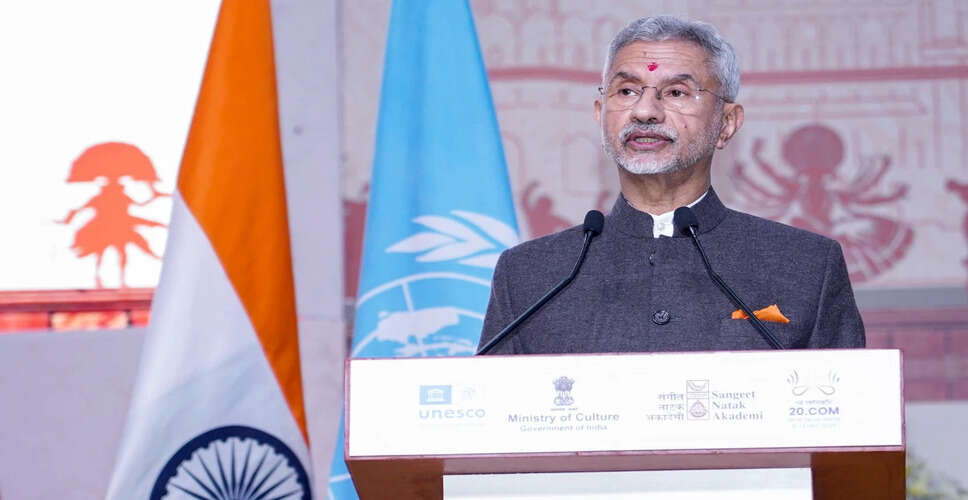
On Sunday, External Affairs Minister S. Jaishankar emphasized that traditions, languages, music, craftsmanship, and other forms of intangible heritage represent the 'most democratic expression of culture' and are a shared asset that many strive to preserve.
During the inauguration of a significant UNESCO meeting focused on the preservation of intangible cultural heritage (ICH) at the Red Fort in the national capital, Jaishankar addressed representatives from various countries, highlighting the necessity of nurturing heritage for peace and prosperity and passing it on to future generations.
UNESCO's 20th ICH Session in India
The 20th session of the Intergovernmental Committee for the Preservation of Intangible Cultural Heritage will take place from December 8 to 13 at the Red Fort. This marks the first time India is hosting a session of a UNESCO panel.
The inauguration was attended by Union Minister Gajendra Singh Shekhawat, UNESCO Director-General Khaled Al-Anani, Delhi Chief Minister Rekha Gupta, and India's Permanent Representative to UNESCO, Vishal V. Sharma.
India's Commitment to Heritage Preservation
Jaishankar highlighted that India is home to numerous UNESCO World Heritage Sites and is actively involved in various conservation and promotion projects worldwide, with a significant focus on preserving intangible heritage.
He stated, 'The world is fundamentally a pluralistic landscape, where its richness lies in its diversity and complexity. It is not flat; rather, it encompasses a vast array of specificities and characteristics, showcasing creativity that is crucial for identity, pride, and history.'
Challenges in Heritage Preservation
Jaishankar remarked, 'The full appreciation of what humanity has achieved over centuries can only be realized when that heritage is carefully nurtured.' He pointed out that challenges arise when there are attempts to dominate, marginalize, dismiss, or even destroy cultural heritage.
The Red Fort, a UNESCO World Heritage Site built by Mughal Emperor Shah Jahan, is a monument protected by the Archaeological Survey of India.