
India Heritage Center: A New Museum to Showcase India's Rich History in Washington, D.C.

Introduction to the India Heritage Center
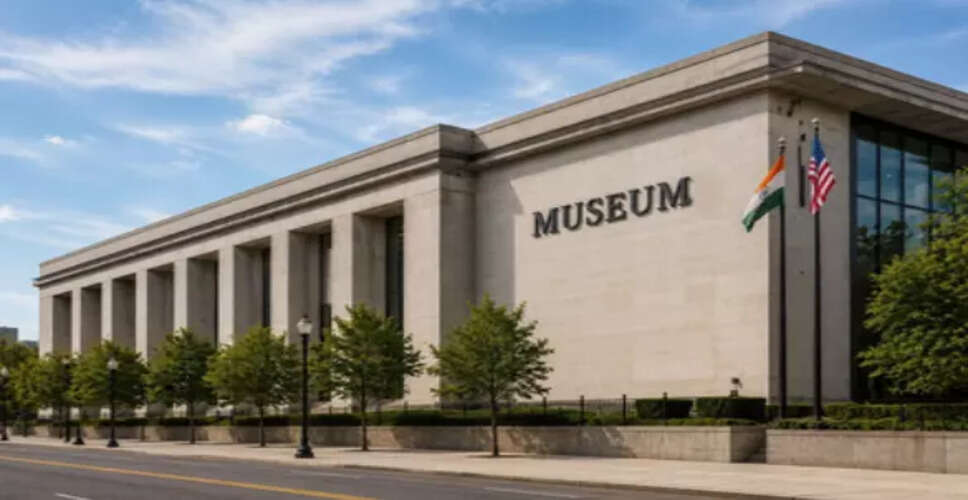
Representational Image
Washington, May 30: After nearly eight years of dedicated research and planning, the initiative for the India Heritage Center is set to take a significant step forward. This ambitious project aims to establish a permanent museum in the U.S. capital that will narrate the story of India from its ancient civilizations to its current status as a modern nation.
Vision and Goals of the Museum
Led by Dr. Amitabh Sharma, an Indian-American educator and community leader, this project aspires to be the first museum in the United States solely focused on India's extensive civilizational, cultural, and historical journey, which spans over 11,000 years. The museum will utilize cutting-edge technology, including virtual reality and interactive exhibits, to showcase India's contributions and challenges to a global audience.
"Indian history and civilization have not been represented with the strength they deserve," Sharma stated. He emphasized the importance of presenting India's rich heritage and contributions to the world.
Sharma, based in Atlanta, noted that the idea for the museum stemmed from a long-standing belief that India's story has often been told through external perspectives and in fragmented ways. The goal is to create a permanent institution that offers a comprehensive narrative of India's past, present, and future.
Museum Features and Exhibits
The envisioned museum will cover 20,000 square feet and include ten galleries, a 350-seat auditorium, a library, reception areas, and a gift shop. Organizers plan to incorporate state-of-the-art technologies, such as immersive experiences and interactive audio-visual systems, to engage visitors effectively.
Sharma explained that the museum will trace Indian history from 9,500 BC onwards, with ten galleries dedicated to various aspects of India's civilizational heritage, scientific advancements, spiritual traditions, cultural achievements, and the evolution of modern democracy.
Proposed exhibits will cover topics such as the Indus Valley civilization, Vedic traditions, innovations in science, yoga, Ayurveda, cultural heritage, independence movements, and the rise of modern India in economic and technological fields.
Target Audience and Community Impact
The museum is designed to serve not only the Indian diaspora but also mainstream Americans and other ethnic communities who may have limited knowledge of India's rich history and diverse cultural traditions. Sharma highlighted the need to portray the actual history accurately, aiming to educate both the Indian community and the broader multiethnic population.
"We want to convey that we have embraced persecuted communities and that our civilization values peace and coexistence," he remarked.
Location and Future Plans
Washington, D.C. is the preferred location for the museum due to its visibility and international significance. Sharma mentioned that efforts are underway to find a suitable site in the capital, emphasizing the importance of being in a high-traffic area for visitors.
The team has spent years compiling and validating historical data to ensure the museum's credibility before proceeding with fundraising and site selection.
The India Heritage Center is registered as a 501(c)(3) non-profit organization, with an estimated project cost ranging from millions to millions. Organizers plan to raise funds through high-net-worth individuals, corporate sponsorships, grants, crowdfunding, and community support.
Community Response and Conclusion
Sharma expressed that the community's response has been overwhelmingly positive, with many asking why such a project wasn't initiated sooner. He summarized the initiative by stating, "Indian history, which has often been told in fragments, needs to be presented in its entirety, authentically and genuinely. This is a significant effort in that direction."
The proposal comes at a time when the Indian-American community is increasingly influential in various sectors in the United States. If realized, the India Heritage Center would contribute a permanent representation of Indian civilization to the museum landscape of Washington, D.C., offering visitors a comprehensive introduction to one of the world's oldest continuous civilizations.