
India Faces Diplomatic Challenges Amidst US-Pakistan Counter-Terrorism Talks
The recent counter-terrorism dialogue between the US and Pakistan raises significant diplomatic challenges for India. With Pakistan potentially leveraging this opportunity to reiterate accusations against India, the situation surrounding the Indus Water Treaty adds further complexity. Irish President Michael D. Higgins' condemnation of racial attacks on the Indian community highlights India's soft power and international standing. This article delves into the implications of these developments for India's foreign policy, emphasizing the need for a multifaceted strategy to navigate the evolving geopolitical landscape.
| Aug 13, 2025, 16:22 IST
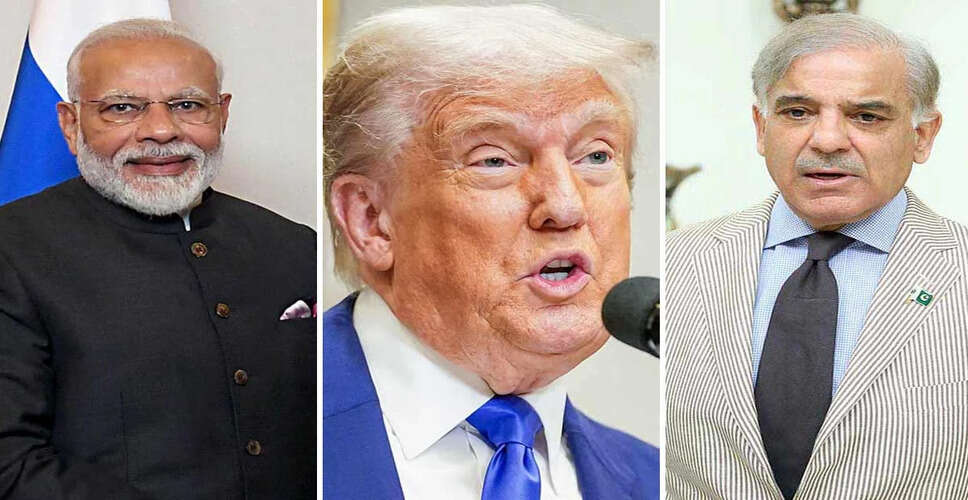
US-Pakistan Counter-Terrorism Dialogue: Implications for India
The recent counter-terrorism discussions between Pakistan and the United States may superficially appear to promote regional stability; however, the political implications for India are concerning. Following the US designation of the Balochistan Liberation Army as a foreign terrorist organization, Pakistan may seize this opportunity to reiterate its longstanding accusations against India on an international platform. If this joint agenda against terrorism leans towards Pakistan's narrative, it could pose a diplomatic challenge for India.
Moreover, Pakistan's aggressive stance on the Indus Water Treaty and provocative statements from Prime Minister Shehbaz Sharif indicate that the water issue transcends mere resource management, becoming part of Pakistan's strategy of 'strategic blackmail.' The temporary suspension of the treaty by India after the Pahalgam terrorist attack has made Pakistan uneasy, prompting it to threaten war. This scenario presents both opportunities and risks for India—an opportunity to exert pressure on terrorism through its water policy, and a risk that Pakistan will attempt to internationalize the dispute.
In the meantime, Irish President Michael D. Higgins' strong condemnation of racial attacks on the Indian community and the emphasis on the historical ties between India and Ireland serve as positive indicators for India's soft power and international standing. This not only sends a robust message regarding the safety of Indian expatriates but also deepens India's diplomatic influence in European nations. Collectively, these three events highlight the necessity for India to remain active on multiple fronts. While it must control the terrorism narrative, it also needs to maintain a strategic advantage over water resources and enhance the safety and cultural influence of its citizens globally. This multifaceted balance will be a true test of India's foreign policy in the coming times.
Regarding the dialogue between the US and Pakistan, it was noted that during the counter-terrorism talks held in Islamabad, both nations agreed to enhance cooperation in addressing threats posed by groups such as the Balochistan Liberation Army (BLA), ISIS-Khorasan, and Tehrik-i-Taliban Pakistan (TTP). This dialogue occurred shortly after the US designated the BLA as a Foreign Terrorist Organization.
A joint statement released after the meeting emphasized the importance of developing effective strategies to combat terrorist threats, including those from the BLA, ISIS-Khorasan, and TTP. Reiterating the 'long-standing partnership' between Pakistan and the US, both sides acknowledged the necessity of 'continuous dialogue' to tackle terrorism and promote peace and stability. The US commended Pakistan's 'consistent successes' in controlling terrorist organizations that threaten regional and global peace and security. Both delegations stressed the need to establish a robust institutional framework and develop capabilities to address security challenges and prevent the use of emerging technologies for terrorist purposes. They also reaffirmed their commitment to close cooperation on multilateral platforms, including the United Nations, to promote effective and sustainable methods for combating terrorism.
On another note, Prime Minister Shehbaz Sharif's assertion that 'India cannot take a single drop of water from Pakistan' signals rising tensions regarding the Indus Water Treaty (1960). Pakistan is clearly indicating that it intends to address the water issue not just diplomatically but also militarily. While the water treaty serves as a strong leverage for India, it must be utilized cautiously to avoid being framed as 'hydro-warfare' in the international community.
Additionally, President Higgins recently condemned the racial attacks on the Indian community, highlighting the historical ties between India and Ireland. He noted that both nations share a legacy in freedom movements, constitutional development, and social reforms. The safety of the Indian diaspora worldwide is a crucial aspect of India's foreign policy. A swift response to such attacks not only protects citizens but also enhances India's global reputation. Strengthening historical-political ties with European nations like Ireland aids India's influence within the European Union. Furthermore, the contributions and cultural presence of Indians in Ireland solidify India's soft power in Europe.
In summary, these three events reveal distinct strategic fronts for India: 1. Strengthening its position in the global anti-terrorism discourse to counter Pakistan's propaganda. 2. Carefully utilizing water resources as a diplomatic pressure tool to safeguard national interests and maintain its international image. 3. Ensuring the safety of the Indian diaspora and expanding soft power on global platforms to enhance India's international reputation and political capital. This is a time for India to adopt a multifaceted strategy where a balanced use of hard power, diplomatic acumen, and cultural influence can position it favorably in the global power balance.