
India Engages with US on Trade Investigations and Tariff Proposals

India's Ongoing Trade Discussions with the US
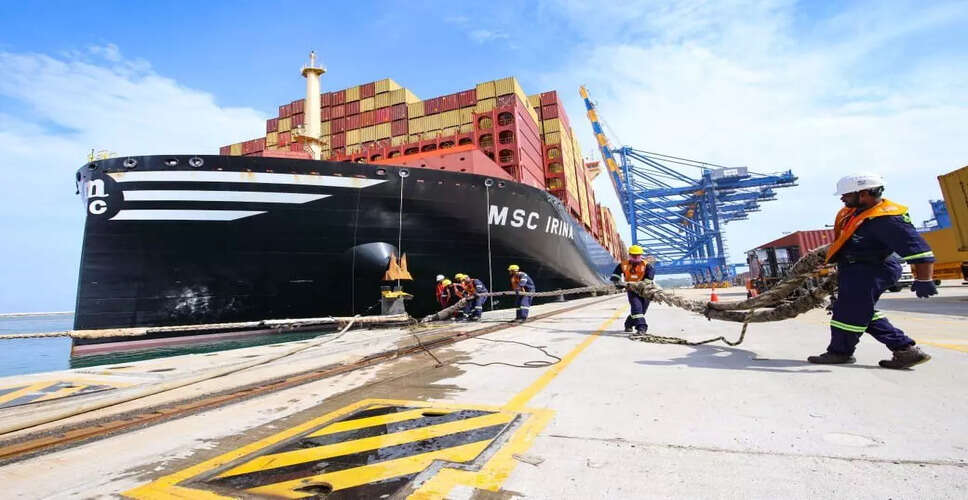
Representational file image of cargo operations underway at Vizhinjam Port in Kerala. (Photo:@airnewsalerts/X)
New Delhi, Jun 3: India is actively collaborating with the United States regarding the Section 301 investigations, which address issues of forced labor and excessive industrial capacity, as stated by the government on Wednesday.
The Commerce Ministry confirmed, "India is in continuous dialogue with the US concerning the Section 301 proceedings. Additionally, we are working on finalizing a framework agreement, as announced on February 2, 2026, in line with the joint statement released on February 7, 2026."
On March 11 and 12, 2026, the Office of the United States Trade Representative (USTR) initiated two separate Section 301 investigations involving 60 economies, focusing on forced labor and industrial capacity concerns.
On June 2, the USTR released its findings from the forced labor investigation, suggesting additional tariffs on imports from these economies.
This proposal includes a 12.5% tariff on imports from 54 economies, including India and China, and a 10% tariff on imports from Canada, Ecuador, the European Union, Indonesia, Mexico, and Pakistan. Notably, Pakistan and Indonesia are key competitors for India in trade.
Section 301 of the Trade Act of 1974 empowers the USTR to investigate trade practices deemed “unfair, discriminatory, or harmful” to US commerce, allowing the US administration to impose retaliatory tariffs if violations are identified.
Currently, the proposed measure is not finalized and excludes products subject to Section 232 tariffs and certain other items.
A special mechanism for textile and apparel products has been suggested, which may permit a specific volume of imports from selected economies to enter the US at reduced tariff rates.
The ministry noted, "The proposed tariffs are still under consideration, and stakeholders can submit requests to participate in public hearings by June 22, 2026. Written comments will be accepted until July 6, 2026."
Public hearings are scheduled for July 7, 2026, where the USTR will review the comments and testimonies before making a final decision on the proposed tariffs.
In parallel, chief negotiators from India and the US commenced a three-day round of discussions in New Delhi on Tuesday to finalize the interim trade agreement's specifics.
The US delegation is led by chief negotiator Brendan Lynch, while India's team is headed by Darpan Jain, an additional secretary in the Department of Commerce.
The two nations aim to finalize the interim trade agreement details and advance negotiations for a broader bilateral trade agreement (BTA).