
India Edges Past England in Thrilling T20 World Cup Semifinal
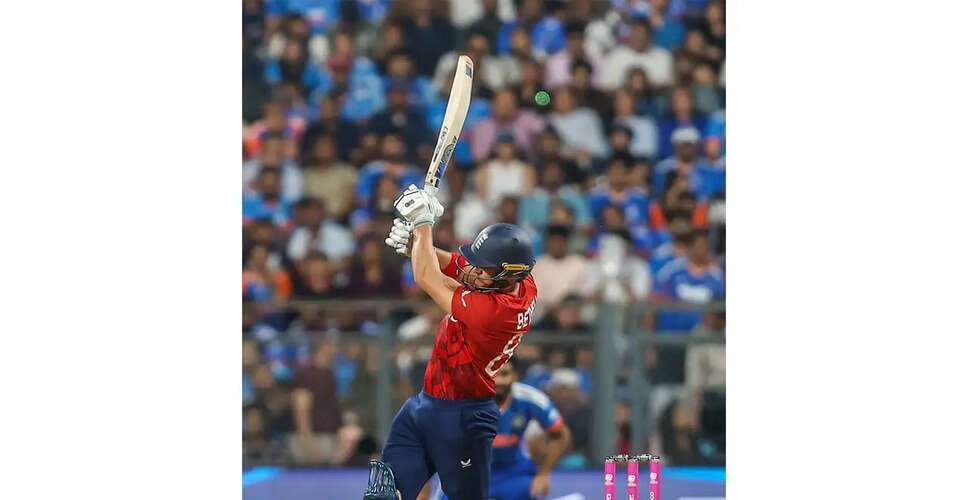
India Secures Final Spot with Narrow Victory
In a gripping semifinal match of the ICC T20 World Cup held at Mumbai's Wankhede Stadium, Team India triumphed over England by a mere seven runs, thanks to a remarkable century from Jacob Bethell. This victory propels India into the final against New Zealand, set for Sunday in Ahmedabad.
Batting first, India posted an impressive total of 253 runs, led by Sanju Samson's explosive 89 runs off 42 balls, complemented by contributions from Shivam Dube (43 runs), Ishan Kishan (39 runs), Hardik Pandya (27 runs), and Tilak Varma (21 runs). Despite a strong start, England fell short, finishing at 246 runs, with Bethell scoring a stunning 105 runs.
England's Brave Chase
England began their chase of 255 runs with an aggressive start, but lost Phil Salt early. Jos Buttler and Harry Brook attempted to stabilize the innings, but Jasprit Bumrah's wicket of Brook marked a turning point. Bethell's counter-attack included a flurry of sixes, but despite his efforts, England couldn't secure the win.
As the match progressed, Bethell's explosive batting kept England in contention, reaching his century in just 45 balls. However, a brilliant catch by Tilak Varma ended his innings, and England ultimately fell short, finishing at 246/7.
Samson's Record-Breaking Performance
Sanju Samson's innings not only led India to a formidable score but also set a record for the highest total in a T20 World Cup knockout match, surpassing the previous record of 205 runs. His aggressive batting included eight fours and seven sixes, showcasing his dominance throughout the innings.
India's innings featured a strong partnership between Samson and Kishan, which laid the foundation for their record total. The team hit a remarkable 19 sixes, tying the record for the most in a T20 World Cup match.
Match Summary
Brief Scores: India: 253/7 (Sanju Samson 89, Shivam Dube 43, Will Jacks 2/40) defeated England: 246/7 (Jacob Bethell 105, Will Jacks 35, Hardik Pandya 2/38).