
India Dismisses Nepal's Objections Over Kailash Mansarovar Yatra
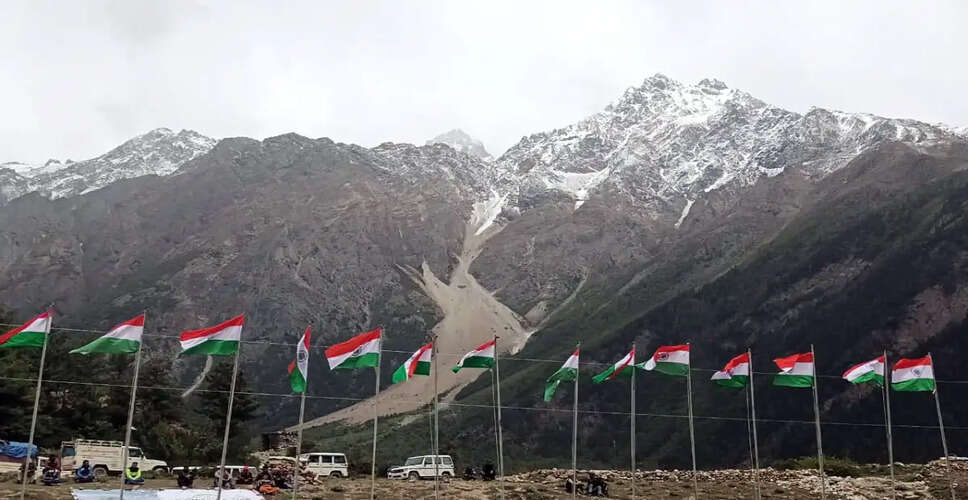

Border Dispute Between India and Nepal
The ongoing border dispute between India and Nepal has resurfaced in the news. On Sunday, India firmly rejected Nepal's objections regarding the upcoming Kailash Mansarovar pilgrimage via the Lipulekh Pass. New Delhi clarified that any unilateral and arbitrary expansion of territorial claims is unacceptable and entirely unfounded. This controversy began when Nepal's Ministry of Foreign Affairs expressed opposition to the decision made by India and China to facilitate the pilgrimage through the Lipulekh Pass. Nepal asserts that this area falls under its sovereignty.
India's Firm Stance
In response to Nepal's claims, Indian Ministry of External Affairs (MEA) spokesperson Randhir Jaiswal stated, "The Lipulekh Pass has been an established and traditional route for the Kailash Mansarovar pilgrimage since 1954. This route has been used for decades without any interruptions. The expansion of territorial claims is neither based on historical facts nor supported by evidence."
Unfounded Claims: India
Jaiswal emphasized that India's position on this matter has always been consistent and clear. He reiterated, "This is not a new issue. Regarding territorial claims, India has consistently maintained that such assertions are incorrect and not grounded in historical facts or evidence. The unilateral and arbitrary expansion of territorial claims is baseless."
Bilateral Relations and Dialogue
The spokesperson also mentioned that India is always open to "constructive dialogue" on all matters related to bilateral relations with Nepal, including resolving border issues through discussions and diplomacy where agreements have already been reached between the two nations.
Kailash Mansarovar Yatra via Lipulekh Pass
Last week, the MEA announced that the annual Kailash Mansarovar pilgrimage would take place between June and August through two routes: the Lipulekh Pass and Nathu La in Sikkim. This pilgrimage to Mount Kailash and Lake Mansarovar, located in China's Tibet Autonomous Region, holds religious significance for Hindus, Jains, and Buddhists alike. As part of efforts to normalize relations between India and China, this pilgrimage was resumed last year after a hiatus of nearly five years.
Official Response
Our response to media queries regarding comments made by Foreign Ministry of Nepal on border issue in the context of the Kailash Mansarovar Yatra ⬇️
— Randhir Jaiswal (@MEAIndia) May 3, 2026
🔗 https://t.co/ouqMCjhwlb pic.twitter.com/hM7lJgh5Uc