
India Demonstrates Advanced Military Capability with Successful Missile Test

India's New Military Era
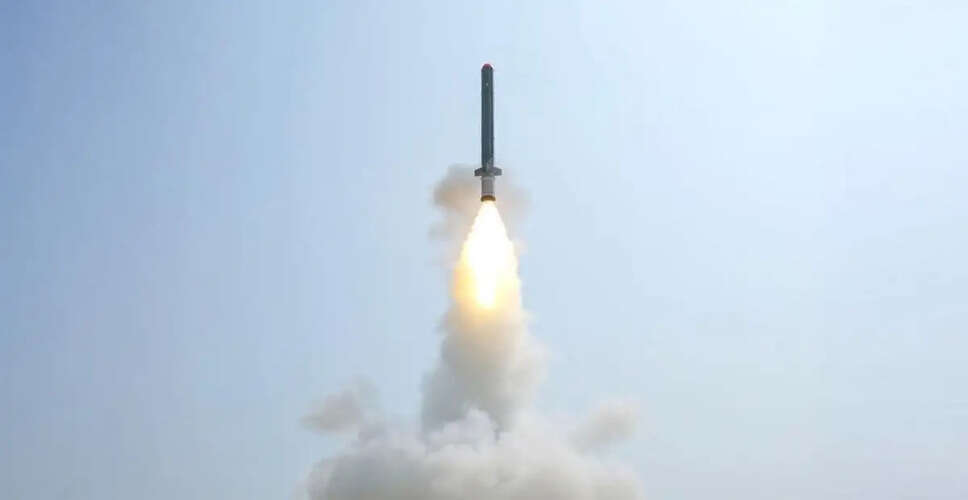
India has sent a clear message to the world, showcasing its transformation into a nation capable of striking deep within enemy territory. The successful test of an indigenous long-range land-attack cruise missile from Dr. Abdul Kalam Island off the coast of Odisha marks a significant milestone in India's strategic capabilities, alarming both China and Pakistan. Developed by the Defence Research and Development Organisation (DRDO), this missile has established India as a formidable power capable of delivering decisive responses.
Missile Specifications and Capabilities
This missile, which can strike targets over a distance of more than 1,000 kilometers, poses a threat to the enemy's most sensitive military installations, command centers, radar stations, and weapon depots within minutes. Unlike conventional ballistic missiles, it flies at a low altitude, utilizing the terrain's features to evade detection by enemy radar systems, making it difficult to intercept before it reaches its target.
Technological Advancements
Measuring approximately six meters in length and weighing around 1.5 tons, the missile is equipped with a fully indigenous turbojet engine. It can travel at speeds close to 80% of the speed of sound and carry a conventional warhead weighing up to 400 kilograms. Future plans include launching it from ground-based mobile platforms, naval vessels, and aerial platforms, providing a shared weapon system for all three branches of India's armed forces.
Successful Testing and Strategic Implications
The recent test was notable for its precision, as the missile met all mission objectives with high accuracy. Various tracking and measurement systems deployed at the integrated test range confirmed its capabilities, with the Defence Ministry stating that the missile performed according to established standards.
Broader Military Context
This achievement comes shortly after India successfully conducted three tests of a new generation ballistic missile defense system and the first successful test of a medium-range anti-ship missile for the navy. This indicates that India is not only developing offensive capabilities but is also prepared to neutralize enemy attacks in mid-air, enhancing its self-reliance in military power.
Changing Power Dynamics in Asia
Strategically, this missile is crucial as China has long sought to dominate Asia with its long-range cruise missiles and hypersonic weapons, while Pakistan has been enhancing its military strength with Chinese technology. India's new capability could shift the balance of power, allowing it to destroy deep-seated enemy positions without crossing borders. In a conflict scenario, this missile could incapacitate the enemy's air defense systems, communication centers, and military command structures early on, weakening their retaliatory capabilities.
Joining an Elite Group
With this development, India joins a select group of nations possessing indigenous long-range cruise missile technology, previously dominated by the United States, Russia, China, France, and to some extent, the United Kingdom. The missile's range means that much of Pakistan falls within its strike capability, and it could also target various strategic locations in China, including military bases in Tibet and adversarial positions in the Indian Ocean region.
A Historic Step for Self-Reliance
This test is also seen as a historic achievement for the Atmanirbhar Bharat (Self-Reliant India) initiative, as the missile's key components and systems were developed domestically. The Aeronautical Development Establishment in Bengaluru has been the primary laboratory for this project, indicating India's shift towards self-sufficiency in military technology.
Reactions and Future Implications
Defence Minister Rajnath Singh hailed this success as a significant boost to India's defense preparedness, while DRDO Chairman Rajesh Kumar Singh congratulated the scientists and engineers involved. However, the broader message to the world is clear: India is no longer a silent nation. Any challenge to its sovereignty will be met with precise and lethal capabilities that can strike at the heart of the adversary.
Conclusion
In summary, this missile test is not merely a military achievement but a declaration of India's evolving strategic mindset. The new India is no longer passive; it is proactive and prepared. With such formidable preparations, the unease among adversaries is inevitable.