
India Critiques Pakistan's Record on Peace and Stability at UN Security Council
In a recent address at the UN Security Council, India's Permanent Representative, Parvathaneni Harish, delivered a strong critique of Pakistan's record on peace and stability. He highlighted the stark contrast between India's democratic progress and Pakistan's reliance on extremism and terrorism. Harish emphasized the need for zero tolerance towards terrorism and responded to baseless allegations from Pakistan. He also referenced decades of terrorist attacks against India, including the infamous 26/11 Mumbai attacks. The discussion included recent violence in Pahalgam, where Pakistani terrorists killed civilians, and India's subsequent military response. This debate underscores the ongoing tensions between the two nations and the complexities of international diplomacy.
| Jul 23, 2025, 09:39 IST
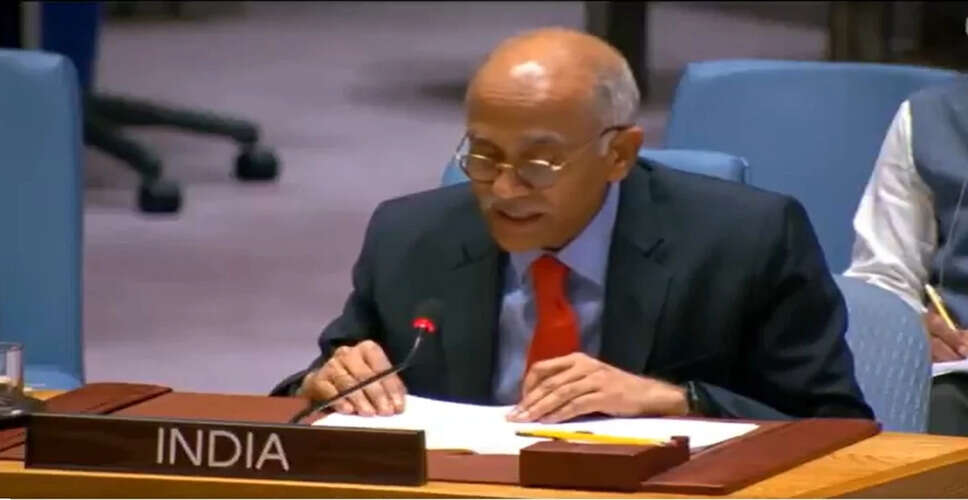
Harsh Critique of Pakistan's History
During a pointed address at the United Nations Security Council, India's Permanent Representative, Parvathaneni Harish, sharply criticized Pakistan's historical record regarding peace, democracy, and economic stability. Speaking at a high-level open debate on the theme of 'Promoting International Peace and Security through Multilateralism and the Peaceful Resolution of Disputes,' Harish drew a stark contrast between New Delhi's development trajectory and Islamabad's ongoing reliance on extremism and external borrowing.
Contrasting Progress in the Subcontinent
Addressing the UN Security Council, Ambassador Harish emphasized that the Indian subcontinent presents a stark contrast in terms of progress, prosperity, and development models. He pointed out that Pakistan is mired in extremism and terrorism while continuously borrowing from the IMF.
Response to Pakistan's Allegations
Ambassador Harish stated, "I feel compelled to respond to the comments made by the representative of Pakistan. In terms of progress, prosperity, and development models, the Indian subcontinent presents a stark contrast. On one side is India, a mature democracy, an emerging economy, and a pluralistic and inclusive society. On the other side is Pakistan, engulfed in extremism and terrorism, consistently borrowing from the International Monetary Fund. When discussing the promotion of international peace and security, it is crucial to understand that there are fundamental principles that must be universally respected, one of which is zero tolerance towards terrorism. It is inappropriate for any member of the Council to engage in conduct that is unacceptable to the international community while preaching about it.
Decades of Terrorism Sponsored by Pakistan
Earlier this May, during an open debate at the UN Security Council, Ambassador Harish criticized Pakistan, stating that India has faced decades of terrorist attacks sponsored by Pakistan, from the 26/11 Mumbai attacks to the brutal mass murder of innocent tourists in Pahalgam.
In his remarks during a debate under the agenda item 'Protection of Civilians in Armed Conflict,' which focused on addressing emerging threats and ensuring the safety of civilians, humanitarian and UN personnel, journalists, and media professionals, Harish felt obligated to respond to the baseless accusations from Pakistan's representative.
He noted, "India has experienced decades of terrorist attacks sponsored by Pakistan along its borders, including the horrific 26/11 attack in Mumbai and the brutal mass murder of innocent tourists in Pahalgam in April 2025. The primary victims of Pakistani terrorism have been civilians, as its aim has been to attack our prosperity, progress, and morale. For a country that has inflicted such violence to participate in discussions on civilian safety is an affront to the international community."
Referencing Recent Violence in Pahalgam
Harish's comments also referenced the recent violence in Pahalgam, directly accusing Pakistan of promoting cross-border terrorism. He mentioned the incident on April 22, where Pakistani terrorists killed 26 civilians.
He revealed that India had initiated 'Operation Sindoor' targeting terrorist infrastructure in Pakistan and Pakistan-occupied Kashmir (POK) in response. He clarified that these strikes were "focused, calculated, and unprovoked."
Following this clash, tensions escalated between the two nuclear-armed neighbors, culminating in cross-border firing until a ceasefire was established on May 10. Harish clarified that it was Pakistan that reached out to India for the ceasefire, directly contradicting claims made by former U.S. President Donald Trump regarding mediating a ceasefire between the two nations.
Social Media Reaction
#WATCH | Permanent Representative of India to the UN in New York, Ambassador Parvathaneni Harish, says "I am also constrained to respond to the remarks made by the representative of Pakistan. The Indian Sub Continent offers a stark contrast in terms of progress, prosperity and… pic.twitter.com/B3ENMTJJA2
— News Media (@NewsMedia) July 23, 2025