
India Critiques Pakistan's Agenda at UN Security Council
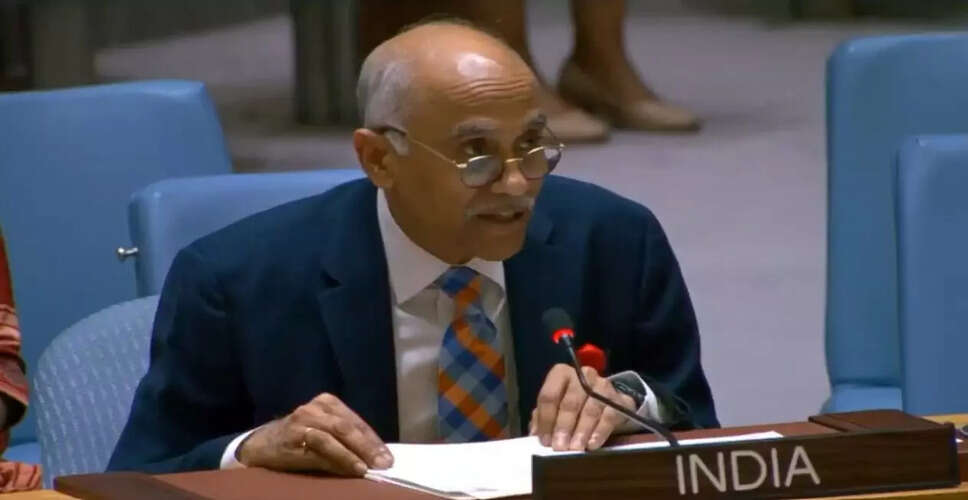
India's Strong Response to Pakistan at the UN
United Nations, Dec 16: India delivered a pointed critique of Pakistan's "divisive agenda" during a session of the UN Security Council, highlighting Islamabad's peculiar approach to governance, which includes imprisoning a Prime Minister and granting lifetime immunity to its Army Chief.
During an open debate on “Leadership for Peace,” India's Permanent Representative to the UN, Ambassador Harish Parvathaneni, responded firmly after Pakistan's Ambassador Asim Iftikhar Ahmad brought up Jammu and Kashmir and the Indus Waters Treaty.
Parvathaneni stated, "Pakistan's unnecessary mention of Jammu and Kashmir in today's discussion reflects its obsessive intent to undermine India and its citizens. A non-permanent member of the Security Council that continues to pursue this obsession across various UN platforms cannot be expected to meet its responsibilities effectively."
He further asserted, "Let me be clear… India will confront terrorism sponsored by Pakistan in all its forms and manifestations with full force.”
India dismissed the Pakistani envoy's claim that the Jammu and Kashmir issue should be resolved according to the UN Charter, relevant Security Council resolutions, and the wishes of the Kashmiri people.
"Pakistan has a distinctive method of honoring the will of its people; this includes imprisoning a prime minister, banning the ruling political party, and allowing its military to orchestrate a constitutional coup through the 27th amendment, which grants lifetime immunity to its Chief of Defence Forces," Harish remarked.
Imran Khan, the former Prime Minister of Pakistan, has been incarcerated since his arrest in August 2023 on corruption allegations and has reportedly faced prolonged solitary confinement.
UN Special Rapporteur on Torture, Alice Jill Edwards, has called on the Pakistani government to urgently address reports regarding Khan's "inhumane and undignified" detention conditions, cautioning that they could constitute torture or other forms of mistreatment.
Harish noted that India entered into the Indus Waters Treaty 65 years ago with goodwill and a spirit of friendship.
"Over these six-and-a-half decades, Pakistan has undermined the Treaty’s spirit by engaging in three wars and launching thousands of terror attacks against India," he stated.
Parvathaneni concluded, "In this context, India has decided to suspend the Treaty until Pakistan, recognized as a global hub of terrorism, credibly and irrevocably ceases its support for cross-border and all other forms of terrorism.”