
India Condemns Demolition of Historic Gurudwara in Pakistan Amid Rising Religious Intolerance

Continued Attacks on Minority Religious Sites in Pakistan
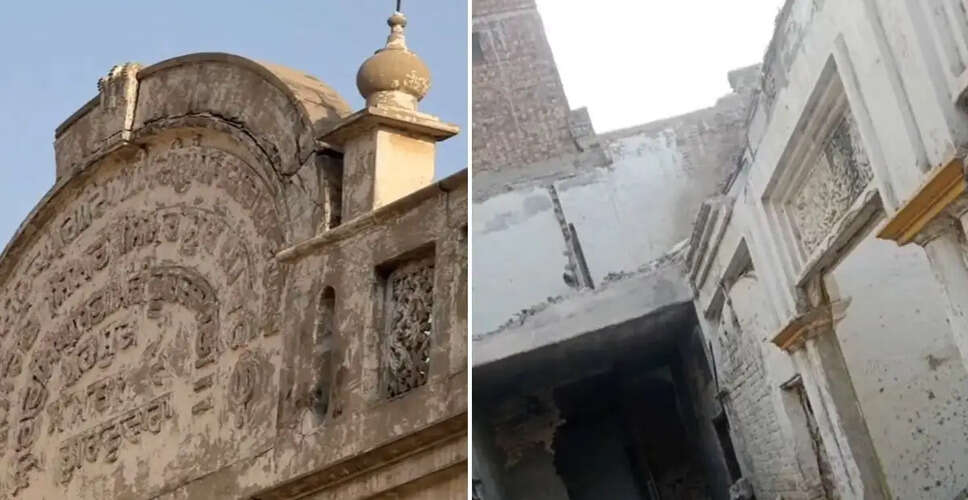
The series of assaults and vandalism against minority religious sites in Pakistan shows no signs of abating. Recently, the historic Gurudwara Shri Guru Singh Sabha Sahib, which has stood for 125 years in Farukhabad, was demolished, exposing the government's failure and intentions. The Indian government has reacted strongly to this disgraceful incident, labeling it a clear example of organized vandalism and religious intolerance. The Ministry of External Affairs has called on the Pakistani government to take immediate action against the perpetrators and to reconstruct the Gurudwara.
Ministry of External Affairs Responds
On Wednesday, spokesperson Randhir Jaiswal expressed deep concern over the demolition of the sacred Gurudwara in Farukhabad, stating that this act is not merely about destroying a building but is a direct assault on Sikh faith, history, and heritage. India has condemned this act as reprehensible and a calculated act of vandalism.
Call for Action Against Religious Intolerance
The Ministry emphasized that religious minorities and their places of worship in Pakistan are consistently targeted. This incident is not isolated but part of a broader pattern of religious extremism and communal violence in the country. The lack of concrete action from local authorities and the Evacuee Trust Property Board raises further concerns.
Demand for Investigation and Reconstruction
India has urged the Pakistani government to conduct an immediate and impartial investigation, ensuring that those responsible are punished severely. Additionally, it has called for the swift reconstruction of the demolished sections of the Gurudwara. The Ministry also insisted that Pakistan must fulfill its responsibility to protect the safety, dignity, and religious freedom of minorities residing there.
Widespread Anger Among Sikh Community
Reports indicate that the historic Gurudwara Singh Sabha, located near Gurudwara Sacha Sauda, was targeted by unknown individuals during the night of June 24-25. This incident has sparked significant outrage within the Sikh community. A delegation from the Delhi Sikh Gurudwara Management Committee met with officials from the Ministry of External Affairs, demanding urgent intervention from the government.
Historical Significance of the Gurudwara
The delegation submitted a memorandum urging the Ministry to prevent further damage to the Gurudwara and to facilitate the reconstruction of the damaged areas. They also called for effective measures to stop the ongoing attacks on religious sites and heritage buildings associated with minorities in Pakistan.
Claims of Demolition by Sikh Representative
Meanwhile, Bhupinder Singh, a Sikh representative from Nankana Sahib, released a video claiming that the 125-year-old Gurudwara was bulldozed on the nights of the eighth and ninth of Muharram. He emphasized that this Gurudwara was not just a religious site but a crucial center for Sikh history and identity, having played a significant role in the Singh Sabha movement, which was pivotal in the renaissance of Sikhism and culture.
Historical Context of the Singh Sabha Movement
Bhupinder Singh noted that the Singh Sabha movement began in Amritsar in 1873 and was organized in Lahore in 1879, providing new direction to the Sikh community and strengthening its religious and cultural identity. The attempt to erase such a historical site is not merely about demolishing bricks and mortar but is a conspiracy to obliterate an entire heritage.
Pattern of Attacks on Sikh Heritage
He also alleged that this is not the first incident of its kind in Pakistan. Previously, the Gurudwara Chobacha Sahib in Dharmapura, linked to the sixth Guru of the Sikhs, was also demolished without any meaningful action from the Evacuee Trust Property Board. Such recurring incidents highlight the insecurity of religious heritage for minorities in Pakistan.
Global Implications of the Incident
The attack on the historic Gurudwara in Farukhabad has transcended being merely an internal issue for Pakistan. It has emerged as a stark example of religious extremism, intolerance, and the oppression of minorities on a global scale. India's stern warning to Pakistan indicates that this issue cannot be easily suppressed. The pressing question remains: how long will Pakistan allow its religious sites to be demolished, and how long will the faith of minorities continue to be trampled?