
India and Vietnam Strengthen Ties with Enhanced Strategic Partnership
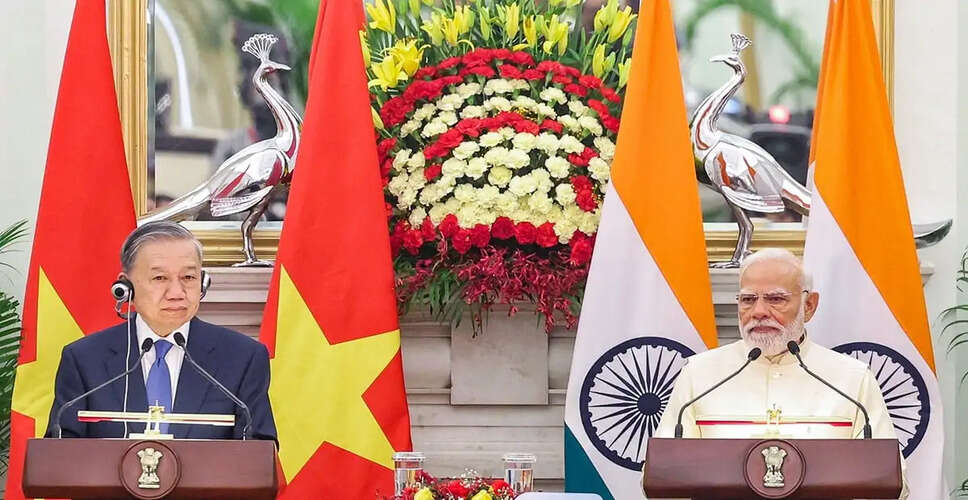

Historic Partnership Announcement
India and Vietnam have taken a significant step in their bilateral relations by elevating them to the level of an 'Enhanced Comprehensive Strategic Partnership.' This historic decision was made following discussions between Prime Minister Narendra Modi and Vietnamese President Vo Van Thuong in New Delhi. The two nations agreed to deepen cooperation in various sectors, including defense, economic collaboration, digital payments, culture, technology, and strategic partnerships. This visit marked President Thuong's first official trip to India since taking office, adding a new strategic dimension to the relationship.
Shared Vision for the Indo-Pacific
During a joint press conference, Prime Minister Modi emphasized that Vietnam is a key pillar of India's Act East policy and the Vision for the Ocean. He noted that both countries share a common perspective on the Indo-Pacific region and will continue to work together for a rules-based order, peace, stability, and regional prosperity. This statement comes at a time when strategic competition in the South China Sea and the broader Indo-Pacific region is intensifying. It is believed that discussions also covered China's increasing military activities and maritime expansion.
Strengthening Defense Cooperation
India and Vietnam's defense collaboration has been steadily growing. Last year, both nations signed an agreement to develop a submarine search, rescue, and assistance mechanism. Additionally, they agreed to enhance cooperation in the defense industry. Under the new strategic partnership, collaboration in defense, maritime security, and military training will expand further. This cooperation is particularly significant as Vietnam faces pressure from China in the South China Sea, while India aims to maintain a balanced power structure in the Indian Ocean and Indo-Pacific.
Economic Goals and Trade Agreements
On the economic front, both countries have made several important decisions. Over the past decade, bilateral trade between India and Vietnam has doubled to reach $16 billion. They have now set a target to increase this to $25 billion by 2030. Agreements have been made to facilitate trade in pharmaceuticals, agricultural products, fisheries, and livestock. Indian grapes and pomegranates will now be exported to Vietnam, while durians and pomelos from Vietnam will be sent to India.
Advancing Digital and Financial Connectivity
A significant step has also been taken to enhance digital and financial connectivity. An agreement was reached to link India's UPI system with Vietnam's rapid payment system, facilitated by a pact between the Reserve Bank of India and Vietnam's central bank. This will greatly ease cross-border payments for traders, tourists, and investors from both countries. This initiative not only expands India's digital payment capabilities internationally but also strengthens its technological presence in Southeast Asia.
Comprehensive Agreements Signed
A total of 13 significant agreements were signed between the two nations, covering areas such as rare minerals, new technologies, digital technology, tourism, pharmaceutical regulation, education, cultural exchange, and urban management. The agreement on rare minerals is particularly crucial from a strategic standpoint, as these resources are vital for semiconductors, defense equipment, batteries, and high-tech industries. Given China's long-standing influence over these resources, this collaboration is seen as a major step towards securing and diversifying supply chains.
Cultural and Civilizational Ties
Efforts to invigorate cultural and civilizational ties were also emphasized. Prime Minister Modi noted that over 1.5 million people have visited Indian Buddhist relics in Vietnam. India is collaborating with Vietnam to preserve ancient Cham civilization sites, including My Son and Nhan Tower temples. A decision has also been made to digitize manuscripts related to the Cham civilization to safeguard this shared heritage for future generations.
Broader Implications of the Partnership
Experts suggest that this new strategic partnership between India and Vietnam extends beyond bilateral relations, holding significant regional and global importance. Amid rising geopolitical competition in the Indo-Pacific, supply chain security, digital economy, and maritime security, this partnership will provide both countries with new strategic strength. It will enhance India's role and influence in the ASEAN region and help balance China's growing influence. India and Vietnam have clearly indicated their commitment to advancing a strong, stable, and multifaceted partnership based on shared interests and visions in the coming years.