
India and US Strengthen Trade Relations with New Agreement Talks
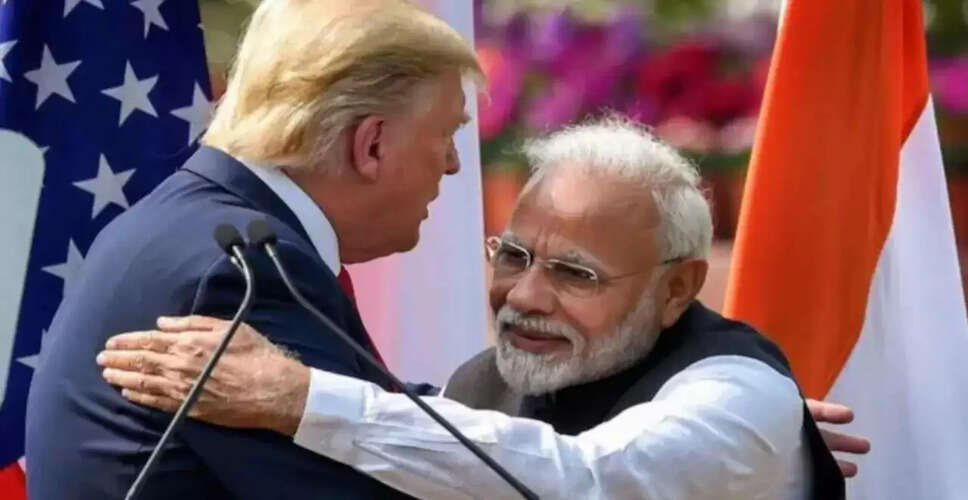

Strengthening Bilateral Trade Ties
India and the United States have reiterated their dedication to finalizing a trade agreement that enhances their economic relationship, as stated in an official announcement on Thursday. The chief negotiators from both nations wrapped up four days of discussions in New Delhi from June 1 to June 4.
The commerce ministry highlighted that the talks were characterized by a collaborative and practical approach, with both parties committed to reaching a mutually advantageous agreement that bolsters trade and economic connections.
During the discussions, the teams engaged in constructive dialogue covering various topics, including trade in goods, non-tariff measures, customs facilitation, and economic security alignment. The US delegation was led by chief negotiator Brendan Lynch, while India's team was headed by Darpan Jain, an additional secretary in the Department of Commerce.
Following the establishment of the framework for the initial phase of the bilateral trade agreement (BTA), both countries are now focused on finalizing the interim trade pact and advancing negotiations for a more comprehensive BTA.
Commerce and Industry Minister Piyush Goyal mentioned that most elements of the first phase of the BTA have been finalized, with discussions now centering on minor details.
On February 7, a joint statement was released by India and the US, outlining the framework for the first phase of the BTA. This framework included a reduction of tariffs on Indian goods from 50% to 18% and the removal of a 25% tariff on Indian products related to Russian oil purchases.
However, on February 20, the US Supreme Court ruled against President Trump's extensive reciprocal tariffs imposed under the 1977 International Emergency Economic Powers Act (IEEPA). Subsequently, the President announced a 10% tariff on all countries for a period of 150 days starting February 24.
In response to these developments, the two sides convened in Washington in April, with the Indian delegation visiting from April 20-23, 2026. The US team returned to continue discussions in New Delhi.
As the tariff situation in the US has evolved, both nations may need to reassess the agreement's framework. Under the agreed terms, India proposed to eliminate or lower tariffs on a variety of US industrial goods and numerous food and agricultural products.
India has also expressed its intention to invest USD 500 billion in US energy products, aircraft, precious metals, technology, and coking coal over the next five years. At the time of the framework agreement, India held a competitive edge over countries like Sri Lanka, Pakistan, and Bangladesh.
With all US trading partners now facing a uniform 10% tariff, the agreement may require adjustments. Experts emphasize the importance of India securing a favorable position over its competitors in the trade pact.
Following the Supreme Court's ruling against Trump's tariffs, the US administration may utilize the Section 301 investigation mechanism to impose new tariffs. In March, the US Trade Representative (USTR) initiated two unilateral Section 301 investigations against several countries, including India, regarding excess capacity and the failure to eliminate forced labor in global supply chains.
On June 2, the USTR proposed a 12.5% tariff on 54 countries, including India, for allegedly not prohibiting the import of goods produced with forced labor. This proposal is still under consideration, and interested parties can submit requests to participate in hearings by June 22, with hearings scheduled for July 7.
In the fiscal year 2025-26, the US was India's second-largest trading partner, with India's exports to the US increasing slightly by 0.92% to USD 87.3 billion, while imports rose by 15.95% to USD 52.9 billion. Consequently, the trade surplus decreased to USD 34.4 billion in 2025-26 from USD 40.89 billion in 2024-25.