
India and Israel Stand Firm Against UN Resolution on Arms Control
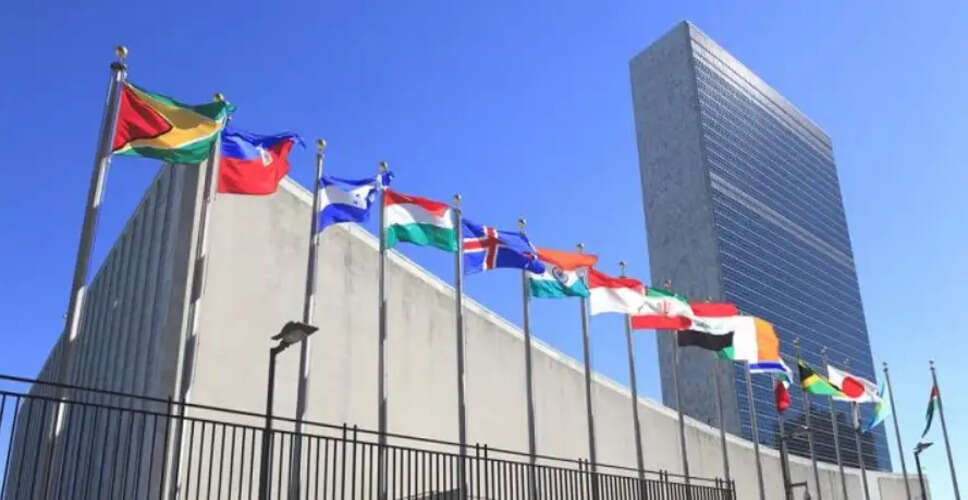

UN General Assembly Votes on Arms Control
United Nations: In a recent vote at the UN, India and Israel opposed a draft resolution concerning conventional arms control, which was proposed by Pakistan and Belarus. India articulated that security concerns extend beyond regional confines.
The resolution, titled 'General and complete disarmament: Conventional arms control at the regional and subregional levels', received overwhelming support in the UN General Assembly's First Committee, passing with 180 votes in favor, while only India and Israel voted against it.
Anmol Sher Bedi, First Secretary at India's Permanent Mission to the UN, explained that India views conventional arms control as a global issue rather than one limited to regional contexts.
"We are not entirely convinced that this should be primarily addressed in regional and sub-regional frameworks," Bedi stated during India's Explanation of Vote.
He emphasized that India's stance aligns with its historical position on such matters.
India also raised concerns regarding the resolution's call for the UN Disarmament Commission to develop principles for regional agreements on conventional arms control.
"We approach this request with a degree of skepticism," Bedi remarked.
He highlighted that the Commission had previously established guidelines on regional disarmament in 1993, conventional arms control in 1999, and confidence-building measures in 2017.
"This makes three consensus outcomes on this topic, yet we are being asked to start anew," he noted.
Bedi questioned the necessity of revisiting a well-explored subject unless the intention is to keep the UN disarmament process occupied.
He also criticized the resolution's perspective on maintaining a balance of defense capabilities within regions, stating, "This implies that security concerns cease at regional borders, which is not the case."
Bedi pointed out that security issues often transcend narrowly defined regions, making the idea of maintaining balance unrealistic.
The resolution asserts that conventional arms control should primarily focus on regional contexts, as most post-Cold War threats to peace arise among neighboring states.
It aims to foster agreements that enhance regional peace and security at minimal levels of armaments and military forces.
Additionally, India opposed a specific paragraph that mentioned conventional arms control proposals relevant to South Asia, which acknowledged various regional initiatives.
The resolution also emphasizes that states with significant military capabilities bear a special responsibility in fostering regional security agreements.