
India and EU Trade Agreement Could Be Finalized Soon, Says German Chancellor
Recent discussions between India and the European Union have gained traction, with German Chancellor Friedrich Merz suggesting that a long-awaited free trade agreement could be finalized by the end of January. This agreement is seen as a significant step towards reducing reliance on China and Russia, with both parties actively engaging in negotiations. As bilateral trade continues to grow, the implications of this agreement could reshape global trade dynamics. Stay tuned for more updates on this developing story.
| Jan 12, 2026, 22:06 IST
Prospects for India-EU Trade Agreement
In light of the evolving global trade landscape, significant developments have emerged regarding the relationship between India and the European Union. German Chancellor Friedrich Merz indicated on Monday that the long-discussed free trade agreement between the EU and India could be finalized by the end of January, potentially impacting global trade dynamics.
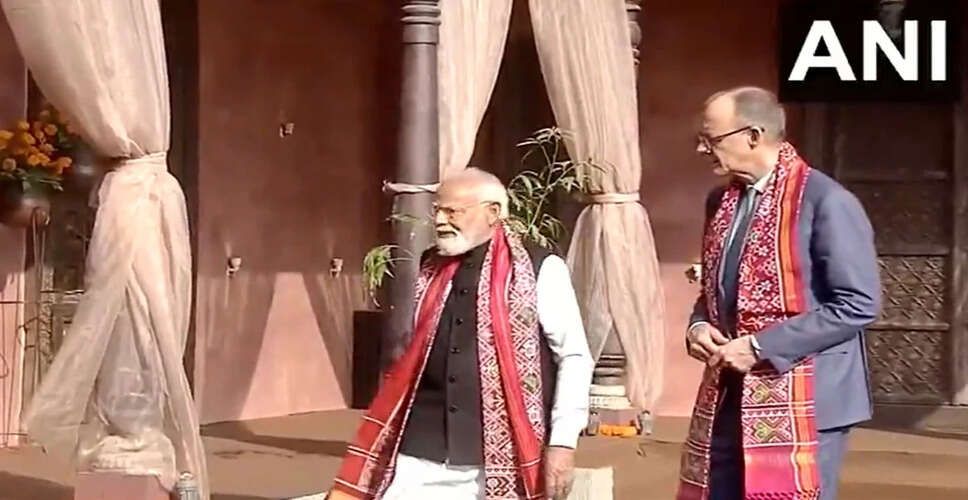
During a press conference following his meeting with Prime Minister Modi in Ahmedabad, Merz stated that if negotiations conclude on schedule, top EU leaders might visit India to sign the agreement. He emphasized that this would represent a major and decisive step towards ensuring the deal.
While there has been no formal response from EU officials regarding this announcement, it is evident that both parties are actively engaging in discussions. This long-pending trade agreement is viewed as an opportunity for India and the EU to reduce their reliance on China and Russia. By 2024, bilateral trade between India and the EU had reached approximately 120 billion euros, making the EU India's largest trading partner.
Reports suggest that talks have accelerated in recent months, particularly after the U.S. increased tariffs on Indian products and pressured New Delhi to decrease its purchase of Russian oil. Notably, the India-U.S. trade agreement failed last year due to a breakdown in communication during Donald Trump's presidency.
In this context, the EU-India agreement is seen as part of a strategy to establish new trade networks in Europe, further strengthened by a recent agreement with the Mercosur group in South America. Meanwhile, Indian Commerce Minister Piyush Goyal mentioned at a separate event in Gujarat that the agreement is nearing its final stages, with tangible results expected soon.
Sources indicate that the EU seeks significant tariff reductions on cars, medical devices, wine, and spirits, while India is requesting duty-free access for labor-intensive products and expedited recognition for its auto and electronics sectors. However, differences remain on issues such as steel, carbon levies, and market access, which require further negotiation.
During Merz's visit, both nations also agreed on collaborations related to minerals, health, and artificial intelligence. Germany, viewing India as an emerging market, is urging New Delhi to lessen its dependence on Russian energy and defense equipment. Merz acknowledged the complexities of India's position regarding the Ukraine conflict, stating that it is inappropriate to point fingers.
Notably, Merz chose India for his first Asian visit as Chancellor, signaling a shift in European leadership's focus from China to India. He described the rising protectionism globally as unfortunate, asserting that it harms both Germany and India, although he refrained from naming specific countries.