
India and China Strengthen Ties: A Look at Vikram Misri's Beijing Visit

Strengthening Bilateral Relations
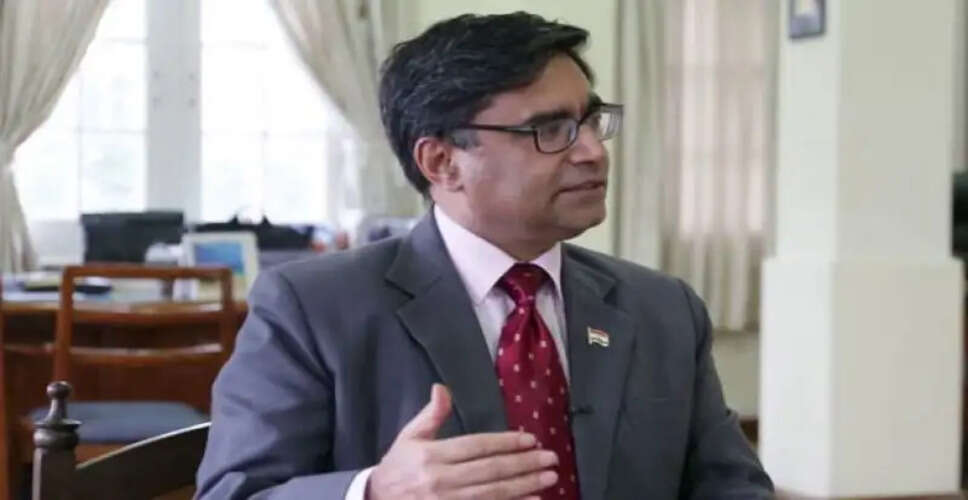
New Delhi: During his recent trip to Beijing, Foreign Secretary Vikram Misri engaged in discussions aimed at enhancing the relationship between India and China, reflecting the collaborative vision shared by Prime Minister Narendra Modi and President Xi Jinping, who view each other as development partners.
According to Randhir Jaiswal, spokesperson for the External Affairs Ministry, both nations recognized the necessity of upholding peace and stability along their shared border.
Misri's two-day visit commenced on Monday, during which he met with several Chinese officials, including Vice Foreign Minister Hua Chunying and Sun Haiyan, Vice Minister of the International Department of the Central Committee of the Communist Party of China.
In recent months, New Delhi and Beijing have introduced various initiatives to restore their relationship, which had been significantly impacted by the prolonged standoff in eastern Ladakh lasting over four years.
The discussions encompassed the full spectrum of bilateral relations, focusing on advancing the leaders' vision of India and China as partners, exploring mutually beneficial opportunities in trade, economic collaboration, cultural exchanges, and people-to-people interactions, as stated by Jaiswal during a media briefing.
Regarding the resumption of border trade through Nathu La, Jaiswal noted that this was an agreement reached by both parties last year. In August 2025, they consented to reopen trade at three designated points: Lipulekh Pass, Shipki La Pass, and Nathu La Pass.
Following a series of diplomatic and military dialogues, both nations have successfully withdrawn troops from several contentious areas along the Line of Actual Control (LAC) in eastern Ladakh.
In October 2024, an agreement was solidified for disengagement at Depsang and Demchok, the last two points of friction in the region.
Shortly after this agreement, Modi and Xi convened in Kazan, where they made several decisions aimed at enhancing bilateral relations.
Last August, Modi visited Tianjin for the annual SCO summit, where he and Xi engaged in extensive discussions on the sidelines, reaffirming India's commitment to fostering ties with China based on mutual trust, respect, and sensitivity.