
India and China Engage in Constructive Talks on LAC Situation
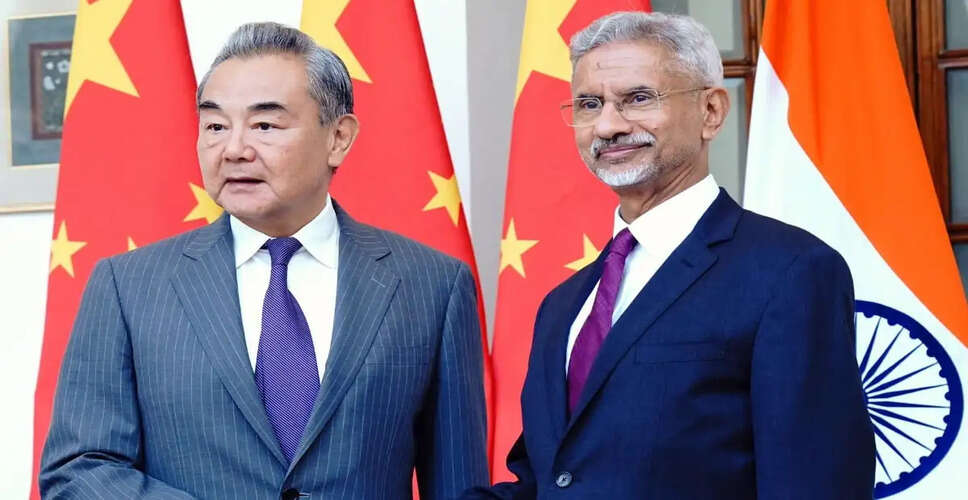

India and China Discuss LAC Stability
India and China have recently held a highly 'constructive' and 'forward-looking' dialogue regarding the situation along the Line of Actual Control (LAC) in Eastern Ladakh. Both nations acknowledged that maintaining peace and stability in border areas is essential for gradually normalizing bilateral relations. This significant discussion took place during the meeting of the India-China Consultative and Coordination Mechanism (WMCC) held in Beijing on Wednesday.
During the WMCC meeting, various aspects related to the border situation were deliberated upon. Following the talks, the Ministry of External Affairs stated, 'The discussions were constructive and future-oriented.' Over the past year, India and China have taken several steps to strengthen their ties, which had been severely strained due to the violent clashes in the Galwan Valley in 2020 and the subsequent military standoff lasting over four years.
The Ministry further noted, 'Both sides reviewed the situation in the India-China border areas and expressed satisfaction with the progress made in maintaining peace and stability, which has facilitated gradual advancements in bilateral relations.' They also agreed to work together for the 'solid preparation' of the next meeting of special representatives, which is set to take place in China.
In August of the previous year, National Security Advisor Ajit Doval and Chinese Foreign Minister Wang Yi held talks in New Delhi, resulting in several outcomes aimed at preserving peace along the border.
The Ministry commented on the WMCC meeting, stating, 'Both sides discussed issues related to border demarcation, management, mechanism establishment, and cross-border cooperation.' The Indian side emphasized the need for an early meeting of experts regarding cross-border rivers.
The statement from the Ministry mentioned, 'Both parties agreed to maintain regular dialogue and communication at diplomatic and military levels, including mechanisms agreed upon during the outcomes of the 24th special representative talks.'
The Indian delegation was led by Sujit Ghosh, Joint Secretary (East Asia) in the Ministry of External Affairs, while the Chinese delegation was headed by Hou Yanqi, Director-General of the Department of Boundary and Ocean Affairs of the Chinese Foreign Ministry. Ghosh also met with Liu Jinsong, Director of the Asian Affairs Department of the Chinese Foreign Ministry, and had a courtesy meeting with Chinese Assistant Foreign Minister Hong Lei.
This WMCC meeting occurred at a time when India and China are striving to normalize their tense relations. Following several rounds of diplomatic and military discussions, both countries have withdrawn troops from several tense areas along the LAC in Eastern Ladakh.
In October 2024, both sides finalized an agreement regarding the withdrawal of troops from the last two disputed areas, Depsang and Demchok. Shortly after this agreement, Prime Minister Narendra Modi and Chinese President Xi Jinping held talks in Kazan, making several decisions to improve relations.
Last August, Prime Minister Modi visited Tianjin, China, to attend the annual summit of the Shanghai Cooperation Organization (SCO). During the summit, Modi and Xi Jinping engaged in extensive discussions, where Modi expressed India's commitment to advancing relations with China based on mutual trust, respect, and sensitivity.