
India Advocates for Unhindered Maritime Navigation at UNSC Meeting

India's Stand on Maritime Security
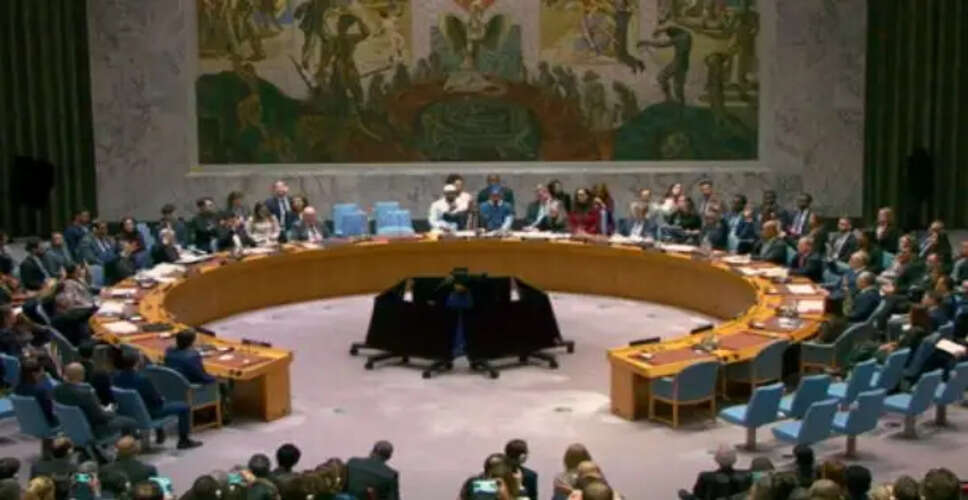
United Nations: During a recent meeting of the United Nations Security Council (UNSC), India emphasized that navigational rights should not be compromised by coercion, threats, or arbitrary interference. The country highlighted that maritime insecurity poses risks that extend beyond immediate threats.
India's Permanent Representative to the UN, Ambassador Harish Parvathaneni, pointed out that disruptions to key global maritime routes underscore the importance of securing these pathways for international peace and prosperity.
He noted that such disruptions have far-reaching implications, particularly concerning energy and food security across various regions.
Speaking at the UNSC Arria-Formula meeting titled 'Safe Seas, Shared Security: Protecting Freedom of Navigation in an Evolving Security Environment,' Parvathaneni reiterated the need for navigational rights to be free from coercive actions.
He also stressed the necessity for coordinated evacuation plans for seafarers in conflict zones, ensuring clear responsibilities among nations and international organizations.
In light of the ongoing US-Israel conflict with Iran, which has affected the critical Strait of Hormuz, India pointed out that maritime insecurity can lead to broader consequences.
Disruptions at vital chokepoints can escalate pressure on alternative routes, increase freight and insurance costs, and disrupt energy and food supplies, particularly impacting developing nations.
The Indian envoy urged the international community to move beyond reactive measures to individual incidents and instead develop practical frameworks that ensure the uninterrupted flow of essential goods during crises.
The goal should be to establish a resilient maritime system capable of absorbing shocks before they escalate into larger economic and humanitarian crises.
India reaffirmed its commitment to a free, open, secure, and rules-based maritime environment.
The rights and freedoms of navigation and overflight must align with international law, including the United Nations Convention on the Law of the Sea, and should be fully honored. Commercial vessels should not be caught in geopolitical conflicts.
With seafarers facing direct threats in the current conflict, and India mourning the loss of several maritime crew members, Parvathaneni emphasized the need for the international community to prioritize the safety of seafarers.
He called for effective contingency planning and international collaboration to ensure their safety, timely evacuation, medical support, crew changes, and repatriation.
Parvathaneni urged nations with vested interests in maritime safety and security to unite in addressing these challenges.
He also acknowledged the rising significance of tackling emerging threats, such as attacks involving unmanned systems, cyber risks, and disruptions to navigation and communication.
International cooperation, capacity-building, and responsible technology use will be essential in overcoming these challenges.