
India Advocates for Global Counter-Terrorism Strategy Amid Rising Threats
India's Commitment to Counter-Terrorism
United Nations: Following a recent terrorist incident in Pahalgam, India has reaffirmed its commitment to advancing the United Nations' counter-terrorism framework to combat this global menace.
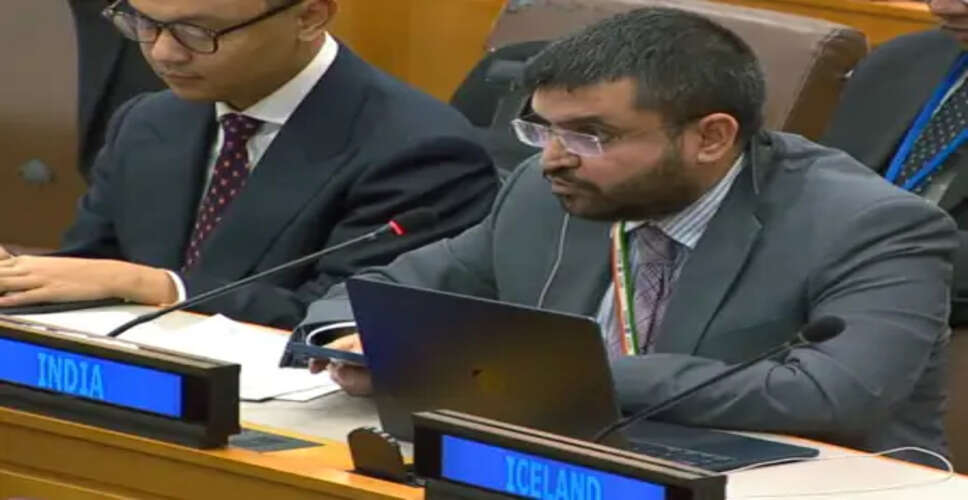
Raghoo Puri, a first secretary at India's UN Mission, emphasized the significance of the Global Counter Terrorism Strategy (GCTS) during the Annual Ambassadorial Level Briefing by the Office of Counter-Terrorism, stating, "Terrorism poses an existential threat to global peace and security, transcending borders, nationalities, and races. It is a challenge that requires a united response from the international community."
The GCTS, which was unanimously adopted by the General Assembly in 2006, serves as a collaborative approach to countering terrorism and has been reaffirmed through multiple Assembly resolutions.
As it approaches its 20th anniversary, the strategy is set for review in July.
Puri assured that India will actively participate in the 9th review of the GCTS, pledging full cooperation during this crucial UN process.
Drawing from its own experiences as a nation affected by cross-border terrorism for over three decades, India is particularly aware of the socio-economic and human toll of such violence.
He recounted a recent attack by The Resistance Front, linked to the Pakistan-based Lashkar-e-Taiba, which tragically resulted in the deaths of 26 tourists in Pahalgam, Jammu and Kashmir.
Puri stressed the need for collective action against groups like ISIS and Al Qaeda and their affiliates.
During India's previous term on the Security Council, particularly as Chair of the Counter-Terrorism Committee in 2022, efforts were made to integrate these principles into the UN's counter-terrorism framework.
He highlighted the Delhi Declaration, which was unanimously adopted by the Council’s Counter-Terrorism Committee, as a proactive measure to address the terrorist exploitation of emerging technologies such as drones and social media.
Alexandre Zouev, the acting under-secretary-general for counter-terrorism, cautioned that terrorists are continuously evolving their tactics in response to counter-terrorism measures, creating a more complex and expansive threat landscape.
He noted that the global community faces significant risks as terrorists leverage advancements in technology, including drones, artificial intelligence, and financial technologies, complicating monitoring and response efforts.