
India Achieves Milestone with Successful Deep-Sea Dive in Atlantic Ocean
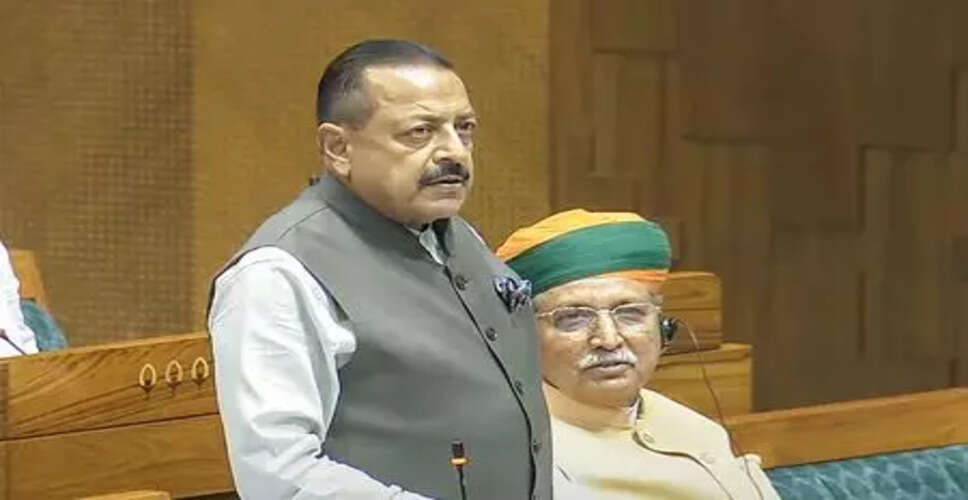
Significant Achievement in Ocean Exploration
New Delhi, Aug 14: The Ministry of Earth Sciences announced on Thursday that Indian aquanauts successfully completed a dive reaching 5,000 meters aboard the French submersible Nautile in the Atlantic Ocean.
This accomplishment represents a significant advancement for India's MATSYA 6000 initiative, which is the country's first domestically developed deep-sea human submersible, part of the Samudrayan Project, as stated by Dr. Jitendra Singh, the Union Minister of State (Independent Charge) for Earth Sciences.
The MATSYA 6000 is engineered to explore depths of up to 6,000 meters, focusing on deep-ocean exploration, resource evaluation, and biodiversity research.
This mission is a result of Indo-French collaboration under the Deep Ocean Mission, which aims to enhance scientific research and technological development in extreme marine environments.
“This successful dive showcases India's expanding capabilities in ocean science and technology, while also reinforcing our international collaborations in marine research,” the minister remarked.
The mission was carried out with assistance from the National Institute of Ocean Technology (NIOT) in Chennai and is anticipated to facilitate future deep-sea missions, including the first manned descent into the Indian Ocean at significant depths.
Last month, the minister highlighted that the central government has consistently raised the budget for science and research, with the highest allocation for FY2025-26 in the past five years.
In a written response in Rajya Sabha, Singh noted that “over Rs 65,307 crore has been allocated to six scientific agencies for research in FY 2025-26.”
In contrast, Rs 41,581.96 crore was designated for science and research in 2024-25, and Rs 39,843 crore in 2023-24.
For the fiscal year 2022-23, the government allocated Rs 37,828 crore, and in 2021-22, Rs 37,823 crore.
The six primary scientific agencies involved are the Department of Science and Technology (DST), the Department of Scientific and Industrial Research/Council of Scientific and Industrial Research (DSIR/CSIR), the Department of Biotechnology (DBT), the Department of Space (DOS), the Department of Atomic Energy (DAE), and the Ministry of Earth Sciences (MoES).