
India Achieves Milestone in Nuclear Energy with Fast Breeder Reactor
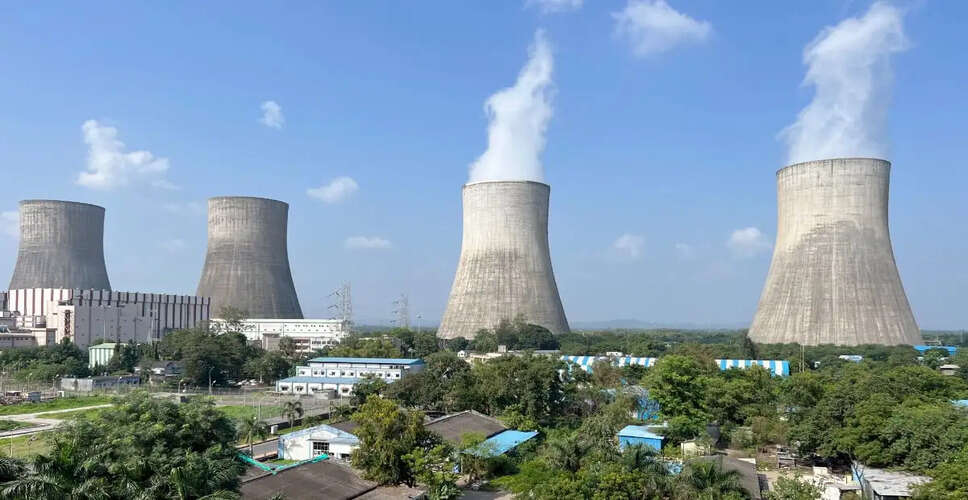

India's Remarkable Nuclear Energy Achievement
India has reached a significant milestone in the nuclear energy sector, achieving a feat that developed nations like the USA, France, and Japan have failed to accomplish despite investing billions. On April 6, the 500 MWe Prototype Fast Breeder Reactor (PFBR) located in Kalpakkam, Tamil Nadu, successfully attained 'criticality' for the first time. This indicates that the reactor has initiated a self-sustaining nuclear chain reaction in a controlled manner. With this success, India has showcased its scientific prowess on the global stage.
A Unique Reactor Achievement
This is not just any ordinary reactor that has achieved criticality. With this development, India has gained a capability that even countries like the USA, France, and Japan have struggled to maintain, ultimately conceding defeat. Currently, only Russia operates commercial fast breeder reactors, while China is still in the early stages of implementing this technology on a commercial scale, possessing a small experimental CEFR reactor and a CFR-600 prototype.
Significance of the Achievement
According to a statement from the Press Information Bureau (PIB), "Once fully operational, India will become the second country in the world, after Russia, to operate commercial fast breeder reactors." This achievement is particularly crucial given India's limited uranium resources, which are essential for nuclear reactors. However, this self-sustaining technology will enable India to utilize thorium, as the country possesses the largest thorium reserves globally, found along the sandy coasts of Odisha, Kerala, and Andhra Pradesh.
Kalpakkam Reactor's Dual Fuel Capability
The Kalpakkam reactor represents an excellent combination of low uranium usage and abundant thorium reserves. Initially, it operates on uranium but can transition to thorium-based fuel in later stages, reducing India's dependence on uranium imports.
Future Energy Security
The Kalpakkam reactor can produce more nuclear fuel than it consumes, potentially providing electricity for centuries through thorium utilization. This not only marks a scientific achievement but also a strategic victory for India.
Entering a New Phase
The PIB further stated, "India has officially entered the second phase of its three-stage nuclear energy program, a vision first conceived by Dr. Homi J. Bhabha, regarded as the father of India's nuclear program."
What Happened in Kalpakkam?
The indigenous Prototype Fast Breeder Reactor (PFBR) at Kalpakkam achieved its first criticality on April 6 at 8:25 PM. This means that a controlled and self-sustaining fission chain reaction has commenced in the reactor core. The reactor utilizes mixed oxide fuel (MOX) and employs liquid sodium as a coolant. It will undergo low-power testing before commencing full commercial operations later this year.
Prime Minister's Remarks
Prime Minister Narendra Modi described this as a "decisive step" in India's civil nuclear journey, highlighting that the fast breeder reactor (FBR) showcases the country's scientific and engineering capabilities and will facilitate the utilization of its vast thorium reserves.
International Recognition
The International Energy Agency (IEA) congratulated India, PM Modi, and Indian scientists and engineers on this significant technological achievement after years of development. The IEA noted on social media, "This reactor will use significantly less nuclear fuel compared to other reactors and pave the way for a closed fuel cycle."
Importance of FBR for India
A fast breeder reactor (FBR) differs from conventional nuclear reactors, which primarily use uranium fuel. An FBR generates more fissile fuel than it consumes, which is crucial for India, given its limited uranium reserves but abundant thorium resources, especially along the coasts of Kerala, Andhra Pradesh, Odisha, and Tamil Nadu.
Three-Stage Nuclear Program
The FBR is a key component of India's three-stage nuclear program, envisioned by Bhabha in the 1950s. In the first stage, India uses natural uranium in reactors to generate electricity, producing plutonium as a byproduct.
Transition to the Second Stage
In the second stage, reactors like the FBR utilize that plutonium as fuel, generating more fuel than they consume. This is vital as it enables India to transition to the third stage, where it can use its vast thorium reserves to produce uranium-233 for future reactors.
Challenges Faced by the US and France
The US was among the first to experiment with fast breeder reactors, attempting to build the Fermi 1 reactor near Detroit in the 1960s. However, a loose plate caused coolant flow issues, leading to a partial meltdown in 1966, and the project was never revived. Later, the US planned a larger Clinch River Breeder Reactor, but it was canceled in 1983 due to high costs, technical difficulties, and safety concerns related to sodium coolant.
France's Investment and Challenges
Similarly, France invested heavily in this technology, planning the 1,200 MW Superphénix reactor, intended to be the world's first large commercial breeder reactor. However, it became one of the biggest failures in nuclear history due to sodium leaks, fires, and corrosion issues, facing political opposition as well. Despite existing for over a decade, it operated for only a few months before being permanently shut down in 1998.
Japan's Experience
Japan's Monju reactor faced similar challenges, experiencing sodium leaks and fires in 1995. After being restarted years later, it encountered another incident, operating for barely 250 days over two decades before being permanently closed by the Japanese government in 2016.
Energy Security for India
India currently produces only 8 GW of nuclear power but aims to increase this to 100 GW by 2047 under its 'Developed India' roadmap. The FBR strengthens India's energy security goals by reducing dependence on imported uranium and fossil fuels, offering a cleaner 'baseload' power option. Once commercially operational, it will shield India from global fuel price fluctuations and disruptions caused by ongoing conflicts in the Middle East.
Conclusion
In summary, reports indicate that the Kalpakkam reactor will generate enough electricity for approximately 3 million homes while also producing additional fuel for future nuclear reactors. Experts view this as a significant step towards long-term nuclear self-sufficiency and strategic autonomy, making the achievement at Kalpakkam a source of pride for every Indian.