
Inauguration of Ganga Expressway: A Milestone for Uttar Pradesh's Infrastructure
Prime Minister Narendra Modi has inaugurated the Ganga Expressway, a 594-kilometer project aimed at enhancing Uttar Pradesh's infrastructure. This expressway, which connects key districts and is expected to reduce travel time significantly, is a public-private partnership involving major construction firms. With advanced safety features and plans for future expansions, the Ganga Expressway is set to boost economic activities and create job opportunities, marking a significant milestone in the state's development journey.
| Apr 29, 2026, 17:13 IST
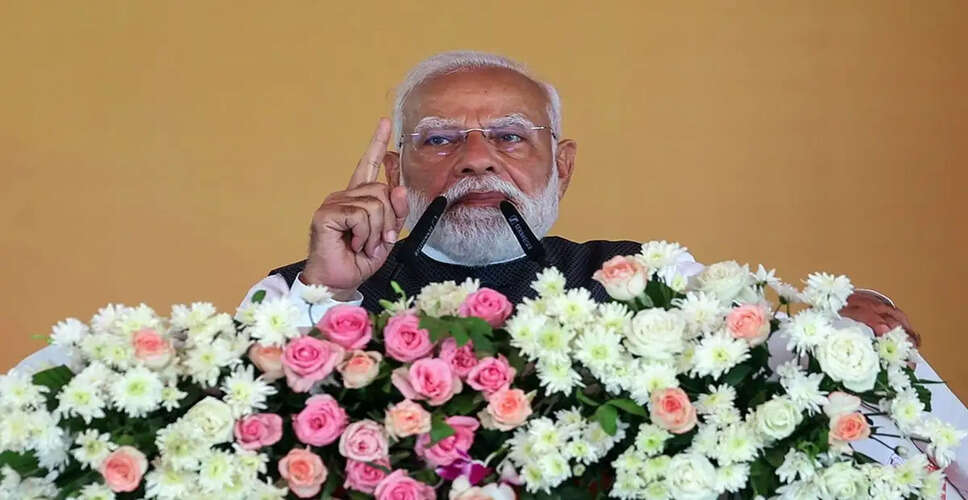

Ganga Expressway Unveiled by Prime Minister Modi
Today, Prime Minister Narendra Modi inaugurated the Ganga Expressway, a monumental 594-kilometer project in Mallawan, Hardoi district, which is set to transform the infrastructure landscape of Uttar Pradesh. This expressway, constructed at an estimated cost of ₹36,230 crores, is not only a significant achievement for the state but also for the entire nation. The six-lane expressway is designed to be expanded to eight lanes in the future, reducing travel time from Meerut to Prayagraj from the current 10-12 hours to approximately 6-7 hours.
State Leaders Praise the Project
During the inauguration ceremony, Uttar Pradesh Chief Minister Yogi Adityanath welcomed the Prime Minister and described the expressway as a lifeline for the state's development journey. He emphasized that this infrastructure will directly connect villages, farmers, youth, and entrepreneurs, thereby accelerating economic activities. Central Minister Pankaj Chaudhary also highlighted it as one of the largest and most modern expressways in the country, symbolizing progress.
Connecting Key Districts
The Ganga Expressway stretches from Meerut to Prayagraj, linking 12 major districts including Meerut, Hapur, Bulandshahr, Amroha, Sambhal, Badaun, Shahjahanpur, Hardoi, Unnao, Raebareli, Pratapgarh, and Prayagraj. Over 500 villages will be directly impacted by this route, enhancing connectivity to several important cities, including the state capital, Lucknow. District Magistrate Vijay Kumar Singh noted the widespread enthusiasm among the public regarding this project, which is expected to revolutionize regional connectivity.
Public-Private Partnership Model
A notable aspect of the expressway is its development under a public-private partnership model. Approximately 80% of the construction was undertaken by the Adani Group, while the remaining portion was completed by IRB Infrastructure. The project involved over 12,000 workers, creating numerous job opportunities.
Advanced Features for Safety and Efficiency
The Ganga Expressway is equipped with state-of-the-art technology, including an intelligent traffic management system, CCTV surveillance, emergency call boxes, and ambulance services along the entire route. Additionally, an emergency airstrip approximately 3.5 kilometers long has been constructed near Shahjahanpur, allowing Air Force planes to land if necessary, which is crucial for national security.
Infrastructure Enhancements
The project also includes the construction of significant bridges, such as a 960-meter bridge over the Ganga River and a 720-meter bridge over the Ramganga River, designed with flood conditions in mind. For traveler convenience, nine public service centers will be established along the route, offering fuel, rest areas, and food services. The expressway will feature 21 interchanges connecting it to national and state highways, and it will link with other major routes like the Agra-Lucknow, Purvanchal, Bundelkhand, and Gorakhpur link expressways, creating a comprehensive transportation network. Plans are also in place to extend it by approximately 146 kilometers to Haridwar, promoting religious and tourism activities.
Economic Impact and Future Prospects
This project holds significant economic importance. Experts believe that road transport is the most cost-effective means for freight transport over distances of around 600 kilometers, and the 594-kilometer Ganga Expressway aligns perfectly with this standard. It is estimated to save ₹25,000 to ₹30,000 crores annually in logistics costs. Furthermore, it is projected to create around three lakh job opportunities over the next decade and contribute over ₹1 lakh crores to the state's GDP.
Toll System and Future Developments
The expressway will operate under a toll system, with two main toll plazas located in Meerut and Prayagraj. While the final toll rates are yet to be determined, they are expected to be comparable to those of other expressways. Uttar Pradesh currently holds over 60% of the country's controlled-access expressway network, with approximately 1,200 kilometers of the total 2,900 kilometers located within the state. The addition of the Ganga Expressway further strengthens this statistic. Overall, the Ganga Expressway is not merely a road project; it is emerging as a cornerstone for Uttar Pradesh's economic, social, and strategic development, promising to reduce distances while opening new avenues for growth, investment, and employment.