
Improvement in Delhi's Air Quality Amid Persistent Smog
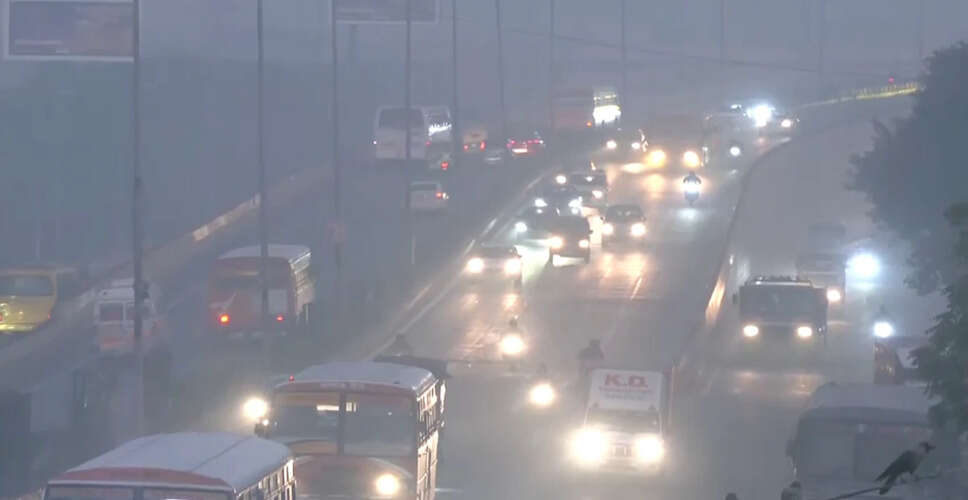
Air Quality Update for Delhi
On the morning of December 17, 2025, the air quality in the national capital showed slight improvement, with the Air Quality Index (AQI) recorded at 328, down from 377 the previous day. However, smog continued to blanket the city. By 9 AM, the air quality was still categorized as 'very poor'.
Monitoring Stations Report
According to the Central Pollution Control Board's Samir app, out of 40 air quality monitoring stations, 30 fell into the 'very poor' category, with Bawana reporting the worst air quality at 376.
Pollution Levels and Weather Conditions
As per the CPCB, the AQI across all monitoring stations in Delhi was below the severe range by 7 AM, although some areas still recorded poor levels. The reduction in pollution levels was aided by strong winds and a decrease in fog on Tuesday, resulting in a 24-hour AQI of 354. The CPCB classifies AQI levels as follows: 0-50 is 'good', 51-100 is 'satisfactory', 101-200 is 'moderate', 201-300 is 'poor', 301-400 is 'very poor', and 401-500 is 'severe'.
Impact of Smog on Daily Life
Dense smog had paralyzed the capital for the past three days, causing significant visibility issues on the roads, disrupting flight and transport services, and leading to numerous road accidents. Fortunately, there was considerable improvement by Wednesday morning. However, the India Meteorological Department (IMD) has forecasted light fog during the day in Delhi and surrounding areas, with maximum and minimum temperatures expected to be 24 degrees Celsius and 10 degrees Celsius, respectively.
Current Weather Conditions
So far this season, Delhi has not experienced a cold wave, and the city's famous winter chill seems to be absent. The fog enveloping the city and the National Capital Region (NCR) is primarily due to hazardous air quality. Due to deteriorating air quality levels, the capital is currently under GRAP IV, which imposes the strictest pollution restrictions. Additionally, the Delhi government announced further stringent measures on Tuesday, including prohibiting fuel supply to vehicles without a Pollution Under Control (PUC) certificate and restricting the entry of non-Delhi vehicles that do not meet BS-VI standards.
Government Response
Delhi's Environment Minister, Manjinder Singh Sirsa, acknowledged the challenges, emphasizing that no government can eliminate pollution from the capital within nine to ten months.
Temperature Forecast
Meanwhile, the IMD predicts no significant change in minimum temperatures across northwestern India over the next three days, followed by a gradual increase of 2 to 4 degrees Celsius over the subsequent four days.