
Implications of the Iran Conflict on Global Nuclear Dynamics
US Military Strategy in Iran: A Double-Edged Sword
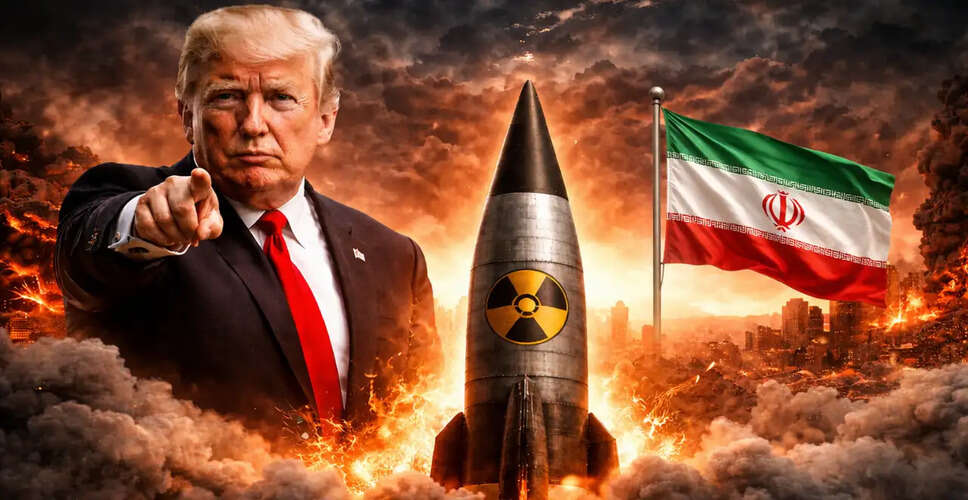
President Donald Trump has consistently emphasized that the primary aim of the US military operations in Iran is to prevent Tehran from acquiring nuclear weapons. However, as the conflict enters its fifth week, analysts express concerns that the very approach intended to curb nuclear proliferation might inadvertently accelerate it, not only in Iran but globally.
Trump's unwavering objective of dismantling Iran's nuclear capabilities has persisted, even as the broader justification for military action has evolved. The US aims to hinder Iran's nuclear program by targeting essential facilities and personnel. Yet, experts warn that these measures may merely postpone Iran's nuclear advancements while simultaneously strengthening its determination.
Recent evaluations have complicated the narrative surrounding Iran's nuclear ambitions. A report from the International Atomic Energy Agency indicated no credible evidence of an undeclared nuclear program. Additionally, US intelligence agencies have determined that Iran is not actively constructing a nuclear weapon, although it has engaged in activities that could enable it to produce one if it decides to do so.
Despite these assessments, the ongoing military pressure on Iran, which has escalated into a broader conflict in the Middle East, could significantly alter Iran's strategic calculations. Experts suggest that while attacks on nuclear sites and personnel may temporarily hinder progress, they could ultimately drive Tehran towards fully weaponizing its nuclear program, particularly if the regime perceives its survival to be at risk following the loss of key leadership figures.
Ramesh Thakur, a professor emeritus and director at the Centre for Nuclear Non-Proliferation and Disarmament, remarked that for Iran, nuclear weapons have become essential for regime survival. He questioned why Iran would not pursue them under such circumstances. Jennifer Kavanagh, a military analysis director at a Washington think tank, noted that with Iran's ballistic missile capabilities severely compromised by US and Israeli strikes, acquiring a nuclear bomb might be a quicker way for the regime to restore its deterrence, especially after facing attacks during negotiations.
Potential Global Nuclear Surge Triggered by Iran Conflict
How Iran War Could Trigger a Global Nuclear Surge
The repercussions of the conflict are already resonating well beyond the Middle East. North Korean leader Kim Jong Un has cited the war in Iran as justification for his country's nuclear strategy. He described Pyongyang's nuclear arsenal as 'irreversible' and claimed that the current situation validates North Korea's decision to retain its weapons, accusing the US of terrorism and aggression.
This mindset has global ramifications. Ramesh Thakur warned that if Iran withstands the ongoing military pressure, its nuclear ambitions could be emboldened, potentially leading Saudi Arabia, Turkey, and even Egypt to consider developing their own nuclear deterrents.
In East Asia, the situation is equally precarious. Concerns are mounting regarding China's stance on Taiwan, reigniting discussions about nuclear deterrence in the region. Further east, India and Pakistan, both nuclear-armed nations, are unlikely to reduce their strategic capabilities in light of recent tensions, including the Pahalgam terror attack and Operation Sindoor.
Even Ukraine, which relinquished its nuclear arsenal after the Soviet Union's collapse, serves as a cautionary example. The ongoing conflict with Russia has persisted for over four years, highlighting the fragility of security assurances from the US and its European allies, reinforcing the belief among some nations that nuclear weapons remain the ultimate safeguard.