
Impeachment Motion Looms for Justice Yashwant Varma Amid Cash Scandal
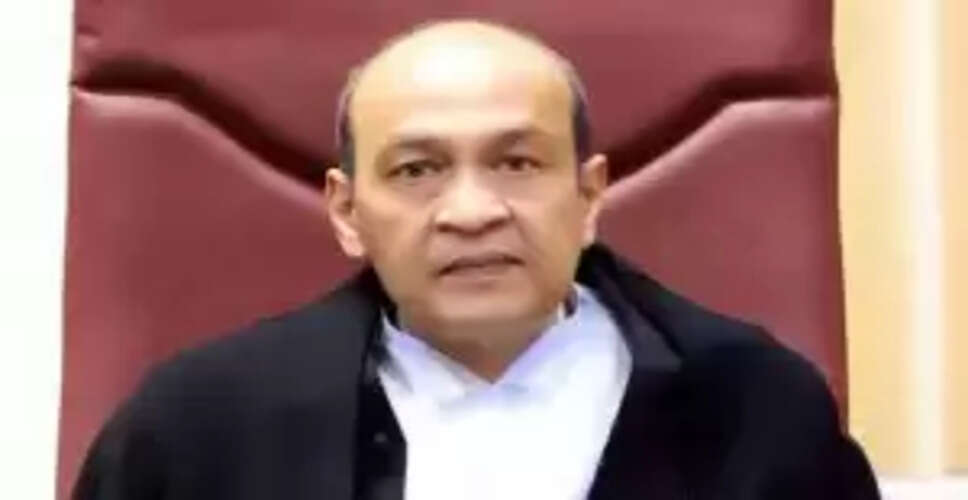
Government Moves to Impeach Justice Varma
New Delhi: The government is preparing to introduce an impeachment motion against Justice Yashwant Varma of the Allahabad High Court in Parliament, aiming to garner cross-party support due to serious corruption allegations following the discovery of a significant amount of cash at his official residence in Delhi.
On Tuesday, sources from the government indicated that Parliamentary Affairs Minister Kiren Rijiju would engage with leaders from various political parties to build consensus for the impeachment motion against Varma, who has been indicted by a Supreme Court-appointed three-member investigation committee.
A fire incident at Varma's residence in March, while he served as a judge at the Delhi High Court, led to the shocking find of several burnt bags filled with cash.
Despite Varma's claims of ignorance regarding the cash, the committee concluded its investigation after interviewing multiple witnesses and recording his testimony.
It is reported that the then Chief Justice of India, Sanjiv Khanna, suggested Varma resign, but he refused. The Supreme Court has since reassigned him to his original cadre at the Allahabad High Court, where he currently has no judicial responsibilities.
Chief Justice Khanna subsequently communicated with the President and Prime Minister, advocating for the impeachment motion, which is the formal process for removing judges from the higher judiciary.
The monsoon session of Parliament is anticipated to commence in the third week of July, during which the government plans to present the motion against Varma.
For the impeachment motion to proceed, it must be introduced in both the Lok Sabha and Rajya Sabha, requiring a two-thirds majority from the Members of Parliament.
At least 50 Rajya Sabha members and 100 Lok Sabha members must endorse the motion for it to be officially considered.
The Law Minister will initiate the motion, and the government will seek support from various party members, including opposition leaders, to demonstrate a unified parliamentary stance against alleged judicial corruption, especially after the disturbing reports of burnt cash at Varma's residence.
The motion will first be introduced in one house and then proceed to the other house once all procedural requirements are met. Historically, there have been only two instances of impeachment motions being addressed by Parliament to remove a sitting high court or Supreme Court judge.
The first case involved former Supreme Court judge V Ramaswami, who faced impeachment for alleged misuse of public funds, but the motion failed to secure enough support in 1993.
In 2011, Soumitra Sen from the Calcutta High Court resigned after the Rajya Sabha passed an impeachment motion against him, making the process moot.
During the last parliamentary session, opposition members were vocal in demanding action against Varma following the cash discovery, while the government awaited a definitive stance from the Supreme Court.
The Supreme Court had established a three-member committee, including Justice Sheel Nagu, Chief Justice of the High Court of Punjab and Haryana, Justice G S Sandhawalia, Chief Justice of the High Court of Himachal Pradesh, and Justice Anu Sivaraman, Judge of the High Court of Karnataka, to investigate the allegations against Varma.
The committee submitted its findings to the Chief Justice of India on May 4, but the details of the report have not yet been made public.