
Impact of US-Iran Conflict on Maritime Traffic in the Strait of Hormuz
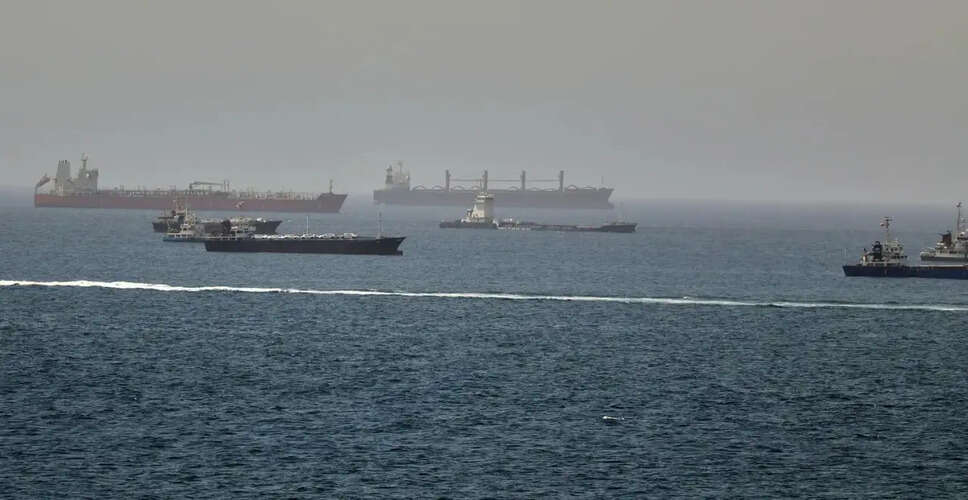

Maritime Traffic Disruption in the Strait of Hormuz
The ongoing tensions between the United States and Iran have significantly affected maritime operations in the Strait of Hormuz, a crucial passage for approximately 20% of the world's crude oil and liquefied natural gas trade. Much of this traffic is directed towards Asia, which has been grappling with an energy crisis since the conflict escalated on February 28. Although there was a brief resurgence in maritime activity following a recent interim agreement between the US and Iran, operations have once again slowed due to renewed hostilities.
UKMTO Reports Severe Threat Level in the Strait
The UK Maritime Trade Operations (UKMTO) has indicated that the security threat in the Strait of Hormuz is currently at its peak. In an advisory released on Friday, they stated, "The maritime security threat level in the Strait of Hormuz remains Severe." They also noted that despite recent unprovoked assaults on merchant vessels, the southern route of the Strait is still open for all traffic.
Decline in Traffic Through the Strait
Recent reports from Reuters, based on data from Kpler and LSEG, reveal that at least five ballast LNG tankers have recently traversed the strait. These include the GasLog Shanghai, operated by the Greek shipping firm GasLog, along with QatarEnergy-affiliated vessels Al Samriya, Al Dafna, Al Gattara, and Al Rayyan. The GasLog Shanghai and Al Rayyan were observed entering the strait overnight, having been spotted outside the waterway on July 9. The other three vessels were last seen off the western coast of India several weeks ago, with Al Samriya and Al Gattara last tracked around June 18-19 and Al Dafna on June 29.
On Thursday, the Very Large Crude Carrier (VLCC) Nissos Kea entered the strait, while the VLCC Lila Vadinar exited. Shipping companies and governments are closely monitoring the situation in the Strait of Hormuz following Iranian attacks on commercial vessels and subsequent US retaliatory actions. According to Xavier Tang, a senior market analyst at Vortexa, Iran has targeted vessels using the Omani route. Kpler's analysis indicates that LNG and oil tanker traffic fell to its lowest daily count since June 28, with only 10 ships passing through on Thursday compared to 14 the previous day and 22 on Monday.
Concerns regarding the safety of stranded seafarers in the Persian Gulf have arisen among Asian nations, including India, the Philippines, and Thailand, which have a significant number of citizens working on these ships. Arsenio Dominguez, the secretary-general of the United Nations' International Maritime Organization, emphasized the human aspect of this crisis, stating, "This is not simply a matter of shipping statistics. Behind the figures are seafarers, and in some cases their families, who continue to bear the human cost of this conflict."