
Impact of US Blockade on Shipping Traffic in the Strait of Hormuz

US Blockade on Iranian Ports: Initial Observations
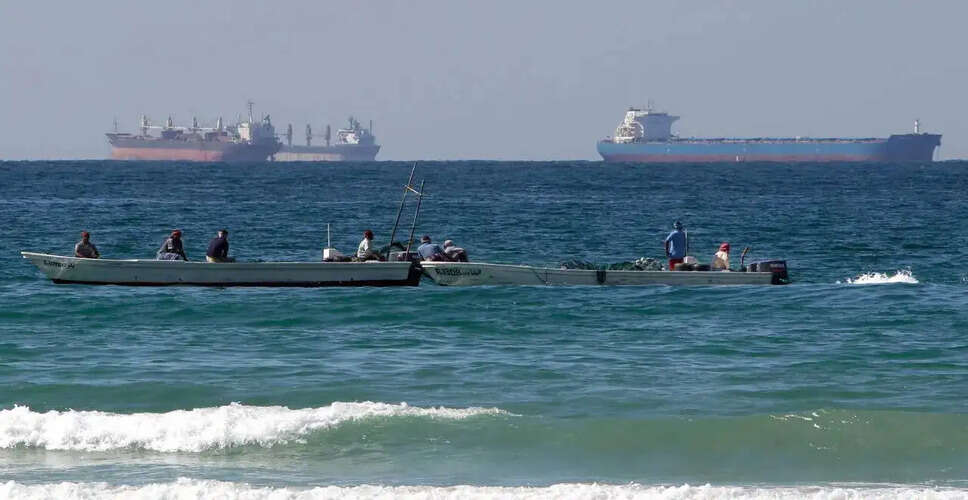
On the first full day of the US-imposed blockade on vessels heading to Iranian ports, there was minimal disruption to traffic in the Strait of Hormuz, according to a report by Reuters. Shipping data indicated that at least eight vessels, including three associated with Iran, successfully navigated the route. This blockade was announced by US President Donald Trump following unsuccessful peace negotiations between the US and Iran in Islamabad.
The blockade has introduced further uncertainty for shipping companies, oil businesses, and insurers. Prior to this, the volume of traffic in the strait had already seen a significant decline, dropping from over 130 ships daily to much lower figures since the onset of the US and Israel's military actions against Iran on February 28.
The US Central Command reported that during the initial 24 hours, no vessels managed to pass through the blockade, with six ships complying with US directives and returning to Iranian ports. The three Iran-linked ships that did traverse the strait were not bound for Iran, thus evading the blockade's restrictions. One of these, a Panama-flagged tanker named Peace Gulf, is en route to a port in the UAE, typically transporting Iranian petrochemical products to various Middle Eastern destinations before they are shipped to Asia.
Additionally, two tankers previously under US sanctions also made their way through the strait. One, named Murlikishan, is on its way to Iraq to collect fuel oil, having previously transported oil from both Russia and Iran. Another vessel, Rich Starry, was the first to pass through and exit the Gulf post-blockade, carrying approximately 250,000 barrels of methanol loaded in the UAE. This ship is owned by a Chinese firm that has faced US sanctions for its dealings with Iran.
China has expressed strong opposition to the blockade, labeling it as 'dangerous and irresponsible' and cautioning that such measures could escalate tensions. However, it has not confirmed whether its vessels continue to utilize the route.
Despite the blockade, various ships continued to transit the strait, including chemical tankers, gas carriers, dry bulk vessels, and one cargo ship that docked at Iran’s Bandar Abbas port. A US advisory indicated that humanitarian shipments would not be impeded.
Fabrizio Coticchia, a professor at the University of Genoa, commented that the US does not need to enforce a complete blockade on all ships or enter the Strait of Hormuz, suggesting that an intermittent blockade could be effective. He noted that while ships would not be attacked, they might be redirected, with US warships remaining outside the strait in the Gulf of Oman.
Currently, war-risk insurance premiums have not escalated further, although they remain significantly high, amounting to hundreds of thousands of dollars weekly, with evaluations occurring every two days. According to ship broker BRS, a return to stability in the Middle East now seems more elusive than it did a week ago, particularly with the US navy's blockade in effect. The report anticipates minimal or no commercial traffic in the strait for the foreseeable future.