
Impact of US Blockade on Oil Tankers in the Strait of Hormuz
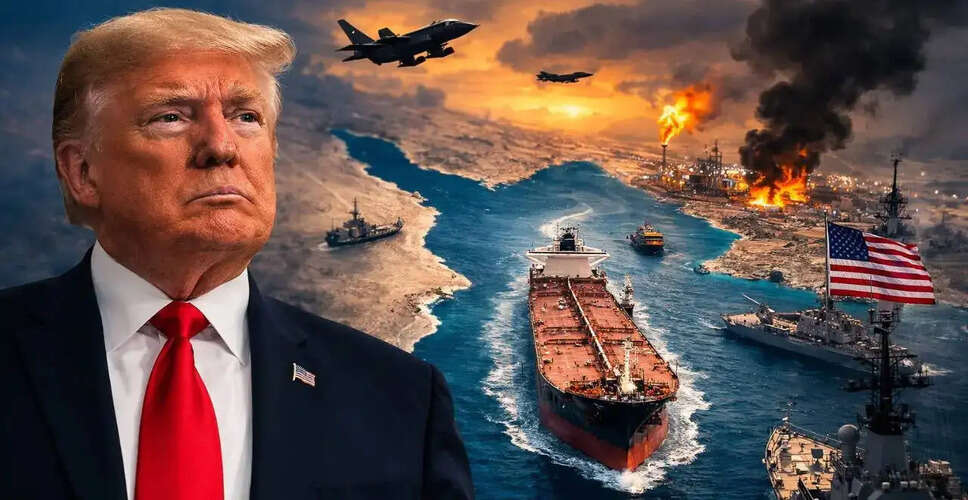

Oil Tankers Alter Course Amid US Blockade
Following the initiation of a blockade by the United States on Iranian ports, at least two oil tankers have diverted their routes away from the Strait of Hormuz, highlighting the blockade's immediate effects on maritime traffic in the area. Data from MarineTraffic indicates that the 188-meter tanker Rich Starry changed its course shortly after approaching the strait. This vessel had set sail from Sharjah Anchorage on April 13, carrying a load and indicating China as its destination with a draught of 11.3 meters. Similarly, another tanker, the 175-meter Ostria, also altered its path upon nearing the strait.
The US military confirmed on Monday that a blockade aimed at Iranian ports is currently in effect, although specific operational details were not disclosed. This action poses a risk to a ceasefire that was established less than a week prior between Washington and Tehran. President Donald Trump stated that any Iranian vessels approaching the blockade would be "immediately ELIMINATED". He also mentioned that Iran had expressed interest in resuming negotiations, although there was no immediate confirmation from Iranian officials.
Two tankers turn away from Strait of Hormuz after US blockade beginsAt least two tankers reversed course near the Strait of Hormuz shortly after the start of the US blockade, highlighting the immediate impact on vessel movements. According to #MarineTraffic data, the 188-metre… pic.twitter.com/dRNi7yEgJI
— MarineTraffic (@MarineTraffic) April 13, 2026
Trump's announcement of the blockade came after high-level discussions between US and Iranian negotiators concluded without a resolution. The US government stated that the blockade aims to prevent Iran from benefiting from oil exports and to pressure its leadership into complying with American demands, which include halting nuclear enrichment and relinquishing stockpiles of enriched uranium. According to a US military statement, the blockade will affect ships "entering or departing Iranian ports and coastal areas", while allowing other vessels to pass through the Strait of Hormuz to different destinations. This strait is a crucial shipping route in the Persian Gulf, typically responsible for about 20% of the global oil supply. However, vessel traffic has already diminished, as many ships are avoiding the area due to concerns over Iranian mines or potential interference.
Hours before the blockade took effect, two tankers associated with Iran—one carrying naphtha and the other transporting gas oil—successfully navigated through the strait. Ship-tracking firm Kpler reported that 14 vessels passed through the waterway on Sunday. Iran has issued warnings regarding potential repercussions, with military spokesperson Ebrahim Zolfaghari stating that if Iranian ports are threatened, "no port in the Persian Gulf and the Sea of Oman will be safe". The oil markets reacted sharply, with Brent crude prices rising to around $100 a barrel by early afternoon. Meanwhile, stock markets in the United States opened slightly lower following declines in Asia and Europe.
Some analysts have raised doubts about the blockade's effectiveness, pointing out that previous conflicts and the deaths of key Iranian figures have not led Tehran to yield to US demands. Additionally, several European allies have distanced themselves from this action. UK Prime Minister Keir Starmer stated that Britain would not participate, while Spain’s defense minister characterized the blockade as illogical.