
Impact of Middle East Energy Crisis on Global Oil Markets
Energy Supply Shock in the Middle East
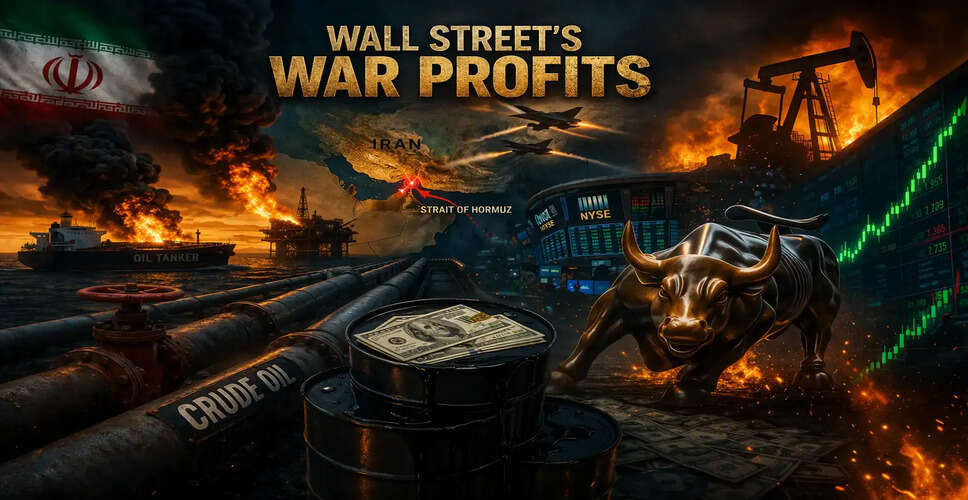
The Middle East is currently experiencing an unprecedented energy supply crisis, significantly affecting the global oil market. This situation has led to American oil companies achieving record market valuations, a phenomenon that is closely linked to the ongoing geopolitical tensions. Following the initiation of US-Israeli military actions against Iran on February 28, 2026, the US energy sector has witnessed a remarkable surge in wealth, which financial analysts are now attempting to understand in light of the human and economic repercussions in the Gulf region. According to a report by Fortune, ExxonMobil's market capitalization soared nearly 30% to reach $643 billion, while Chevron's valuation approached $400 billion, also reflecting a 30% increase. Occidental Petroleum, which had previously struggled, saw a 43% rise in its stock. Additionally, Venture Global, the fastest-growing US LNG exporter, experienced a staggering 92% increase in its stock since the beginning of the year. Major refiners like Valero, Marathon, and Phillips 66 have all surpassed market caps of $70 billion, marking record highs. A critical factor in this scenario is the Strait of Hormuz, a vital waterway that Iran has effectively closed.
The Strategic Importance of the Hormuz Chokepoint
The Hormuz Chokepoint Calculus
An S&P Global Ratings report highlighted that 89% of Saudi Arabia's energy exports transit through the Strait of Hormuz. In contrast, Iran, Kuwait, and Qatar rely entirely on this route for their shipments, while Iraq exports 97% of its oil through it. The implications are clear: with Hormuz effectively shut, the global demand for oil remains high, and the United States emerges as the alternative supplier. This marks the first instance in history where the Strait of Hormuz has been completely closed. The total halt of oil exports from the Gulf region would remove nearly 20% of global oil supplies from the market, with approximately 80% of that oil destined for Asia. Research from the Federal Reserve Bank of Dallas, published on March 20, indicated that oil importers unable to access Persian Gulf barrels are now driving up prices globally, exerting upward pressure on markets everywhere. Bloomberg reported a rapid and severe decline in production among US allies in the Gulf, with Iraq's output plummeting to about 1.7 to 1.8 million barrels per day, down from around 4.3 million prior to the conflict. The UAE's production has also decreased to approximately 1.5 million barrels per day, while Kuwait's cuts have risen to nearly 1.3 million barrels per day. Kuwait Petroleum Corporation has declared force majeure on oil and refinery product sales. According to CNBC, WTI crude prices surged to $119.48 during overnight trading, marking the first time oil prices exceeded $100 per barrel since Russia's invasion of Ukraine in 2022.
The LNG Market Advantage for the US
The LNG Windfall
The ongoing conflict has unexpectedly positioned American natural gas exporters favorably, a scenario that was not anticipated in pre-war market forecasts. Iranian drone strikes targeted facilities of QatarEnergy at Ras Laffan, the largest LNG export plant globally, prompting Qatar's Defence Ministry to confirm the attack. Consequently, QatarEnergy halted production and declared force majeure on its contracts. Qatar is responsible for about one-fifth of the global LNG supply, and its sudden exit from export markets caused Asian and European gas prices to double almost overnight. Energy analyst Tyson Slocum from Public Citizen remarked that this situation represents a significant financial boon for US LNG exporters. As governments in Asia scramble for alternatives to Middle Eastern fuel, demand for US LNG exports is surging, with the Trump administration capitalizing on these shortages to promote US energy in new markets. Taiwan has pledged to increase its imports of US LNG starting in June, while India has begun rationing natural gas. US LNG export terminals are currently operating at full capacity, indicating that while the volume exported may not increase, the profits per shipment are likely to rise.
Political Connections and Financial Gains
A Meeting With President Donald Trump: Not-So-Coincidental
These financial benefits are underpinned by a well-documented relationship between the Trump administration and the US oil and gas sector. President Donald Trump, along with Vice President JD Vance, Secretary of State Marco Rubio, and Interior Secretary Doug Burgum, convened with representatives from major energy firms such as Chevron, ExxonMobil, and ConocoPhillips just weeks before the Iranian strikes commenced on February 28, as reported by various news outlets. The meeting, held on January 9, officially focused on Venezuelan oil investments. This gathering was part of a broader relationship that developed during the 2024 campaign cycle, during which the fossil fuel industry contributed at least $75 million to Trump's campaign and affiliated PACs, alongside an additional $104 million spent on lobbying in 2025. The New York Times corroborated this figure through its own analysis of FEC filings. The financial ties did not cease with the election; Chevron contributed $2 million to Trump's inaugural fund, while ExxonMobil, ConocoPhillips, and Occidental Petroleum each donated $1 million. In total, fossil fuel-linked donors contributed over $19 million to the inaugural committee.
Economic Consequences of the Conflict
The Reverse Oil (Read Dollar) Flow
Goldman Sachs estimates that Qatar and Kuwait could see their GDPs decline by 14% if the conflict persists until the end of April. The UAE and Saudi Arabia may also experience contractions of 5% and 3%, respectively. Gulf analyst Yesar Al-Maleki indicated to Al Jazeera that the economic repercussions could rival those of the 1991 Gulf War if the conflict continues. Europe entered 2026 with gas storage levels at just 46 bcm at the end of February, compared to 60 bcm in 2025 and 77 bcm in 2024, according to Bruegel. The European Central Bank maintained its rates on March 19, raising its 2026 inflation forecast to 2.6% from 1.9%, attributing this adjustment to the war's significant impact on energy prices, a situation that Bruegel analysts directly associate with the disruptions in the energy market caused by the conflict. The gains in US energy stocks starkly contrast with the overall weakness in the equity market. Analysts at the Wilson Center have articulated that this conflict highlights the strategic advantages of domestic production for the United States. However, global pricing ensures that American consumers are not entirely shielded from distant conflicts, with this insulation seemingly applying only to corporate balance sheets rather than fuel prices at the pump.