
Impact of Global Oil Prices on India's Economy Amid Ongoing Conflicts
Rising Fuel Prices and Their Economic Consequences
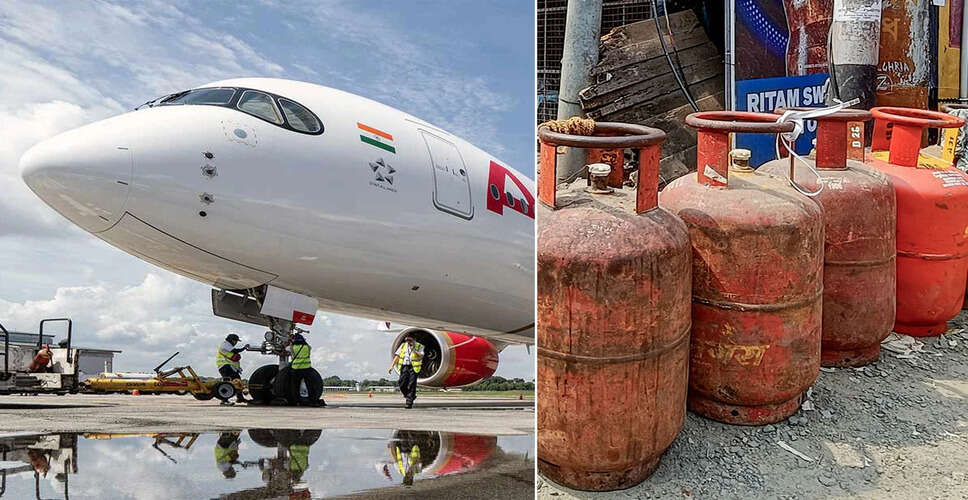
Although the conflict in Iran is occurring far from India, its repercussions are increasingly felt in the country, particularly in consumers' wallets. A surge in global oil prices has led to a significant rise in the cost of aviation turbine fuel (ATF) today, alongside an increase in the price of commercial gas cylinders. It's important to note that aviation fuel prices were deregulated two decades ago and are now determined according to international market rates. This marks the first instance where ATF prices have exceeded ₹2 lakh per kiloliter.
Challenges for Airlines and Rising Operational Costs
This spike in fuel prices is expected to exert additional pressure on airlines, as fuel accounts for approximately 40% of their total operational costs. Furthermore, the ongoing conflict in West Asia has resulted in the closure of several air routes, necessitating longer flight paths and consequently increasing fuel consumption. Additionally, the price of a 19-kilogram commercial gas cylinder, commonly used in hotels and restaurants, has risen by ₹195.50, bringing its cost in Delhi to ₹2,078.50.
Economic Impact of Regional Conflicts
The escalating conflict in West Asia, the closure of the Strait of Hormuz, and significant disruptions in global oil supply have directly impacted the country's economy. In response to the seriousness of the situation, the central government has attempted to curb potential steep increases in ATF prices. However, the crisis appears to be affecting various sectors.
Government Measures to Mitigate Price Hikes
The central government has clarified that due to international circumstances, ATF prices could have seen an increase of over 100% on April 1. To provide relief to domestic travelers, this increase was limited to just 25%, translating to an approximate rise of ₹15 per liter, implemented gradually. This decision is a significant relief for the aviation sector, as full implementation of the hike would have led to soaring airfares, directly impacting passengers.
Current ATF Prices and Their Effects
Currently, the price of ATF in Delhi has reached ₹1,04,927 per kiloliter, reflecting an increase of about 8.5% compared to last month. Similar price hikes have been observed at other major airports across the country. However, the most severe impact has been felt by non-scheduled and charter flights, where ATF prices have surged by up to 115%, creating a direct economic crisis for this segment.
Rising Costs of Cooking Gas and Its Implications
On the cooking gas front, the situation is equally concerning. The price of a 19-kilogram commercial cylinder has increased by up to ₹200, severely affecting hotels, restaurants, and small businesses. In Delhi, this cylinder now costs over ₹2,078, with even higher prices reported in Kolkata and Chennai. Additionally, the price of a smaller 5-kilogram cylinder has risen by ₹51.
Government Relief for Domestic Consumers
Fortunately, the government has provided some relief to domestic consumers by keeping the price of the 14.2-kilogram domestic gas cylinder stable at ₹913 in Delhi. However, the duration of this relief remains uncertain, as ongoing instability in the international market could soon impact the average consumer's kitchen.
Stability of Petrol and Diesel Prices
Interestingly, petrol and diesel prices have remained stable, with petrol priced at ₹94.72 and diesel at ₹87.62 per liter in Delhi. Since a ₹2 reduction last March, there have been no changes in these prices. Experts suggest that if global conditions persist, this stability is likely to be disrupted. This entire situation indicates that India's energy security remains vulnerable to global crises. While the government is attempting to manage the situation, the real challenge lies ahead. Should tensions in West Asia escalate further, the repercussions will be felt across air travel, cooking gas, and daily life.
Future Strategies for Energy Price Management
The pressing question now is whether the government will devise a long-term strategy to address these challenges or continue to provide temporary relief during crises. If the storm of energy prices does not subside, its effects will extend beyond individual wallets, potentially shaking the entire economy.