
Impact of Aravalli Range Degradation on Delhi's Climate
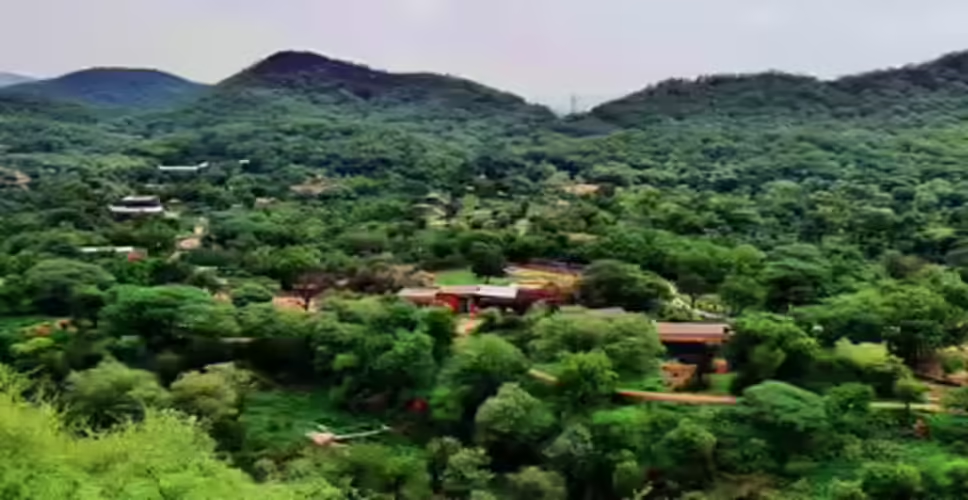
Threats to the Aravalli Mountain Range
The Aravalli mountain range, one of the oldest in the world, is facing severe erosion, posing a significant threat to the climate and environment of the Delhi-NCR region. Experts warn that if mining and encroachment continue unchecked, the region will experience intensified heat waves in summer, extreme cold in winter, and increased pollution levels throughout the year.
The Role of Aravalli in Environmental Protection
Spanning approximately 700 kilometers from Gujarat to Delhi, the Aravalli range acts as a natural barrier against the sands and hot winds of the Thar Desert. It serves as the 'green lungs' for Delhi-NCR, trapping dust particles to control pollution and playing a crucial role in groundwater recharge. However, decades of both illegal and legal mining, deforestation, and urbanization have led to rapid degradation of this vital range.
Consequences of Erosion
According to environmental experts, the erosion of the Aravalli has already created 12 significant gaps, allowing the Thar Desert's sand to reach Delhi-NCR directly. This results in summer temperatures rising by 2-3 degrees, increased intensity of heat waves, and frequent dust storms. In winter, the disruption of cold winds leads to extreme cold, while pollution gets trapped, forming smog. Climate scientist Dr. Manish Kumar states, 'The degradation of the Aravalli is directly affecting Delhi's air quality, water security, and weather patterns. If this barrier breaks, desertification will accelerate, and pollution could reach lethal levels.'
Recent Legal Developments
Recently, the Supreme Court made a controversial ruling regarding the new definition of the Aravalli, stating that only hills over 100 meters high would be protected. This could potentially exclude 90% of the area from conservation. However, on December 29, the court suspended its November decision and indicated the formation of a new expert committee. The central government has also clarified that no new mining leases will be granted in the Aravalli region. Environment Minister Bhupender Yadav emphasized, 'The protection of the Aravalli is our priority.'
Warnings from Environmental Activists
Environmental activist Vikrant Tongad warns, 'The Aravalli not only prevents desertification but also influences the monsoon, ensuring rainfall. Its destruction could turn Delhi into a semi-desert.' Water conservationist Rajendra Singh adds, 'If the Aravalli is compromised, Delhi's weather will deteriorate, leading to increased heat, cold, and pollution.'