
Impact of Ali Larijani's Assassination on Iran's War Dynamics
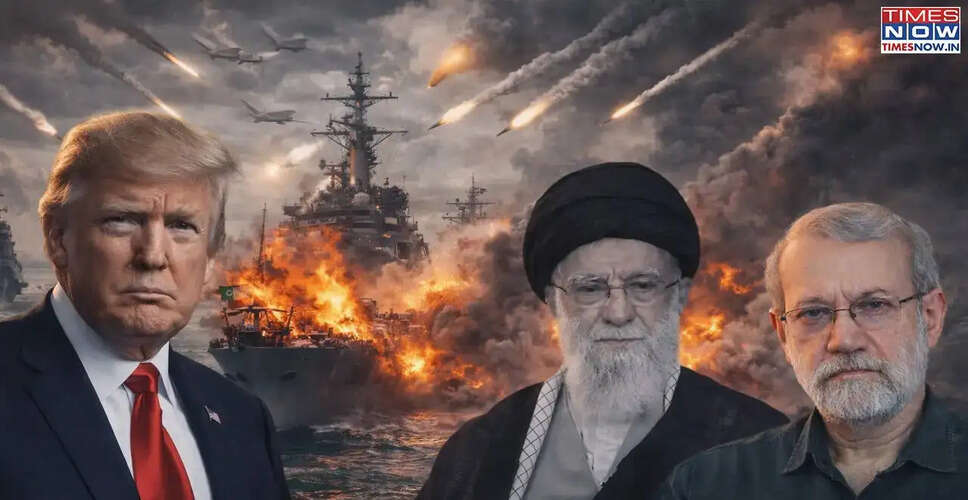
Significance of Larijani's Death in the Iran Conflict
The assassination of Ali Larijani during a coordinated US-Israel operation could mark a pivotal moment in the ongoing conflict involving Iran, potentially having a more profound operational effect than the earlier killing of Ali Khamenei. While Khamenei's death reverberated globally, it primarily dealt a symbolic blow to the Islamic Republic. In contrast, Larijani's elimination targets the very framework that sustains the state, particularly in times of war. As tensions escalate, the loss of a crucial coordinator rather than a mere figurehead could alter the trajectory of the conflict, rendering it less predictable and potentially extending its duration.
The Ineffectiveness of the Decapitation Strike
The ‘Decapitation Strike’ That Didn’t Collapse Iran
When Khamenei was killed in a US-Israel strike on February 28, it was perceived as an effort to dismantle Iran’s leadership in one fell swoop. However, the Iranian system proved resilient, adapting rather than collapsing. Reports indicate that Iranian officials swiftly established a leadership council and redistributed power among key institutions, such as the Supreme National Security Council. Military operations proceeded with minimal disruption, as command structures transitioned to a more decentralized approach. Previous analyses suggested that Iran's governance model is designed to endure the loss of even its highest-ranking leader, making Khamenei's death significant politically yet manageable structurally.
Larijani: The Operational Backbone of Iran
Larijani: The Quiet Power Behind the State
While Khamenei symbolized authority, Larijani embodied functionality. Operating largely behind the scenes, he was recognized as a key player within Iran’s security and political framework. Described as a 'backroom powerbroker,' Larijani was instrumental in shaping policy, managing internal alliances, and ensuring that strategic decisions were effectively implemented. As the head of the Supreme National Security Council, he played a vital role in coordinating between Iran’s political leaders, military, and intelligence agencies, acting as a crucial link in a system reliant on internal balance and communication.
The Consequences of Larijani's Absence
A Vacuum at the Worst Possible Time
Larijani's assassination occurs at a critical juncture when coordination is paramount. His absence diminishes the capacity of Iran’s various power centers to operate cohesively, heightening the risk of miscalculations. Unlike a symbolic leader who can be quickly replaced, a coordinator like Larijani relies on relationships, trust, and real-time decision-making, all of which are challenging to replicate. This creates a precarious gap in wartime, where the difference between escalation and restraint often hinges on swift, centralized coordination.
Potential for Prolonged Conflict
Why This Could Make the War Longer & Not Shorter
Initially, the removal of a key strategist might appear to weaken Iran. However, the situation is more nuanced. Iran’s Foreign Minister Abbas Araghchi noted that the country’s political structure is robust enough to endure beyond individual leaders. Yet, this resilience could also extend the conflict. Without a central coordinator, power may fragment, leading to independent actions by various military and proxy groups, hardline factions gaining influence, and weakened diplomatic channels. The result could be a sustained, uneven escalation, complicating efforts to contain the conflict.
A Shift in War Dynamics
From Retaliation to Unpredictability
The conflict had already intensified following Khamenei’s assassination, with Iran conducting retaliatory strikes and rising tensions in the Strait of Hormuz, a vital route for global oil supplies. However, Larijani’s death signals a new phase. While the previous strike aimed to disrupt leadership, this one threatens the internal coherence of the system. The transition from a leadership crisis to a coordination crisis is subtle yet significant, and in wartime, such distinctions are crucial.
The Future of the Conflict
A War That Just Got Harder to Control
The broader implications are evident: this conflict is no longer solely defined by military might but also by the stability of internal systems. Khamenei’s assassination tested the survival of Iran’s leadership, while Larijani’s killing now assesses its operational effectiveness under pressure. If the system remains intact, the war will persist; if coordination falters, the risks will escalate. Regardless, the conflict is unlikely to conclude swiftly, as Larijani was not just a figure in the regime but a vital component of its operational circuitry, and damaging that circuitry could lead to increased volatility.