
Historic Recognition for Transgender Voters in Sikkim

A Milestone for Sikkim's Transgender Community
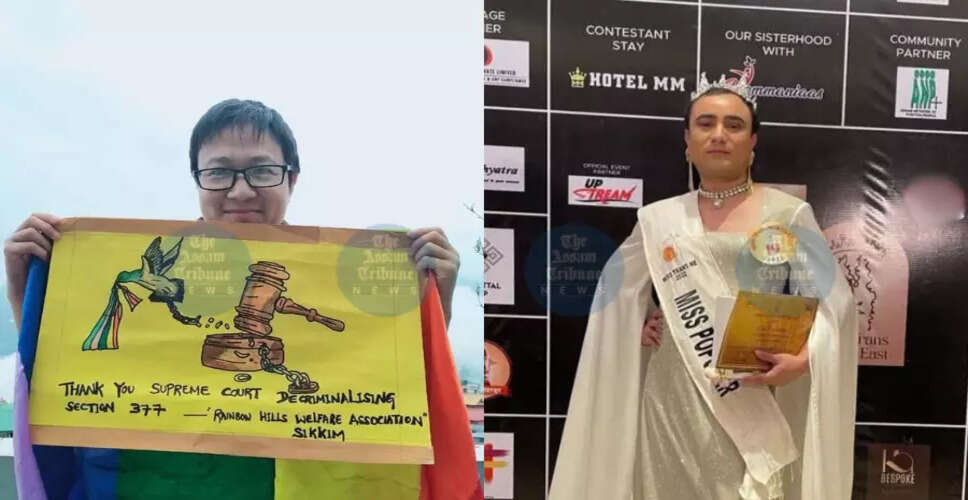
Tshering W. Lepcha (left) and Sajan Basnet, the first two registered voters under the third-gender category in Sikkim (Photo: AT)
For many years, the quest for recognition among Sikkim's transgender community has been a deeply personal journey. This year, however, it has taken a significant public turn with the inclusion of their identities in the state's electoral rolls.
The recent Special Summary Revision (SSR) in Sikkim has officially registered two individuals under the third-gender category, marking a historic first for the Himalayan region.
While the number may seem small, this moment holds great importance for a community that has long fought for visibility and official acknowledgment.
At the forefront of this change are two government employees, Sajan Basnet and Tshering W. Lepcha, whose paths to self-acceptance, though different, have led them to the same destination—the right to be recognized authentically.
Sajan Basnet, a 34-year-old from Rongli in East Sikkim, began her journey of self-discovery in the sixth grade, performing in traditional female clothing. However, fully embracing her identity took many years.
For Basnet, being recognized under her true gender identity signifies the restoration of her dignity as a distinct gender.
"Having a separate line for voting is not just about convenience; it’s about acknowledging who I am," Basnet expressed.
With the encouragement of her family and friends, she gradually became more at ease with her identity.
"It was a long journey to self-acceptance," she reflected.
Today, she stands as Sikkim's first registered transgender voter and the first openly transgender government employee.
Her journey has also led her to engage in community service. As an active participant in local LGBTQIA+ initiatives, Basnet is advocating for a dedicated drop-in center through the Social Welfare Department, which she believes could offer vital support and a safe haven for community members.
For Basnet, the significance of her voter registration is deeply personal.
Similarly, 40-year-old Tshering W. Lepcha, a government schoolteacher from Dzongu in North Sikkim, shares a different yet resonant story.
Having lost her parents early in life, Lepcha faced her own internal battles regarding her identity, struggling to align her feelings with societal expectations.
"Accepting my reality was challenging, as it conflicted with my beliefs and feelings," she recalled.
Over time, this struggle transformed into a source of empowerment. Today, Lepcha fulfills dual roles as an educator and a community advocate, drawing from her own experiences.
Her advice to young individuals facing similar dilemmas is grounded in her own reality: "Be financially independent before coming out to your family, as some may react negatively."
The experiences of Basnet and Lepcha highlight that official recognition transcends mere changes in electoral records.
Their registration under the third-gender category coincides with a growing public discourse on gender identity, dignity, and inclusion.
While two names may seem insignificant in the context of a larger electorate, they represent years of struggle, self-acceptance, and resilience.