
Illegal Bangladeshi Immigrants Flee West Bengal Amid Crackdown

A Shocking Turn of Events in West Bengal
In West Bengal, a startling and serious situation has emerged amidst a crackdown on illegal immigrants. Hundreds of undocumented Bangladeshi migrants are now fleeing towards border checkpoints and transit terminals, driven by the fear of detention and legal action. These migrants, who have lived in India for decades, have openly confessed to the media about how they entered the country and acquired fake Indian documents.
The '10-Minute' Infiltration Formula and Smuggler Networks
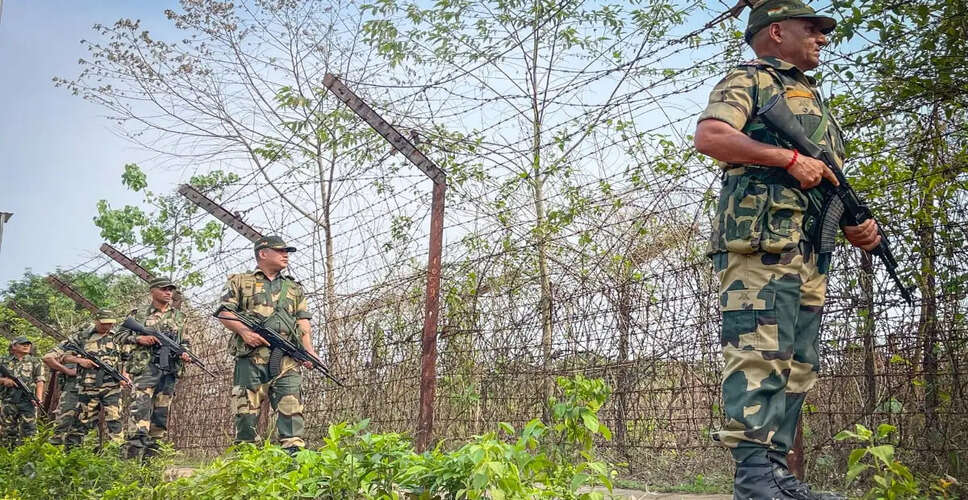
Statements from illegal immigrants to various media outlets reveal a highly organized and systematic network operating along the India-Bangladesh border. A carpenter from Bangladesh's Kushtia district disclosed that he paid a smuggler between 7,000 to 8,000 rupees to cross the border. These smugglers monitor the movements of Border Security Force (BSF) personnel and take advantage of any '10-minute gap' during patrols to push groups of migrants into India.
Despite Military Presence: Another illegal migrant residing in Bengaluru claimed he paid an agent 20,000 rupees, who managed to get him across despite the heavy military presence at the border.
Utilizing Rivers and Remote Paths: The 4,096-kilometer India-Bangladesh border includes riverine areas, dense forests, and agricultural land, which human traffickers exploit effectively.
Government's Stance on Returning Migrants
Union Home Minister Amit Shah addressed reports of hundreds heading back to Bangladesh, stating that since these migrants are returning voluntarily, the government will not take legal action against them. He congratulated Suvendu Adhikari for allocating 600 hectares of land to the BSF, including areas near the 'Chicken Neck' (Siliguri Corridor).
The most shocking aspect of these statements is the level of organization involved in the border crossings, as revealed by the migrants' accounts to various media outlets.
How the Smuggling Works
A Bangladeshi migrant shared with a local YouTube channel, 'Haldia Live', that he entered India through a smuggler's network from Kushtia. He explained, "I worked in Kerala. Now, they ask for voter ID and Aadhaar cards even for renting a room, which I don’t have." He detailed how the crossing occurs, stating that teams of five to six individuals monitor BSF presence and exploit any gaps to send people across.
He noted, "Sometimes, we have to wait all night for a chance to cross, and other times it happens within 10 minutes." According to him, smugglers charge around 7,000 to 8,000 rupees per person.
Political Support for Illegal Immigrants
One illegal Bangladeshi migrant claimed that local political workers from the Trinamool Congress helped him obtain documents after he entered India. He stated, "When Mamata's party was in power, I got my voter ID and ration card made with their help. I also benefited from the 'Lakshmi Bhandar' scheme for two to three years."
Another migrant explained how the recent crackdown on illegal immigrants has changed the situation. He mentioned, "No one said anything during the Trinamool Congress rule. Now that the government has changed, people are after us. Our landlords are scared of fines and jail time for housing Bangladeshis."
Returning Home After Years in India
Many of those returning to Bangladesh or waiting at border checkpoints have spent years in India. Salam Dali, who was waiting at the Hakimpur border with his wife and child, told a media outlet that he worked as a carpenter in India. He revealed that he crossed into India about five years ago by paying a smuggler 8,000-10,000 rupees.
Another migrant recounted being brought to India by his parents when he was around ten years old, stating, "We just lived and worked without any issues." Reports have also highlighted similar experiences from migrants waiting at border terminals.
The Broader Implications of Illegal Immigration
These statements from illegal Bangladeshi migrants indicate that the issue extends beyond border security; it is supported by an organized system involving smugglers, fake documents, and networks spanning multiple Indian states. Beyond political controversies, these confessions illustrate the financial and administrative burden placed on India, depleting welfare resources and exerting additional pressure on the country's treasury and security apparatus.