
Human-Elephant Conflict in Assam: Families Await Promised Assistance

Impact of Human-Elephant Conflict on Families
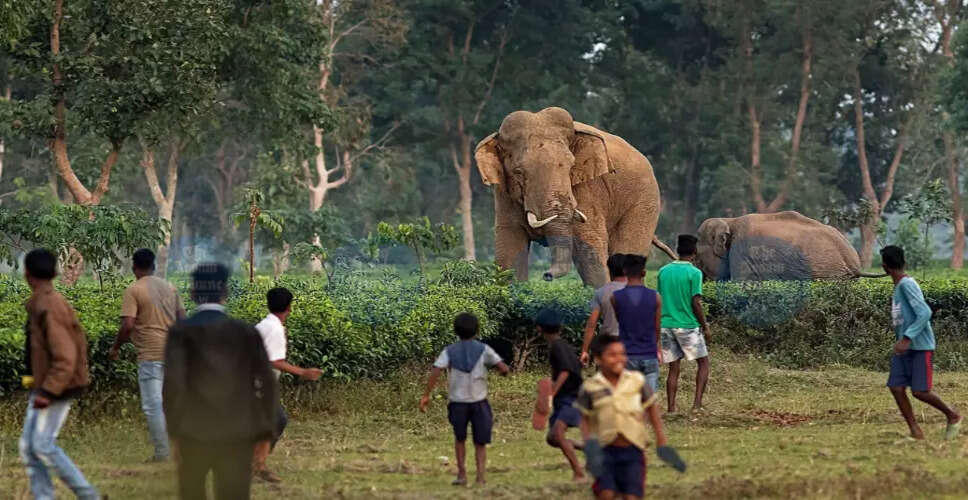
Elephant attacks continue to claim lives across Assam (Photo: AT)
For families who lose their primary earners due to human-elephant conflicts, the government's commitment to provide assistance within 72 hours is crucial. This support can help cover funeral expenses, provide food, and offer some financial relief during a challenging time.
In Assam, families affected by such tragedies are eligible for an ex gratia payment of Rs 6 lakh, with the government assuring that this aid will be disbursed within three days of the incident. However, in Goalpara district, some families impacted by recent elephant attacks report delays in receiving this promised assistance.
Families in Goalpara Await Assistance
The family of 50-year-old Amzad Ali, who tragically lost his life on September 6 at the 17 Assam Police Battalion camp in Dakurvita, has been waiting for the promised aid. Ali, a havildar, encountered an elephant while walking towards the camp entrance, and despite the use of a focus light, the animal remained hidden in the darkness.
His brother-in-law, Asraful Sikdar, mentioned that they have begun the necessary paperwork for the ex gratia but have yet to receive any funds. Officials from the Forest Department collected their documents and indicated that the payment would be made after approval, but Sikdar expressed frustration over the lack of communication and the potential delay of two to three months for the funds to arrive.
“We have not received any updates,” he stated, emphasizing the need for a more permanent solution to the ongoing human-elephant conflict, which has resulted in fatalities year after year.
Another Tragic Incident
A similar situation has unfolded for the family of 14-year-old Yunus Ali, who was killed on September 14 when an elephant entered his home in Naldoba village. His sister, Atifa Begum, sustained injuries and is currently receiving treatment at Gauhati Medical College and Hospital.
Neighbors have reported that the family has not yet received the promised Rs 6 lakh. A relative of Yunus mentioned that while they received some immediate financial assistance for Atifa's medical care, they have incurred significant expenses totaling around Rs 2.08 lakh without any compensation for Yunus's death.
“We were told that submitting medical bills would help with compensation, but nothing has materialized,” the relative lamented.
Forest Department's Response
The Goalpara Forest Division acknowledged the delays in compensation but clarified that these do not reflect a change in the government's timeline. DFO Tejas Mariswamy explained that a new notification is being implemented, which has caused some delays due to the establishment of a new administrative framework.
Mariswamy assured that the usual timeline for compensation remains two to three days and highlighted ongoing efforts to mitigate human-elephant conflicts through village-level initiatives, including solar exclosures and dedicated anti-depredation squads.
He noted that 42 villages affected by severe human-elephant conflicts have received protective measures, resulting in zero incidents in those areas.
Contrasting Experiences
In contrast to the delays faced by families in Goalpara, the family of 39-year-old Umakanta Moran, who was killed in an elephant attack on September 7, received the Rs 6 lakh ex gratia promptly. Moran's tragic death occurred while he was returning home from his farmland.
Despite receiving compensation, the family has called for additional support, including a one-time payment of Rs 20 lakh, free education for their daughter, and state assistance for their unborn child.
This situation highlights a broader issue in areas prone to such conflicts: while immediate compensation can provide temporary relief, it does not address the long-term economic impact on families who lose their main source of income.
The Need for Comprehensive Solutions
Experts in wildlife management argue that compensation only addresses the aftermath of these conflicts. A former forest ranger emphasized that habitat loss due to human development has led to increased encounters between elephants and people.
To mitigate these conflicts, experts suggest restoring degraded forests, expanding grasslands, and employing trained elephants to manage elephant movements. For families like Amzad Ali's, the pressing question remains: when will the promised assistance actually arrive?
As elephant attacks continue to pose a threat in Assam, it is crucial to consider how to expedite relief for affected families and reduce the frequency of such tragic incidents.