
How US Navy's EA-18G Growlers Played a Pivotal Role in Venezuela's Military Operation
US Navy's Electronic Warfare Strategy in Venezuela
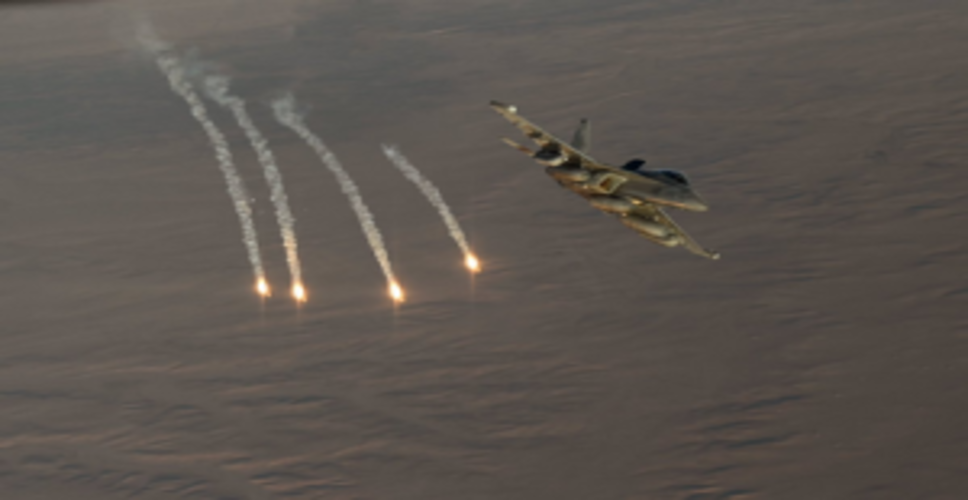
Washington: Reports indicate that the US Navy's EA-18G Growlers were instrumental in neutralizing Venezuela's air defense systems during the military operation that resulted in the capture of President Nicolas Maduro.
A significant defense article from a major media outlet discussed Boeing's Growlers, emphasizing the US's renewed focus on signal-jamming technologies in contemporary warfare.
The Growler, designed as a carrier-based electronic attack jet, specializes in dominating the electromagnetic spectrum rather than delivering munitions. In the Venezuelan operation, it was part of a substantial US air fleet that suppressed radar and communication systems, facilitating the rapid entry and exit of special forces aircraft in Venezuelan airspace.
The operation reportedly involved over 150 US aircraft, including fighters, bombers, and drones. However, the Growler was particularly notable for its capability to disrupt signals instead of targeting ground installations.
Experts in electronic warfare highlight that this unique ability enhances the aircraft's effectiveness. The Growler is equipped with jamming pods that detect enemy radar signals, analyze them in real-time, and transmit customized signals to confuse or overwhelm the systems. This can lead to radar displays being cluttered with false targets or losing track of actual aircraft.
By executing these tactics, the Growler can prevent surface-to-air missiles from locking onto US aircraft, thereby safeguarding both strike jets and transport helicopters. A single Growler can provide protection for an entire group of aircraft, acting as a force multiplier.
The EA-18G is derived from Boeing’s F/A-18F Super Hornet and has replaced the older EA-6B Prowler in the US Navy since its operational debut in 2009. It now serves as the backbone of the US's airborne electronic warfare capabilities, with Australia also utilizing the aircraft.
In the context of Venezuela, Growlers effectively navigated the country's outdated air defense systems, which are heavily reliant on older Soviet and Russian technologies, including variants of the S-300 missile system. Venezuela also employs some older Chinese radar systems.
However, analysts warn that employing such tactics would be more challenging against advanced adversaries like China or Russia, which possess more sophisticated and resilient air defense networks. Nonetheless, the Venezuelan operation highlighted the resurgence of electronic warfare after a period of relative neglect.
In previous conflicts in Afghanistan and the Middle East, US forces encountered fewer advanced air defenses, diminishing the necessity for extensive jamming. This situation has shifted with the ongoing war in Ukraine, now recognized as one of the largest electronic warfare conflicts in history.
Modern jamming technologies are also advancing. Older analog systems like the ALQ-99 are being phased out in favor of digital, software-driven pods capable of rapidly changing frequencies and adapting to new threats. These systems can jam radar, disrupt communications, or generate misleading signals to confuse enemy sensors.
Despite the advancements made by US adversaries, analysts assert that airborne jamming remains essential. Future conflicts, particularly in the Indo-Pacific region, are anticipated to rely heavily on control of the electromagnetic spectrum, alongside traditional aircraft and missile capabilities.
As one former US defense official remarked, while electronic warfare may not be as visible as fighter jets or naval vessels, it plays a "critically important" role in determining air superiority.