
How Narendra Modi's New Bill Aims to Eradicate Paper Leaks in Education
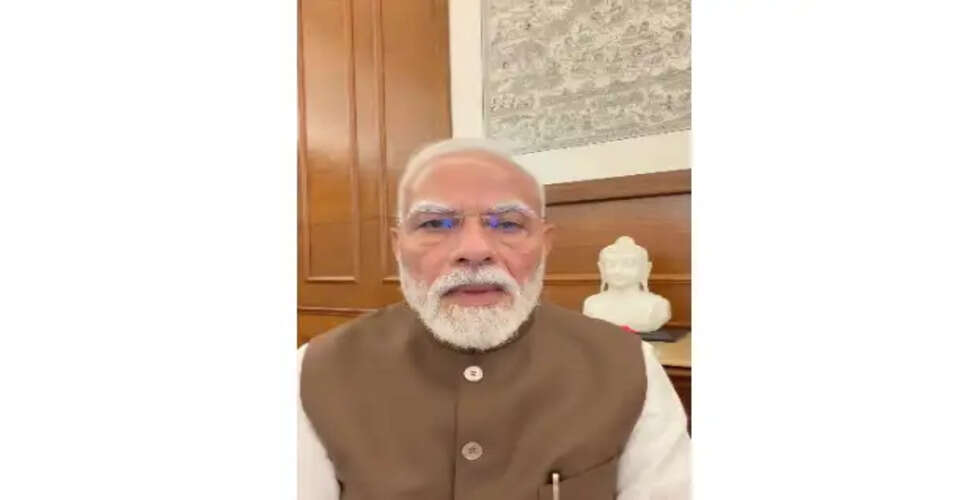

Prime Minister Modi's Call for Educational Reform
New Delhi: On Thursday, Prime Minister Narendra Modi emphasized the urgent need for sweeping reforms in the education sector to combat the ongoing issue of paper leaks. He firmly stated that there would be no leniency for those jeopardizing the futures of students.
In a video message shared on Instagram shortly after Parliament approved a bill aimed at amending the anti-paper leak law to enforce stricter penalties, Modi highlighted the government's commitment to addressing this pressing challenge that has affected both the Centre and various states.
This marks the third video update from Modi on his Instagram account within a week.
He noted, "The problem of paper leaks has persisted for years, threatening the futures of students taking various exams."
Modi asserted that comprehensive reforms in the education system are essential to effectively tackle this issue.
He mentioned that the government is dedicated to creating a robust examination framework, which will heavily rely on advanced technology.
A task force has been established, fast-track courts are being introduced, and the government is actively seeking input from states to enhance the examination process and curb irregularities.
Regarding the anti-paper leak legislation, which was passed by both the Lok Sabha and Rajya Sabha, Modi stated that a strong legal framework is now in place to combat this issue.
He declared, "We will not tolerate the activities of paper leak gangs or anyone undermining the future of our children."
With the bill's passage, the government has taken significant steps toward establishing a reliable examination system.
Modi reiterated the government's dedication to ensuring fair opportunities for students.
"We will not allow paper leak incidents to go unchecked. Our fight against this issue will persist. Together, let’s work towards realizing the vision of a developed India," he urged.
On Thursday, Parliament approved The Public Examination (Prevention of Unfair Means) Amendment Bill, 2026, reflecting the government's commitment to protecting the interests of students, who represent the nation's future.
The new legislation imposes harsher penalties, including up to 10 years in prison and fines reaching Rs 50 lakh for those involved in paper leaks.
This bill was introduced in response to student protests led by the Cockroach Janta Party (CJP) at Jantar Mantar, which began on June 20 and concluded after 36 days on July 25, following the resignation of Dharmendra Pradhan as Union education minister and the acceptance of other demands by the government.
The protests mobilized thousands of students nationwide and received backing from major opposition parties.
The discontent culminated in a significant march to Parliament on July 20, which was met with a strong police response, including lathi charges and tear gas.
After three rounds of negotiations, an agreement was reached on July 25, leading to the cessation of the protests after the government agreed to the demands.