
How India's Finance Minister Plans to Boost Economic Growth Through Consumption
Government's Strategy for Economic Growth
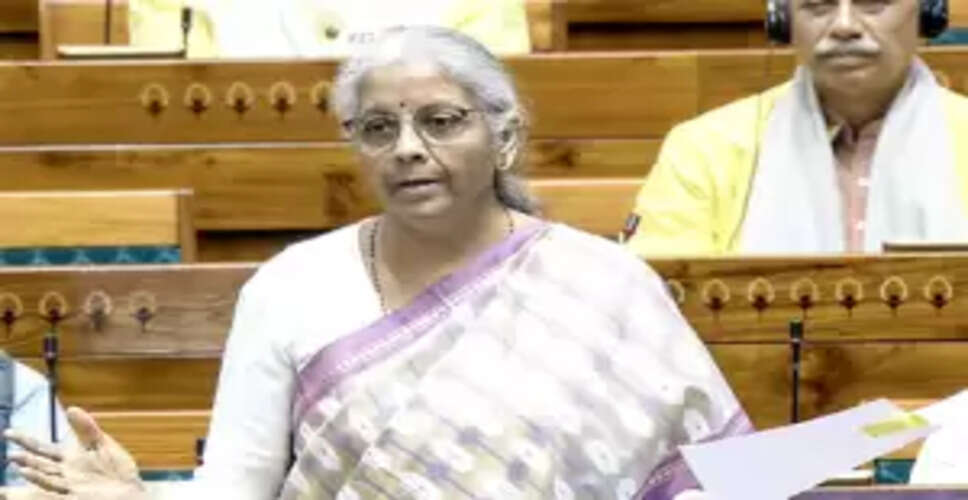
New Delhi: On Monday, Finance Minister Nirmala Sitharaman presented a comprehensive approach in Parliament aimed at enhancing consumption growth within the economy. This strategy integrates demand-boosting initiatives, income-enhancing supply-side tactics, and structural reforms, all contributing to GDP expansion.
In her written response to a Lok Sabha inquiry, she highlighted several policy measures, including a new income tax exemption for individuals earning up to Rs 12 lakh, recent reductions in GST rates, and a sustained focus on improving the business environment, skill development, job creation, and infrastructure enhancement. Additionally, expanded credit access through programs like MUDRA and PMSVANidhi is anticipated to further stimulate economic consumption.
Sitharaman also pointed out that the government is committed to fostering balanced growth in both rural and urban consumption through various policy initiatives.
Urban initiatives such as livelihood and skill development programs, along with tax incentives and the expansion of digital payment systems, are enhancing consumption in cities. Concurrently, flagship programs like PM-KISAN, the Mahatma Gandhi National Rural Employment Guarantee Scheme, and PM Awas Yojana (Gramin) are driving income growth in rural regions.
The Finance Minister emphasized that bolstering consumption demand will positively influence overall economic activity by supporting household incomes, promoting private investments, and reinforcing economic growth.
According to data from the National Statistics Office (NSO), the proportion of Private Final Consumption Expenditure in GDP rose from 62.2% in Q2 of 2024-25 to 62.5% in Q2 of 2025-26. Furthermore, its growth in constant price terms increased from 6.4% to 7.9% during the same timeframe.
The GDP at constant prices is projected to grow by 8.2% in the second quarter (Q2) of 2025-26, compared to 5.6% in Q2 of 2024-25 and 7.8% in the first quarter (Q1) of 2025-26, indicating a robust acceleration in economic momentum, as stated by the Finance Minister.