
How India is Ensuring Safe Return of Nationals Amid West Asia Turmoil
Safe Passage for Indian Nationals from Iran
New Delhi: In light of the ongoing conflict in West Asia, the Ministry of External Affairs (MEA) reported that 1,043 Indian citizens, including 717 students, have successfully exited Iran with the help of the Indian mission in Tehran.
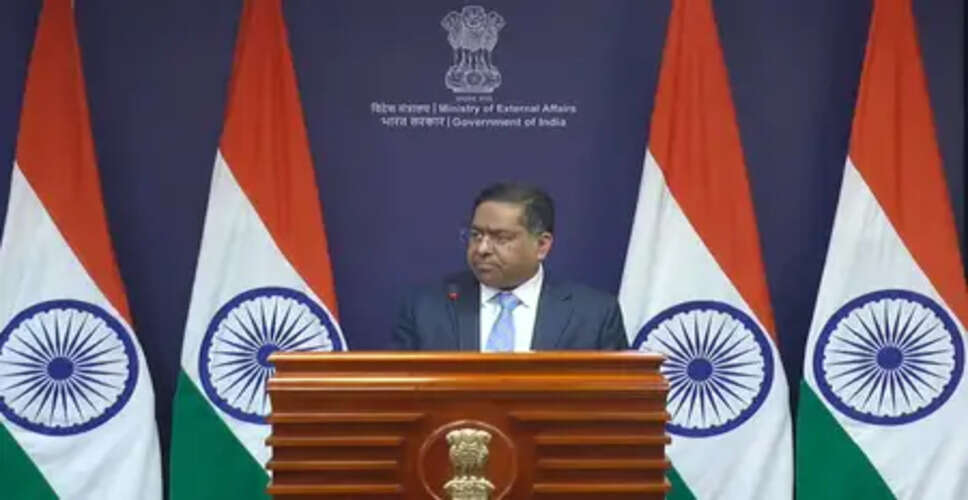
During a briefing on the situation in West Asia, Aseem R Mahajan, Additional Secretary (Gulf) at the MEA, noted that the flight operations are steadily improving, with approximately 426,000 passengers having returned to India since February 28.
He mentioned that a total of 2,149 flights, comprising both scheduled and chartered services from Indian and foreign airlines, have been conducted from the region to India.
The MEA is actively monitoring the situation in the Gulf and West Asia, prioritizing the safety and welfare of the significant Indian population residing there.
Mahajan emphasized that the ministry's dedicated Control Room is operational to assist Indian nationals and their families with inquiries.
The MEA is facilitating the travel of Indian citizens in Iran through Armenia and Azerbaijan, with 1,043 individuals, including 717 students and 326 other citizens, having departed Iran with the mission's support.
Additionally, arrangements are being made for Indian nationals traveling from Israel via Jordan back to India. Due to flight restrictions from Kuwait, Bahrain, and Iraq, the MEA is also aiding travel through Saudi Arabia.
Mahajan confirmed that the remains of an Indian national who died in a March 18 attack in Riyadh have been repatriated to India earlier on Wednesday.
He expressed condolences to the family during this challenging time.
The Indian missions in Oman, Iraq, and the UAE are in contact with local authorities regarding a missing Indian national and the repatriation of another deceased citizen's remains.
On Tuesday evening, MEA spokesperson Randhir Jaiswal revealed that External Affairs Minister S. Jaishankar met with the Iranian envoy in India to discuss the ongoing conflict in West Asia.
Jaiswal noted that many Indian nationals in Iran are returning, primarily through Armenia or Azerbaijan, and thanked Iran for its support in facilitating this transit.
In his opening remarks, Jaiswal mentioned a phone call from US President Donald Trump to Prime Minister Narendra Modi, where they discussed the evolving situation in West Asia.
The Prime Minister reiterated India's stance on the need for de-escalation and restoring peace promptly.
He also highlighted the importance of keeping the Strait of Hormuz open and secure, which is crucial for global peace and economic stability.
Both leaders agreed to maintain communication regarding ongoing efforts to promote peace and stability in the region.
Prime Minister Modi also received a call from Sri Lankan President Anura Kumara Dissanayake, where they discussed the West Asia situation and the significance of secure shipping lines for the global community.
They also reviewed progress on initiatives aimed at enhancing India-Sri Lanka energy cooperation and regional security.
Mahajan further elaborated that Indian missions are actively supporting students, seafarers, stranded nationals, and short-term visitors with visa facilitation, consular services, and logistical assistance as needed.
Airlines are currently operating limited non-scheduled flights based on safety and operational considerations between the UAE and India.
Around 80 flights are anticipated to operate from various UAE airports to India on Wednesday, with continued operations from Oman and Saudi Arabia.
With Qatar's airspace partially open, Qatar Airways is expected to conduct approximately nine non-scheduled commercial flights to India later on Wednesday.
Special non-scheduled flights by Jazeera Airways from Kuwait are operating from Al Qaisumah Airport in Saudi Arabia, while Gulf Air from Bahrain is facilitating travel from Dammam Airport to various destinations in India.