
Historic Water Sharing Agreement Signed Between Haryana and Rajasthan

Significant Milestone in Inter-State Water Disputes
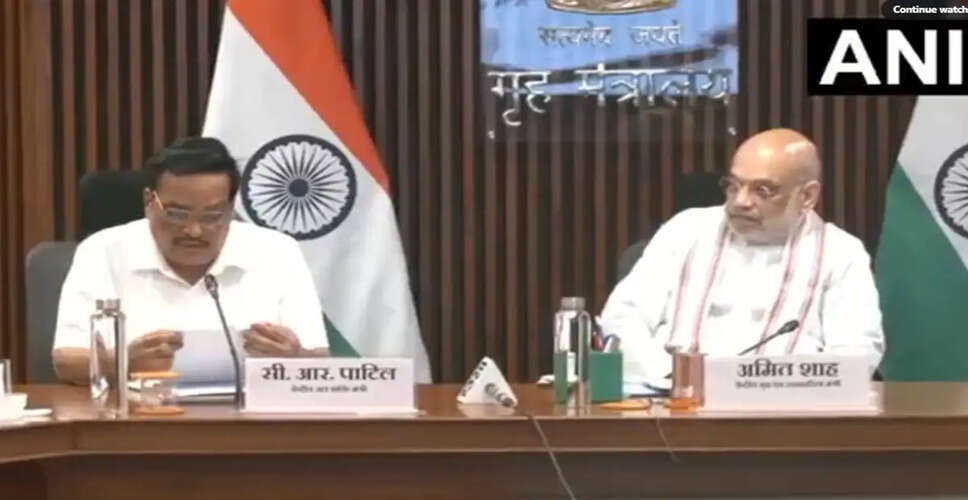
On Monday, a landmark agreement was reached aimed at resolving inter-state water disputes. In a ceremony attended by Union Home Minister Amit Shah, a crucial Memorandum of Understanding (MoU) was signed at the Kartavya Bhawan concerning the distribution of water between Haryana and Rajasthan. The high-level meeting also saw the presence of Union Minister for Jal Shakti, C.R. Patil, along with Haryana Chief Minister Nayab Singh Saini and Rajasthan Chief Minister Bhajan Lal Sharma. This agreement is viewed as the dawn of a new era for the efficient and systematic management of water resources between the two states.
C.R. Patil emphasized that this agreement is the result of extensive discussions and will facilitate better implementation of the water-sharing framework established in 1994. He highlighted the necessity of coordination between states for the proper utilization of water.
Statements from State Leaders
Haryana's Chief Minister Nayab Singh Saini stated that Haryana respects Rajasthan's water rights and supports equitable distribution through collaboration. Rajasthan's Chief Minister Bhajan Lal Sharma remarked that the state is merely seeking its rightful share of water and that better utilization of surplus monsoon water could alleviate drinking water issues in several districts.
Details of the Agreement
Under the new arrangement, Rajasthan will receive its allocated share of water during the monsoon season through a pipeline laid underground from the Hathnikund Barrage via the Western Yamuna Canal system.
Officials noted that the objective is to ensure a long-term and consistent supply of drinking water to drought-affected areas in Rajasthan, such as Churu, Sikar, and Jhunjhunu. This agreement is linked to the 1994 Upper Yamuna River Board (UYRB) agreement, which already outlined how the water of the Yamuna River would be shared among the basin states. However, it has not been fully implemented for many years, leading to recurring disputes.
Background of the Dispute
The primary contention has been how the water of the river is divided among Haryana, Rajasthan, and other states. There has been a long-standing debate regarding the distribution of Yamuna River water between Haryana and Rajasthan. Punjab has also been part of a separate but related dispute concerning the Ravi-Beas waters, which has persisted since Haryana became a separate state in 1966.
States frequently argue over whether they are receiving their full allocated share of water, particularly during the summer and sowing seasons. This issue intensifies during the Kharif season when the demand for water for paddy cultivation rises, and river water levels drop. Each year, after the filling season ends, water is distributed from large reservoirs, including the Bhakra, Pong, and Ranjit Sagar dams, among Punjab, Haryana, Rajasthan, and Delhi.
Both Punjab and Haryana cultivate water-intensive crops, especially paddy, leading to a sharp increase in water demand during the summer. Additionally, the groundwater levels have declined, increasing the importance of canal water.
Future Steps
Officials indicated that the next steps will involve implementing this agreement, which includes the technical planning of the pipeline system and monitoring water flow. The central government has also instructed departments to ensure better coordination between the states.