
Historic US-Iran Agreement Signed at Versailles: A New Era of Diplomacy

A New Chapter in Diplomatic History
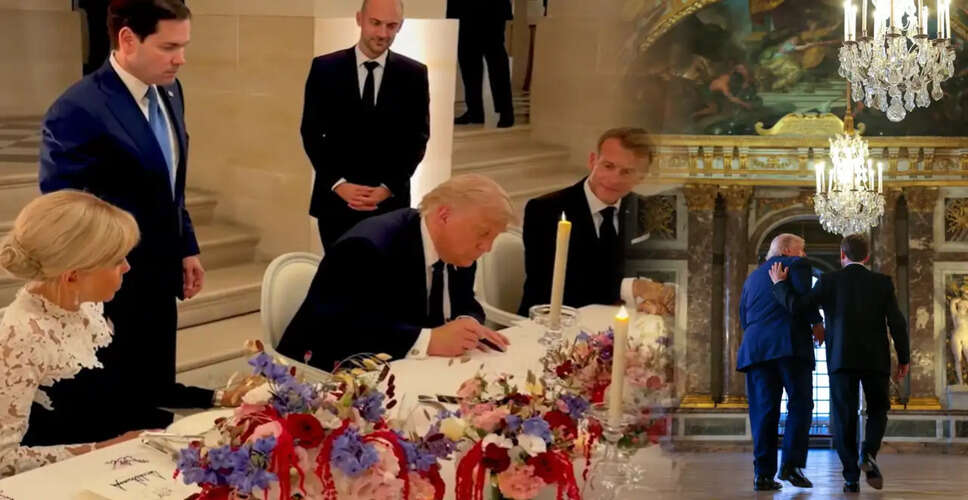
The recent signing of a Memorandum of Understanding (MoU) between the United States and Iran at the Palace of Versailles marks a significant milestone in diplomatic history. French President Emmanuel Macron announced that US President Donald Trump finalized the agreement during a dinner at the palace, highlighting it as a pivotal step towards enduring peace and the reopening of the crucial Strait of Hormuz. This event occurs over a century after the Treaty of Versailles, a landmark peace settlement, was signed at the same location. As the world focuses on this latest diplomatic achievement between Washington and Tehran, the palace's historical ties to major geopolitical events are being revisited.
Versailles has long been more than just a symbol of French royal heritage; it has served as a venue for the conclusion of wars, the declaration of empires, and the reshaping of global diplomacy.
The Treaty of Versailles: A Historical Benchmark
Treaty Of Versailles Remains The Palace's Most Famous Agreement
The most notable treaty ever signed at Versailles is undoubtedly the Treaty of Versailles from 1919. This agreement, which was finalized on June 28, 1919, in the Hall of Mirrors, officially concluded the state of war between Germany and the Allied Powers after World War I. It imposed military limitations, territorial concessions, and reparations on Germany while also establishing the League of Nations. Historians continue to analyze its long-term effects, with many suggesting that its stringent terms contributed to the conditions leading to World War II two decades later. Due to its historical importance, nearly every significant diplomatic document signed at Versailles draws comparisons to the 1919 treaty, including the recent Iran-US MoU, as both aimed to resolve major international conflicts.
Versailles also witnessed the Preliminary Peace of Versailles in 1871, which followed the Franco-Prussian War and laid the groundwork for the later Treaty of Frankfurt, marking a pivotal moment in European political dynamics.
From Imperial Proclamation to Modern Diplomacy
From Imperial Proclamation To Modern Diplomacy
Another significant political event at Versailles occurred on January 18, 1871, when King Wilhelm I of Prussia was declared German Emperor in the Hall of Mirrors, effectively establishing the German Empire. The selection of this venue for the 1919 peace treaty was seen as a symbolic reversal of German dominance.
In recent decades, the palace has continued to play a vital role in modern diplomacy, hosting G7 summits, NATO discussions, bilateral state visits, and high-level talks on economic and security matters involving some of the world's most influential leaders. The recent US-Iran agreement adds to this rich diplomatic legacy. Officials from both nations have stated that the memorandum extends the current ceasefire, facilitates the reopening of the Strait of Hormuz, sets a framework for future nuclear negotiations, and outlines steps for phased sanctions relief.
The agreement also commits both parties to seek a comprehensive resolution within 60 days, with discussions expected to center on Iran's nuclear program, regional security, and economic strategies aimed at stabilizing relations after months of tension. For Macron and French officials, the choice of Versailles was deliberate, emphasizing the symbolic weight of the agreement by linking it to one of history's most significant peace treaties. While the ultimate success of the Iran-US MoU in achieving lasting peace remains to be seen, it is clear that the Palace of Versailles has once again served as a backdrop for a diplomatic moment with far-reaching consequences.