
Historic Translocation of Wild Water Buffaloes from Kaziranga to Kanha
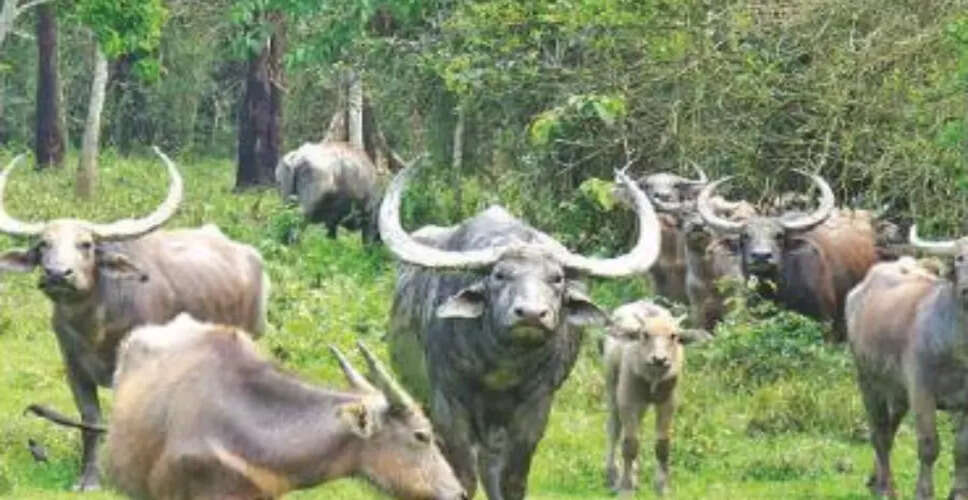

Significant Conservation Initiative
Officials mentioned that the wild water buffaloes chosen for relocation were obtained from the central and eastern ranges of Kaziranga.
Guwahati, April 29: A groundbreaking conservation project has successfully relocated wild water buffaloes from Kaziranga National Park to Kanha Tiger Reserve in Madhya Pradesh, marking the longest distance ever for such a translocation.
The initial group, consisting of three females and one male buffalo, was released on Tuesday, initiating a larger plan to move a total of 50 buffaloes and reestablish the species in central India after nearly a century of absence.
This initiative highlights Assam's crucial role as the main habitat for wild water buffaloes, whose population is now predominantly found within the state. Officials confirmed that the buffaloes selected for this project were sourced from the thriving populations in Kaziranga's central and eastern ranges, thanks to ongoing conservation efforts.
Madhya Pradesh's Chief Minister Mohan Yadav officially launched the Wild Buffalo Reintroduction Project at Supkhar in Balaghat district. He remarked, “This project showcases the power of interstate collaboration. Assam has been instrumental in aiding us to restore a species that vanished from our forests a century ago.”
The translocation was the result of extensive planning and coordination between the forest departments of both states, with support from veterinary teams and wildlife specialists.
Between March 19 and April 10, 2026, seven sub-adult buffaloes were identified in Kaziranga, with four successfully completing their journey on April 25 under closely monitored conditions to reduce stress and ensure their safety.
Chief Minister Himanta Biswa Sarma previously engaged in discussions with his Madhya Pradesh counterpart to support this initiative, which also aims to strengthen conservation partnerships between the two states. Officials believe this collaboration could lead to similar projects, potentially including the translocation of other species like rhinos in the future.
The buffaloes were gradually introduced into a controlled enclosure at Supkhar in Kanha, allowing them to acclimatize to their new surroundings. This reintroduction is anticipated to significantly aid in the restoration of grassland ecosystems, as wild buffaloes play a vital role in shaping vegetation dynamics through their grazing habits.
The species had faced local extinction in Madhya Pradesh due to habitat loss, hunting, and human encroachment. A study conducted by the Wildlife Institute of India identified Kanha as an optimal site for reintroduction, highlighting its expansive grasslands, sufficient water resources, and low levels of human disturbance.