
Historic Special Session of Parliament Begins: Focus on Women's Reservation Bill
The special session of Parliament has commenced, focusing on the Constitution (131st Amendment) Bill, which aims to restructure Lok Sabha seats and facilitate the Women's Reservation Act. The government plans to increase the number of seats to 850, ensuring 33% reservation for women in the upcoming elections. This move seeks to address legal challenges and promote gender equality in political representation. The session is expected to spark significant discussions on the distribution of seats among states and the implications for future elections. Stay tuned for updates on this pivotal legislative development.
| Apr 16, 2026, 12:18 IST
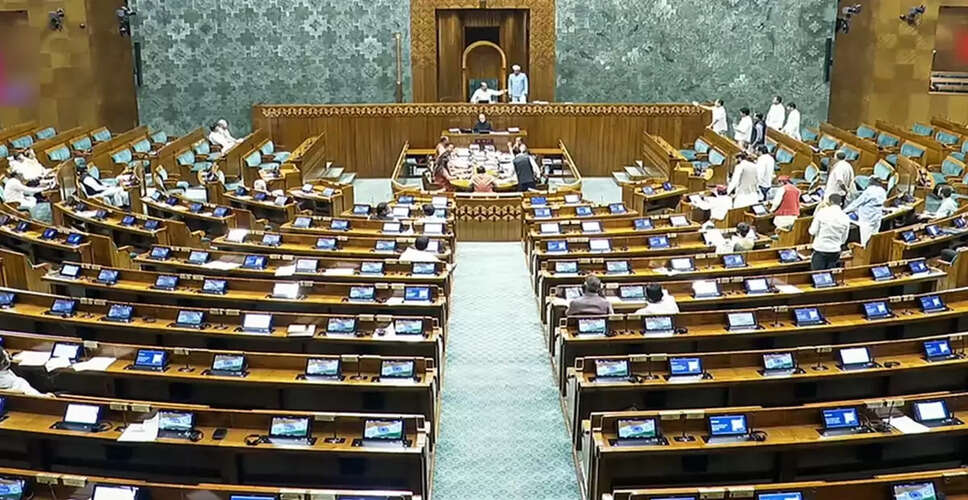

Parliament's Special Session Kicks Off
The three-day special session of Parliament is commencing today, marking a significant moment in the history of Indian democracy. The primary focus of this session is the Constitution (131st Amendment) Bill. This legislation aims to not only restructure the allocation of Lok Sabha seats but also to eliminate major legal and practical obstacles hindering the 'Nari Shakti Vandan Adhiniyam' (Women's Reservation) initiative. The objective is to increase the number of Lok Sabha seats from 543 to 850, thereby addressing the legal challenges associated with the Women's Reservation Act.
Plans for Women's Reservation
By increasing the total number of seats, the government intends to implement a 33% reservation for women in the upcoming 2029 general elections, without reducing the current number of seats held by men. This move aims to mitigate internal political conflicts. However, the proposed expansion to 850 seats has sparked contentious debates regarding the distribution of seats among states, particularly in light of the delimitation process scheduled for 2026.
Distribution of 850 Seats
How Will the 850 Seats Be Allocated?
The draft bill outlines a clear distribution for the expanded assembly, allocating 815 seats to states and 35 to Union Territories. This represents a significant increase from the current 530 state seats and 13 for Union Territories. To expedite this process, the government has proposed separating the delimitation from the 2026 census and instead using data from the 2011 census as a basis.
Proportional Expansion Model
According to the centrally supported 'proportional expansion' model, it is anticipated that there will be an approximate 56% increase in the current number of seats for each state. This proportional increase aims to maintain the existing political balance among states and alleviate long-standing concerns regarding the North-South divide, which has historically impeded delimitation efforts.
Connection Between Women's Reservation and Delimitation Bills
Key Link Between Women's Reservation and Delimitation Bills
The 'Nari Shakti Vandan Adhiniyam' connects women's reservation to the delimitation process and the latest census. The government plans to proceed with both delimitation and the implementation of one-third reservation for women legislators using data from the 2011 census.
Ensuring Women's Representation
Unlike the 2023 version, which was tied to the 2021 census, the new bill seeks to eliminate delays and ensure that by the 2029 general elections, one-third of all seats will be reserved for women. It proposes that delimitation be based on the most recent census data available—in this case, the 2011 census.
The model with 850 seats offers a significant advantage, potentially reserving around 283 seats for women while leaving approximately 567 seats for general and other categories—exceeding the current total number of Lok Sabha seats.
This bill also includes provisions for rotating reserved seats after each delimitation, ensuring that women's representation is distributed across various constituencies over time.
Furthermore, this reservation will apply not only to the Lok Sabha but also to state assemblies, as well as the assemblies of Delhi, Puducherry, and Jammu and Kashmir.