
Historic Setback for Modi Government as Key Bill Fails in Lok Sabha
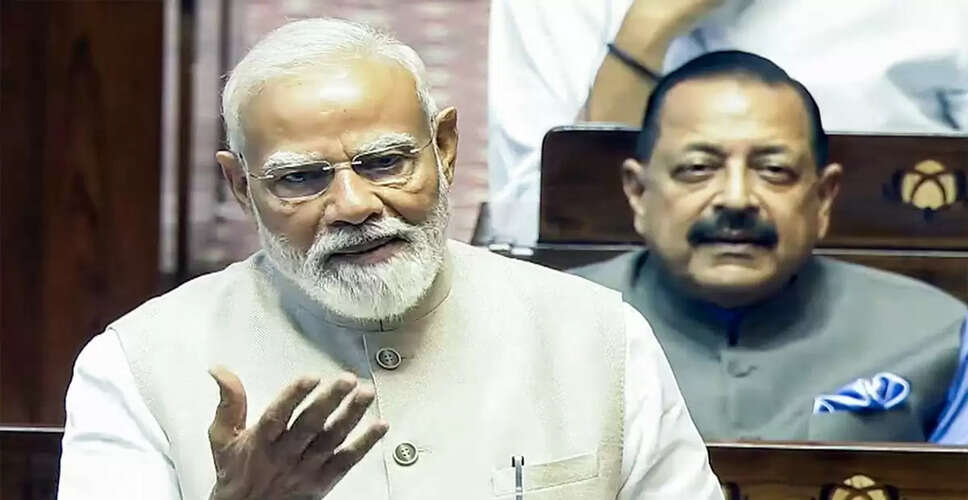

Significant Political Event in Lok Sabha
The events that unfolded in the Lok Sabha on Friday are poised to be remembered as a pivotal moment in Indian democracy. The constitutional amendment bill introduced by the Modi administration, which intertwined sensitive topics like delimitation and women's reservation, ultimately faced defeat in the Lok Sabha. This loss is not merely a routine legislative setback; it marks the first time since the National Democratic Alliance came to power in 2014 that a bill led by Prime Minister Narendra Modi has been defeated during a parliamentary vote. While the government has encountered challenges on issues like land acquisition and agricultural laws, those situations were different and did not result in a direct defeat through a vote in the house.
Tensions Rise Before Voting
Prior to the voting, the atmosphere was already charged. Intense discussions were taking place behind the scenes between leaders from both the ruling party and the opposition. Continuous meetings among top leaders were held, and there were also significant protests within the house. The ruling party's sharp response to opposition leader Rahul Gandhi's speech heightened the tension further. However, by the time Union Home Minister Amit Shah stood to speak, it was nearly evident what the bill's fate would be, yet the government remained determined to push it to a vote.
Political Implications of the Defeat
The defeat of the Constitution (131st Amendment) Bill, 2026, is viewed as a considerable political embarrassment for the Modi government. This incident not only signals the strength of a united opposition but also underscores the necessity for extensive and serious dialogue on critical issues like the Constitution. This setback has clarified that in Parliament, political consensus is just as crucial as numerical strength.
Controversies Surrounding the Bill
The presentation and structure of the bill raised several questions. The most contentious issue was the combination of two distinct topics—women's reservation and delimitation. The opposition labeled this as a strategic maneuver aimed at advancing one issue under the guise of another. Leaders like Akhilesh Yadav from the Samajwadi Party questioned this approach, asserting that it contradicted principles of transparency.
Diverse Perspectives Within the Government
Within the government, various assessments regarding the bill emerged. However, all coalition partners remained united on this issue. Some leaders from the Bharatiya Janata Party believed that Prime Minister Modi introduced this bill to strengthen the party's hold among female voters. Notably, there has been a rise in support for the BJP among women in recent years, and this bill was seen as an effort to bolster that support. Although the bill did not pass, it made it clear which parties support women's reservation and which do not.
Historical Context of Legislative Challenges
To understand this situation better, historical examples provide important context. Instances in India's parliamentary tradition where the central government faced significant obstacles in passing its bills are rare. A notable example is the anti-terrorism law introduced by then-Prime Minister Atal Bihari Vajpayee's government in 2002, which failed to pass in the Rajya Sabha but was later enacted through a joint session. Similarly, the 64th Constitutional Amendment aimed at granting constitutional status to Panchayati Raj institutions failed in the Rajya Sabha but was successfully implemented later during P. V. Narasimha Rao's government as the 73rd Amendment. These examples illustrate that the process of constitutional reforms is often complex and multi-layered.
Current Status of Women's Reservation Law
In the current context, the status of the women's reservation law is similarly fraught with complexities. The law passed in 2023 provided for a thirty-three percent reservation for women in the Lok Sabha and state assemblies, but its implementation was made contingent upon the census and subsequent delimitation. Recently, the central government attempted to amend this arrangement by proposing to increase the number of Lok Sabha seats to 850 and to implement women's reservation immediately alongside delimitation. However, this amendment did not pass in the Lok Sabha, leaving the original 2023 law unchanged.
Political Divisions Emerge
This entire controversy has also highlighted clear political divisions. While the opposition supported the 2023 women's reservation law, it opposed the new amendment that sought to alter the relationship between delimitation and reservation. Opposition leader Rahul Gandhi explicitly stated that if the government implemented the previously passed women's reservation law, the entire opposition would support it without exception. Conversely, Home Minister Amit Shah sharply criticized the opposition, accusing them of preventing women from receiving their rights. He also warned that this issue could become a significant political question in future elections, with widespread implications.
Looking Ahead to Upcoming Elections
Moving forward, attention will be focused on how this issue plays out in the upcoming assembly elections in West Bengal and Tamil Nadu, and how the BJP plans to leverage it in its campaign strategy. Indications suggest that the party is poised to adopt an aggressive stance on this matter. Through various advertisements released in newspapers, the BJP has attempted to convey a clear message that it supports women's reservation and that it was the opposition led by Congress that prevented the bill from passing, thereby denying women their rights. It will be intriguing to see how this issue impacts the electoral landscape and whether it genuinely influences voter preferences.